A yellow forklift parked in a large warehouse aisle lined with tall steel pallet racking stacked with boxes

Air Horns for Warehouse Signaling

A 150 dB train-horn signal that cuts across the whole floor — no tank, no wiring, just your cordless-drill battery.

49 products
150 dB output
2,000 ft remote
Pre-Built
Ships same day
90-day money-back
1-Year Warranty
Air Horns for Warehouse Signaling
Boss Horn
Boss Horn 1.51M subscribers
Subscribe

Why these horns own the warehouse floor

  • 150 dB that carries the length of the building — a signal that cuts through forklift engines, conveyors and HVAC drone instead of getting lost in it.
  • Wireless remote up to 2,000 ft on select models — start, stop or muster a crew from the dock, the mezzanine or the far aisle without walking the floor.
  • Recharges off your drill battery — it won't die mid-shift, and there are no compressed-air cans to keep reordering for the safety closet.
  • Pre-built and grab-and-gozero install, no wiring to inspect, ready for a drill, a new pick zone or a temporary work area in seconds.
  • Deep freight-train tone — a distinct, recognizable note your team learns to react to, not just another beep blending into the background.

Train Horns Built for Warehouse Signaling

Battery compatibility:
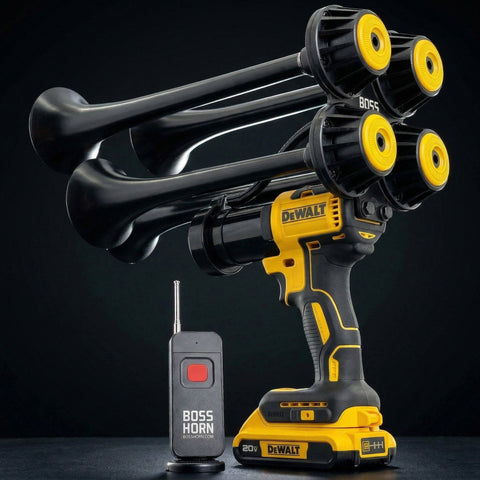
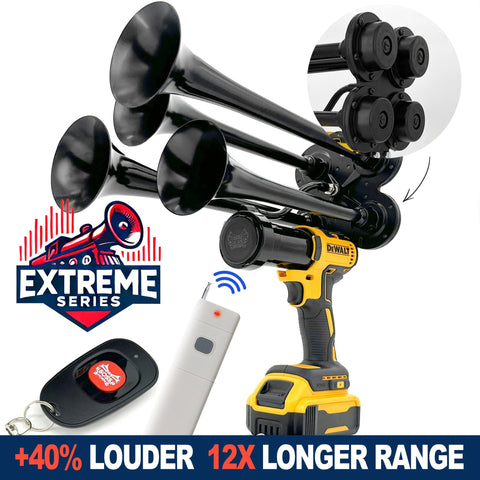
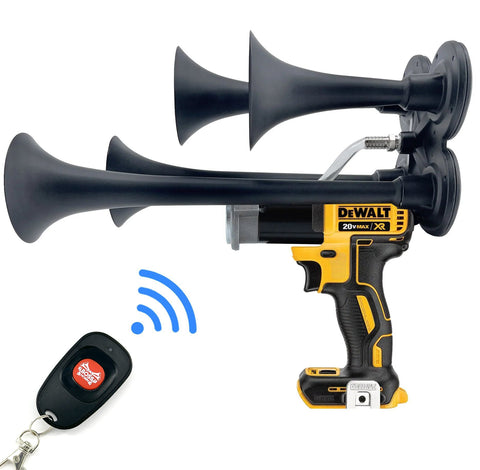
DeWalt Train Horn - Boss Series (New 2026 Model) - BossHorn - dark-14%
Loudness150 dB
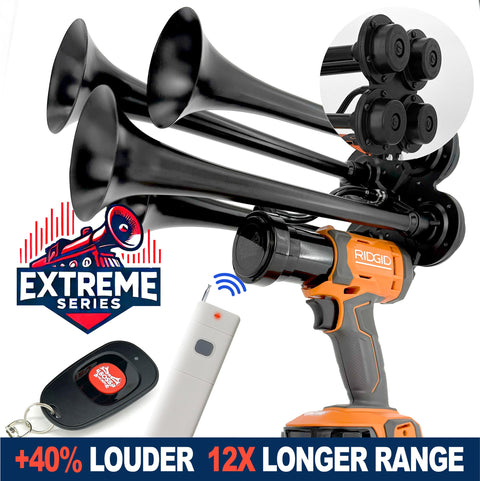
Horn4 XL Trumpets
Heard up to1.5 miles
ToneDeep Low Pitch

Boss Series Train Horn for DeWalt® 20v Battery

$450.00 $385.00
5.0 (5)
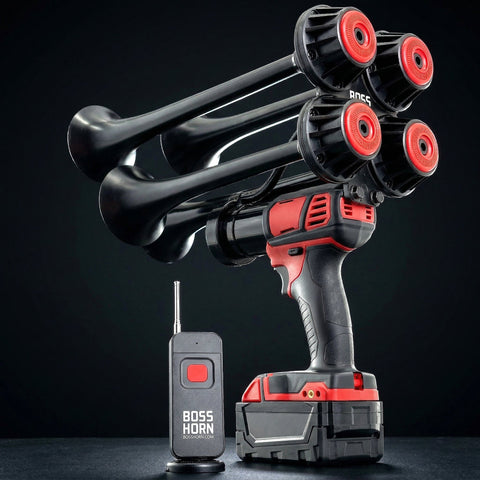
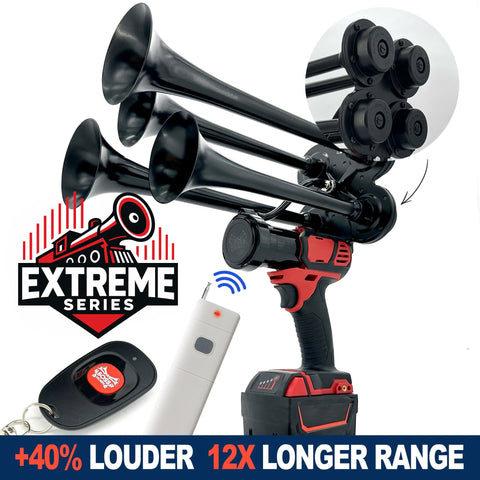
Boss Series Train Horn for Milwaukee® 18v Battery - BossHorn black-15%
Loudness150 dB
Horn4 XL Trumpets
Heard up to1.5 miles
ToneDeep Low Pitch

Boss Series Train Horn for Milwaukee® 18v Battery

$430.00 $365.00
4.7 (7)
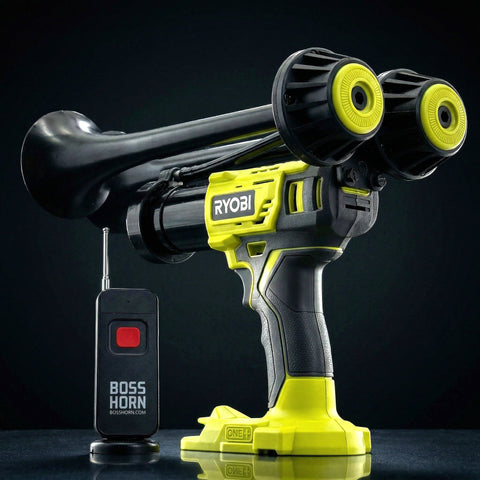
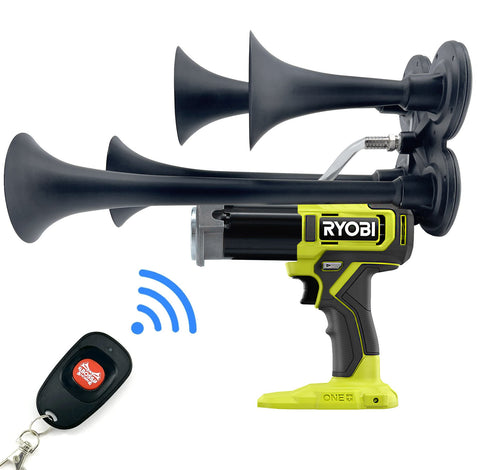
Ryobi Train Horn - Boss Series (New 2026 Model) - BossHorn dark
Loudness150 dB
Horn4 XL Trumpets
Heard up to1.5 miles
ToneDeep Low Pitch

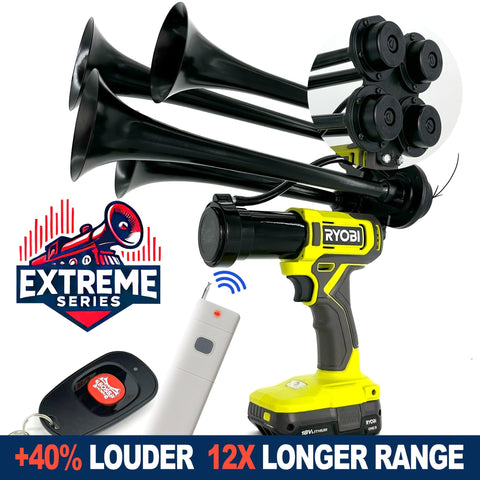
Boss Series Train Horn for Ryobi® 18v Battery

$385.00
5.0 (3)
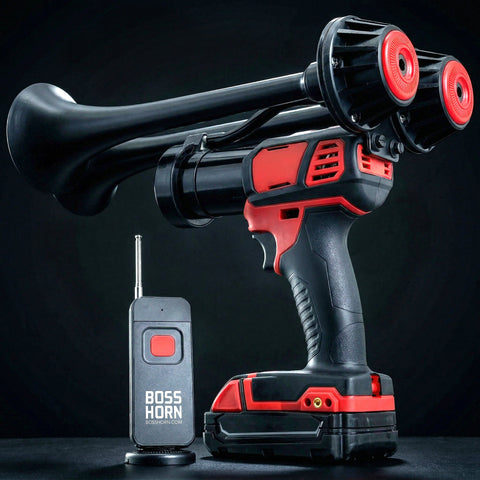
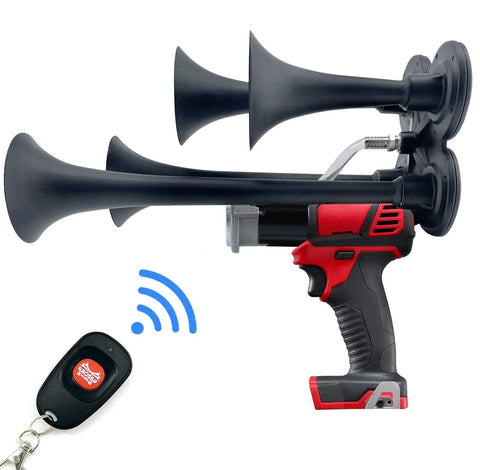
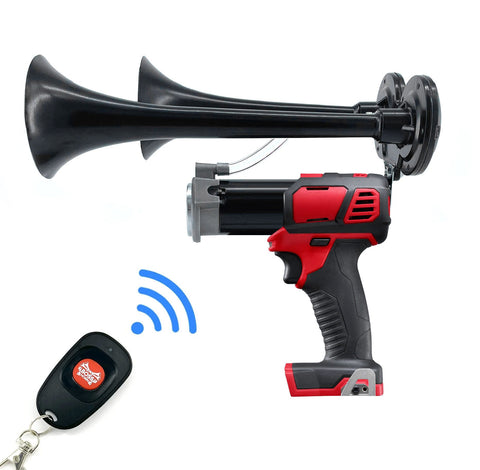
Dual Train Horn for Milwaukee® 18v Battery (New 2026 Model) - BossHorn black-27%
Loudness130 dB
Horn2 trumpets
Heard up to< 1 mile
ToneHigh pitch

Dual Train Horn for Milwaukee® 18v Battery (New 2026 Model)

$255.00 $185.00
5.0 (8)
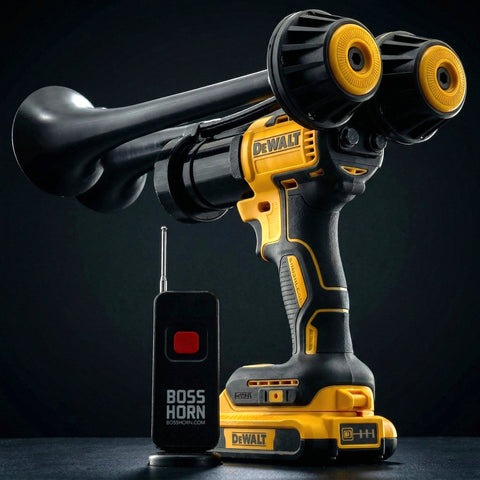
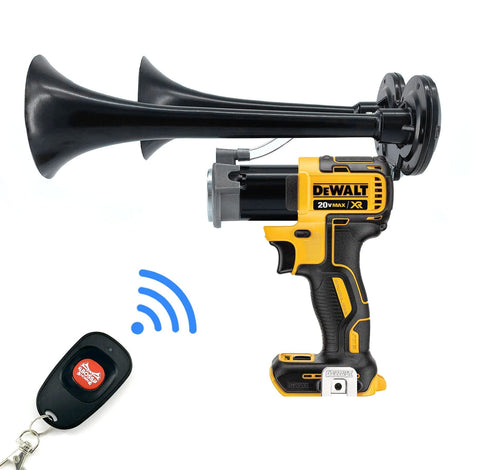
Dual Train Horn for DeWalt® 20v Battery (New 2026 Model) - BossHorn-25%
Loudness130 dB
Horn2 trumpets
Heard up to< 1 mile
ToneHigh pitch

Dual Train Horn for DeWalt® 20v Battery (New 2026 Model)

$280.00 $210.00
5.0 (6)
Dual Train Horn for Ryobi® 18v Battery (New 2026 Model) - BossHorn  dark-26%
Loudness130 dB
Horn2 trumpets
Heard up to< 1 mile
ToneHigh pitch

Dual Train Horn for Ryobi® 18v Battery (New 2026 Model)

$245.00 $180.00
4.8 (4)

See and hear every warehouse horn

Quick product demos of every horn — how it sounds, how it mounts on your drill battery, and how to use it as a clear signal across the floor.

Signaling that gets through

One blast the whole floor actually hears

A working warehouse is loud by default — forklift engines, conveyor lines, balers, box machines and HVAC all running at once. A raised voice, a whistle or a phone call won't reach the picker three aisles over or the team out on the dock.

A real train-horn-style air horn gives you a single, carrying signal that rises above all of it. Use it to call a shift change, signal a dock move, pause the line, kick off a count, or start an evacuation drill — one pull and everyone in the building knows it's time to react.


Are air horns allowed for warehouse signaling?

Yes — a loud audible signal is a legitimate, expected part of an industrial site, which is the opposite of a packed stadium where horns get confiscated at the gate. Plants use audible call-outs for shift starts, breaks, line stops, dock and crane moves and emergency drills every day.

One honest caveat: a portable horn is a supplement, not a replacement for any code-required fixed fire-alarm or evacuation system. Treat it as a manual signaling and backup tool — for drills, temporary or remote work areas with no fixed wiring, power-outage backup, or any spot you want a clear human-triggered call-out. Brief your crew on exactly what each signal means, and follow your site's OSHA and safety policy so the horn helps rather than confuses.

How loud does a floor signal need to be?

To beat ambient warehouse noise a signal needs real output. Handheld air horns generally run 110 to 150 decibels, and the train-horn-style kits in this collection reach up to 150 dB — a deep, locomotive-grade blast built to carry the length of a high-bay building.

Use it responsibly. 150 dB is genuinely loud, so aim the trumpets down an open aisle or open space, never fire it near anyone's ears, and keep to short bursts. In a workplace that already runs near OSHA noise limits, make sure anyone close by has hearing protection, and brief the team so the blast is a recognized signal — not a startle around moving equipment.

How a drill-battery signal horn works

There's no compressor to wheel out, no air tank to fill, and no wiring to run through the rack structure. Each horn pairs an on-board air pump with real metal trumpets, so the whole unit is self-contained and ready to grab off the safety shelf.

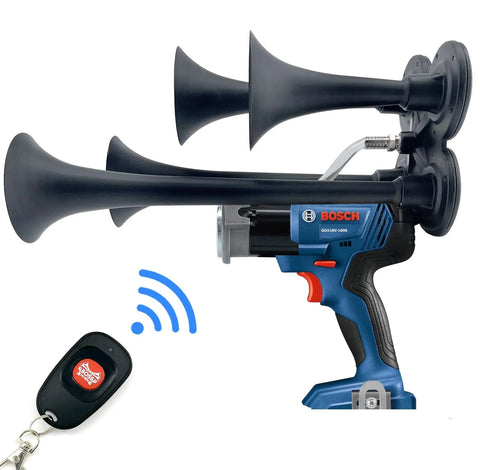
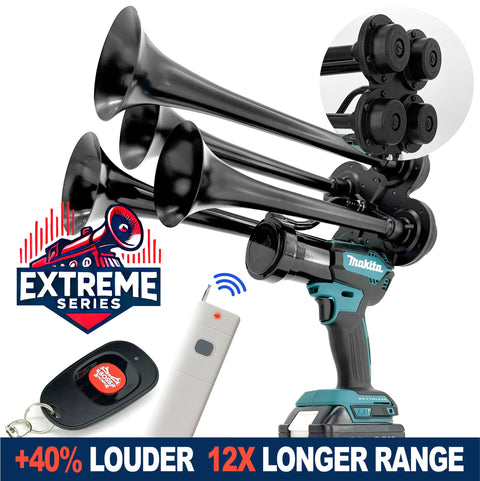
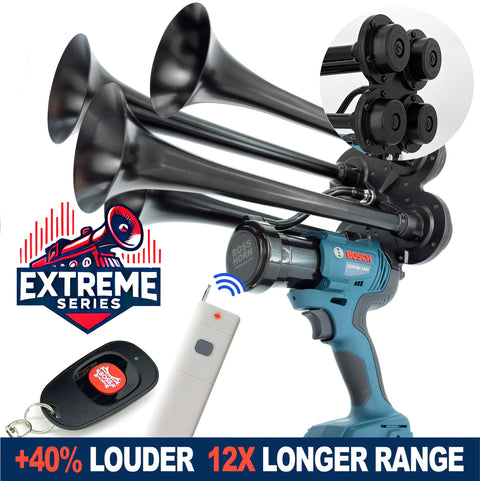
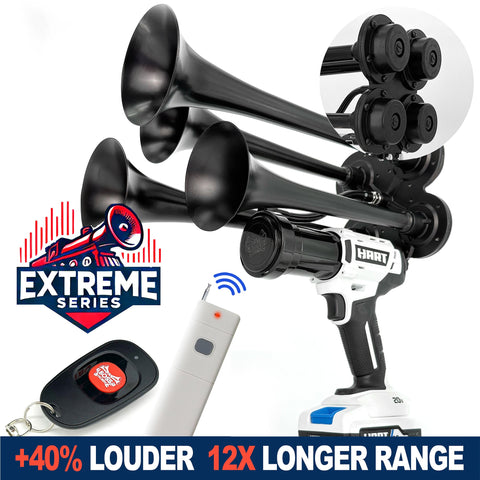
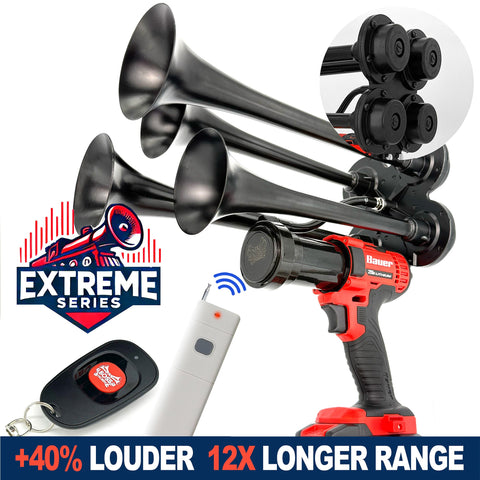
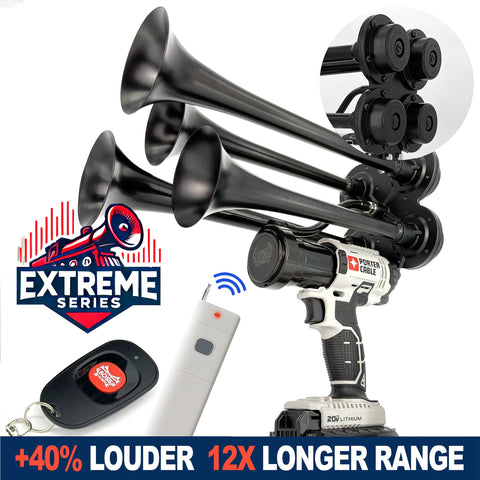
Power comes from a cordless-drill battery your maintenance crew almost certainly already stocks. Slide a Milwaukee® M18™, DeWalt® 20V MAX, Makita® 18V LXT® or Ryobi® ONE+® pack (and more) into the base, pull the trigger, and it sounds off. Select models add a wireless remote that works from up to 2,000 ft, so a supervisor can trigger the signal from the office, the mezzanine or across the dock. When a pack runs low, recharge it on your normal drill charger and swap it back in.

Choosing the right horn for your site

Match the horn to how your floor runs:

  • Trumpet count. Single, dual and quad-trumpet setups layer the tone — more trumpets give a fuller blast that carries farther across a big building.
  • Tone style. Pick a LOUDEST trumpet style for maximum cut-through, or LOW TONE for a deep note that travels through racking and walls.
  • Remote range. Remote-equipped models trigger from up to 2,000 ft — ideal for signaling between the dock, the office and the far end of the floor.
  • Battery brand. Choose the model that runs on the drill packs already in your tool crib, so a charged battery is always on hand.
  • Grab-and-go. With no tank or compressor, it stores in the safety cabinet and is ready for the next drill or temporary zone.

Your warehouse signal-horn checklist

  • Keep a charged pack staged in the base, with a spare drill battery in the safety cabinet.
  • Define your signals — write down what one blast, two blasts and a long blast each mean, and post it where the crew can see it.
  • Brief and drill the team so the tone is a recognized cue, not a surprise around moving forklifts.
  • Pick a blast direction — point the trumpets down an open aisle, away from anyone standing close, and have hearing protection nearby.
  • Confirm it's a supplement — keep your code-required fixed alarm system in service and use the horn for manual call-outs, drills and backup.

Warehouse signaling air horns — FAQ

Can I use an air horn for signaling in a warehouse?
Yes. A loud audible signal is a normal part of an industrial site — plants use them for shift changes, line stops, dock and crane moves and drills. Just treat a portable horn as a manual signaling and backup tool, not a replacement for any code-required fixed fire-alarm or evacuation system, and follow your site's OSHA and safety policy.
How loud is the horn?
Up to 150 dB — a deep, train-horn-style blast built to carry the length of a high-bay building over forklifts, conveyors and HVAC. Handheld air horns typically run 110 to 150 dB, and ours sit at the top of that range. Aim the trumpets down an open aisle and use short bursts.
Does it need an air compressor or a tank?
No. There's no compressor, no air tank and no wiring to install through your racking. An on-board air pump drives real metal trumpets, so the whole unit is self-contained and runs entirely off a cordless-drill battery.
Which drill batteries does it work with?
It runs on common cordless-drill packs, including Milwaukee® M18™, DeWalt® 20V MAX, Makita® 18V LXT® and Ryobi® ONE+® — and more. Pick the model that matches the batteries already in your tool crib so a charged pack is always on hand.
How far does the remote reach?
Select models include a wireless remote that triggers the horn from up to 2,000 ft, so a supervisor can sound a signal from the office, the mezzanine or across the dock without walking the floor. Range varies by model — check the product page for the exact horn.
What can I use it to signal?
Common uses are shift starts and breaks, pausing or restarting a line, dock and yard moves, head-count musters and evacuation drills. Define exactly what each blast pattern means, post it, and brief the crew so the tone is a recognized cue rather than a surprise.
Is 150 dB safe to use on the floor?
It's safe when handled responsibly. 150 dB is very loud, so always point the trumpets down an open aisle and away from people, never fire it near anyone's ears, and keep to short bursts. Make sure anyone close by has hearing protection, especially in a space already near OSHA noise limits.
How do I recharge it?
Just like your drill. When the battery runs low, set it on your cordless-drill charger, top it off and slide it back into the base. There are no air canisters to buy or refill — ever.
How fast does it ship?
Orders placed before 2 PM PT ship the same business day, so you can have a signal horn staged on the floor without a long wait.

About Air Horns for Warehouse Signaling

A portable train-horn-style air horn gives your floor a clear, carrying audible signal for shift changes, dock moves, drills and other manual call-outs — up to 150 dB, no compressor or wiring, powered by the same cordless-drill battery your crew already carries.