A fleet of sailboats racing across open blue water on a bright, breezy day, sails full as they head upwind

Air Horns for Sailing & Regattas

A 150 dB air horn that fires off your cordless-drill battery — built to time a clean warning-prep-start sequence from the committee boat or the club line.

49 products
150 dB output
2,000 ft remote
Pre-Built
Ships same day
90-day money-back
1-Year Warranty
How do I choose the right horn for me?

Pick the horn that runs on a battery you already own.

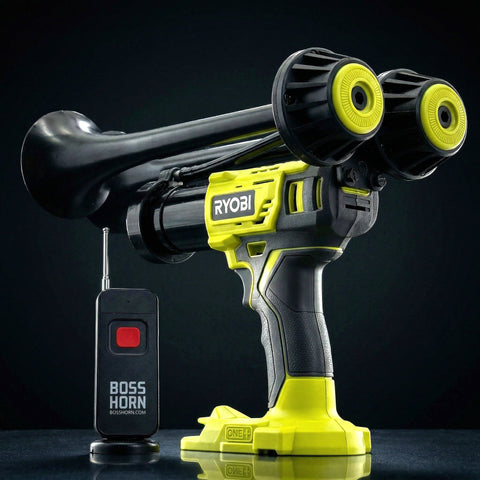
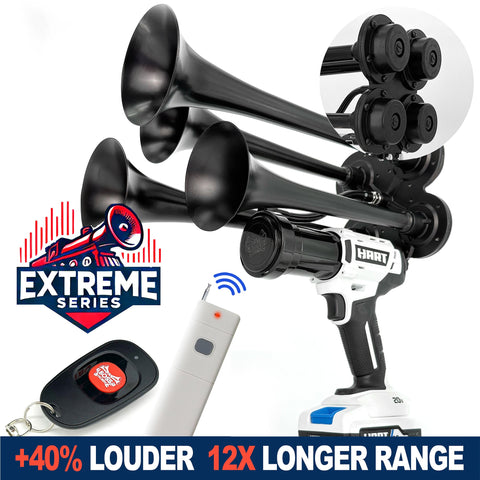
Runs on your existing tool batteries — the same packs as your drill or impact driver. No new batteries to buy or throw away: cheaper for you, easier on the planet.

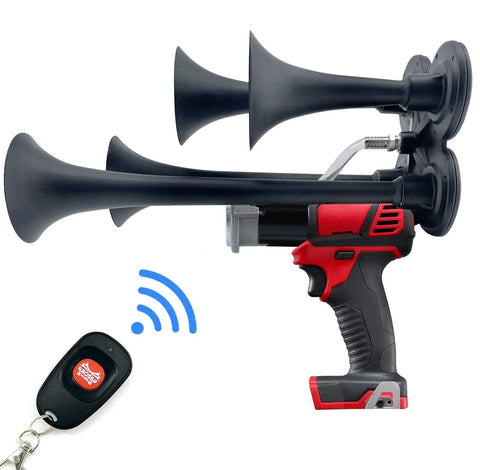
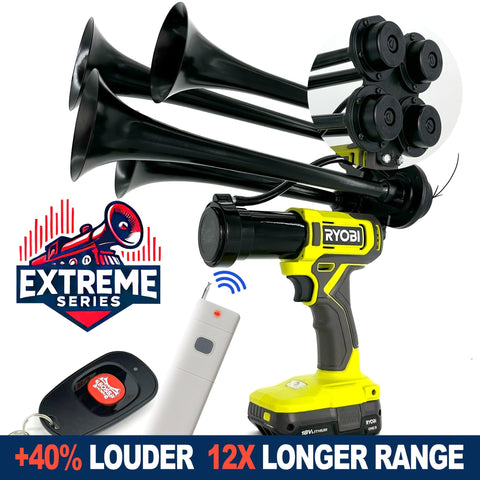
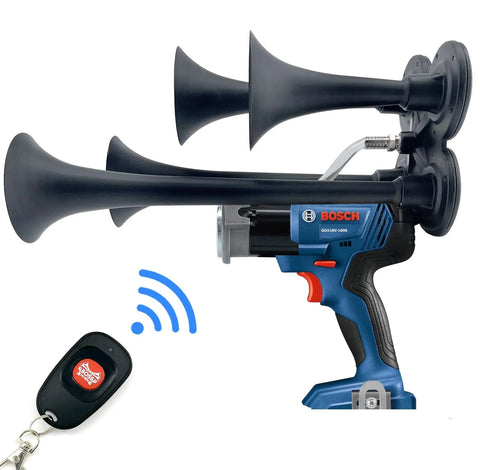
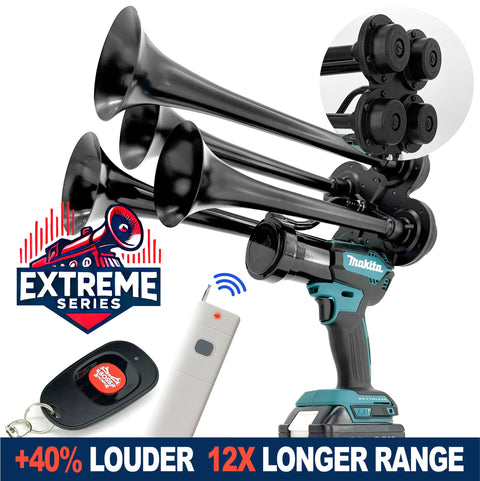
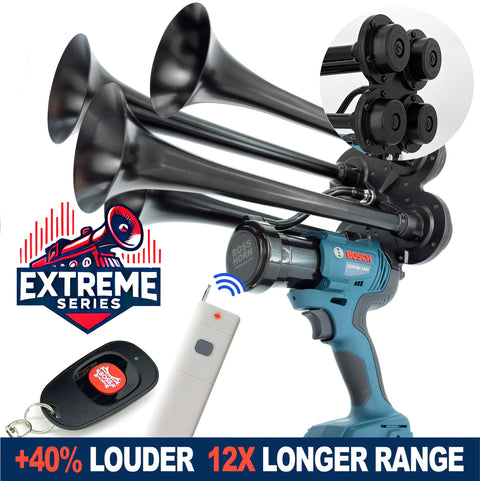
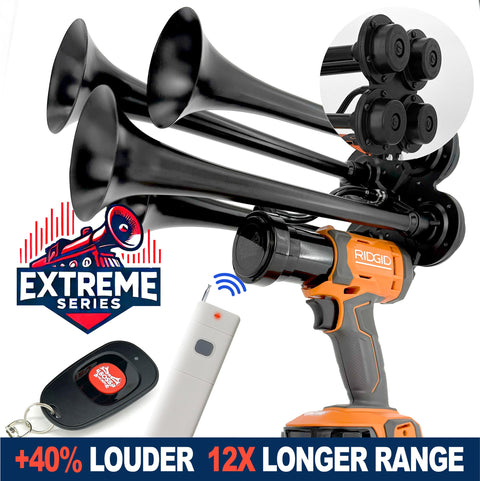
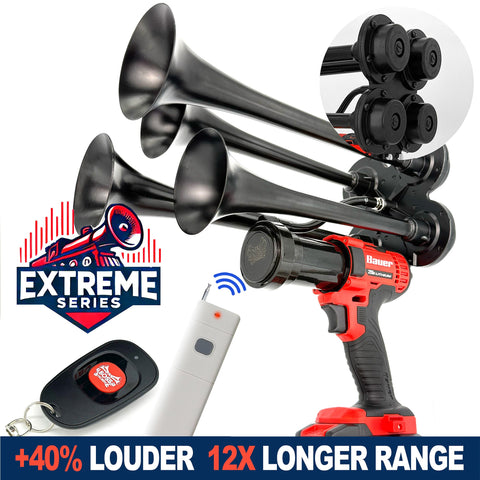
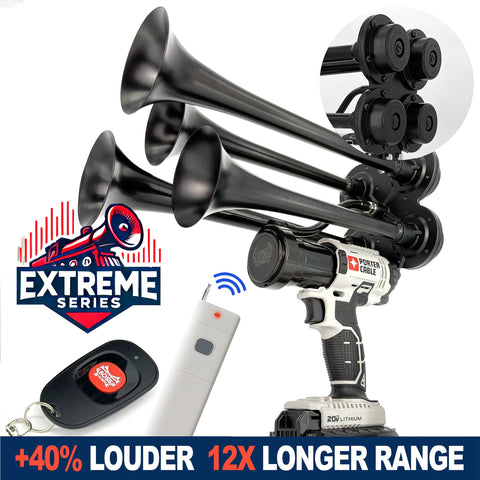
The brand changes nothing about the horn. Every horn uses the exact same internal and external parts — so a Quad is a Quad and a Dual is a Dual. They sound and perform identically across every battery brand; you give up zero sound or power.

No cordless tools yet? Go with DeWalt®, Milwaukee® or Ryobi® — they give you the widest range of tools to buy later on the very same batteries.

Which horn is the loudest?

Our loudest sit at the top — here's how the lineup ranks:

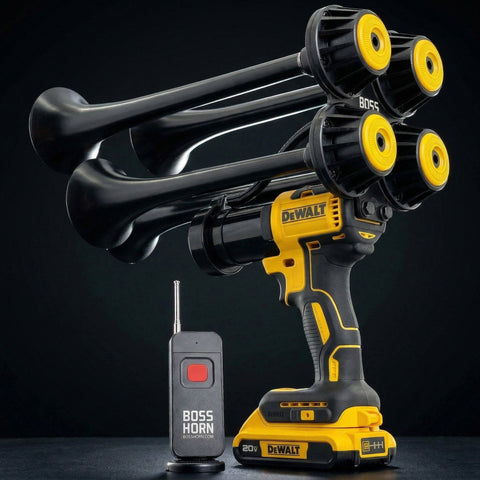
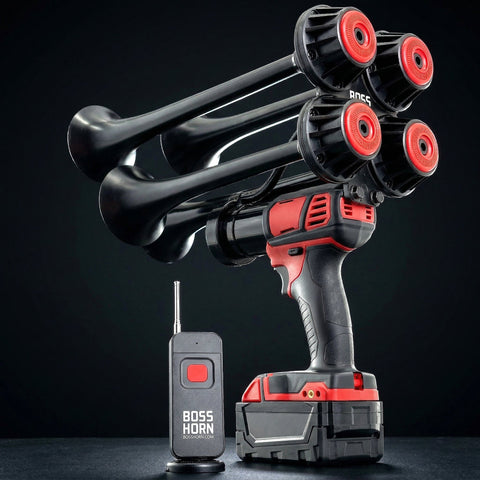
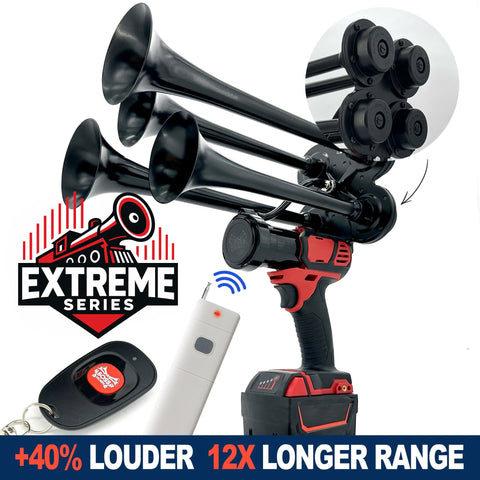
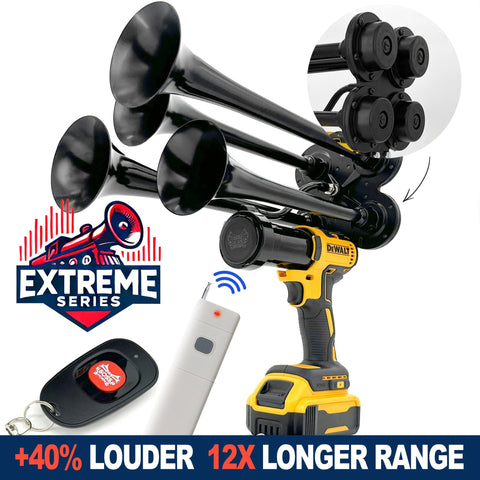
1. Boss Series — our newest (2026) and most refined; it reworks the older Extreme design and fixes its weak spots. Its older sibling, the Extreme Series, sits right alongside it.

2. Quad — four trumpets, big full sound.

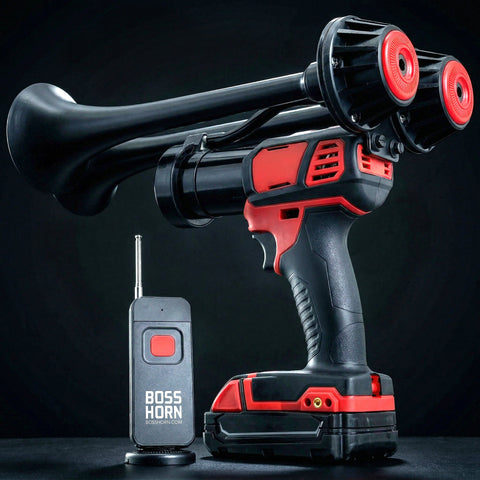
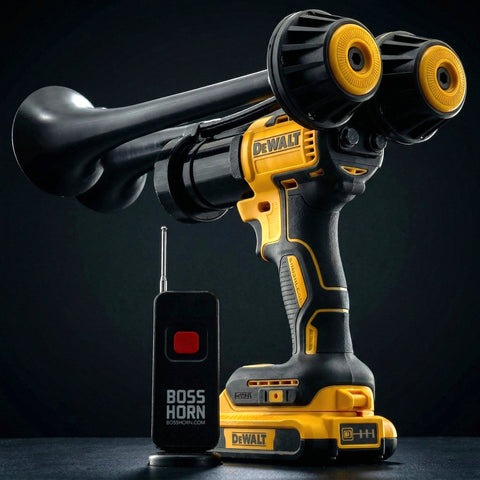
3. Dual — the 2026 Dual shares the Boss design, and it's the one to pick if your battery brand isn't covered by the Boss Series yet.

Skip the 5-trumpet. The on-board compressor can't push enough air for all five trumpets, so it ends up thinner and higher-pitched than it should.

Do I need a drill — or does it come with one?

No drill needed — and none included.

Ships fully built and ready to use — nothing to assemble, no tools required.

The only thing you add is a battery — the same cordless-tool pack your drill already uses.

Snap it in, pull the trigger — and it roars in seconds.

Boss Horn colour caps
Air Horns for Sailing & Regattas
Boss Horn
Boss Horn 1.51M subscribers
Subscribe

Why these horns own the starting line

  • 150 dB that carries down the line — a deep, locomotive-grade blast the back of the fleet hears over wind, chop and flapping sails, so every boat reacts to the same signal.
  • Wireless remote up to 2,000 ft — sound the warning, prep and start from the rail, the bow or a separate pin-end boat without leaning over a fixed button.
  • Recharges off your drill battery — no disposable canisters to fizzle out three races into the day and no cans to restock; top it up like any cordless tool between regattas.
  • Assembled and ready to lift out of the bag — nothing to plumb, no tank, no wiring on the committee boat; it's set to fire before the first warning of the sequence.
  • A low freight-train growl — genuine metal trumpets put out a serious, unmistakable note that registers as a race signal, never a plastic squeak swallowed by the wind.

Train Horns Built for Sailing & Regattas

Battery compatibility:
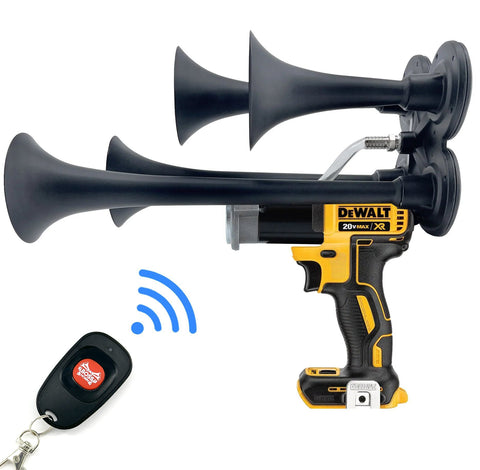
DeWalt Train Horn - Boss Series (New 2026 Model) - BossHorn - dark-14%
Loudness150 dB
Horn4 XL Trumpets
Heard up to1.5 miles
ToneDeep Low Pitch

Boss Series Train Horn for DeWalt® 20v Battery

$450.00 $385.00
5.0 (5)
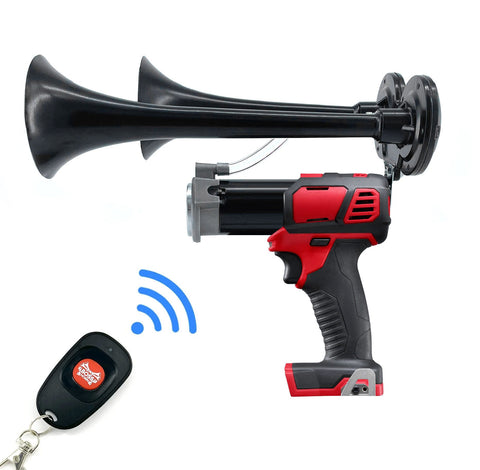
Boss Series Train Horn for Milwaukee® 18v Battery - BossHorn black-15%
Loudness150 dB
Horn4 XL Trumpets
Heard up to1.5 miles
ToneDeep Low Pitch

Boss Series Train Horn for Milwaukee® 18v Battery

$430.00 $365.00
4.7 (7)
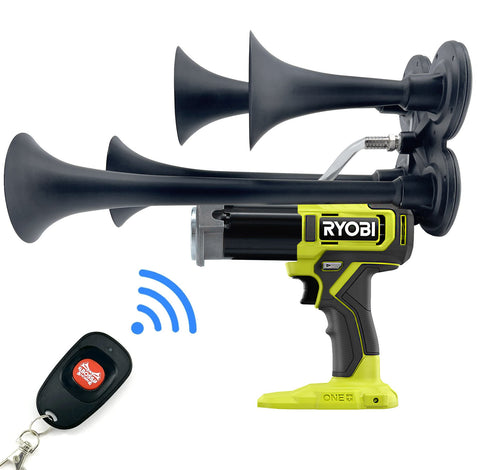
Ryobi Train Horn - Boss Series (New 2026 Model) - BossHorn dark
Loudness150 dB
Horn4 XL Trumpets
Heard up to1.5 miles
ToneDeep Low Pitch

Boss Series Train Horn for Ryobi® 18v Battery

$385.00
5.0 (3)
Dual Train Horn for Milwaukee® 18v Battery (New 2026 Model) - BossHorn black-27%
Loudness130 dB
Horn2 trumpets
Heard up to< 1 mile
ToneHigh pitch

Dual Train Horn for Milwaukee® 18v Battery (New 2026 Model)

$255.00 $185.00
5.0 (8)
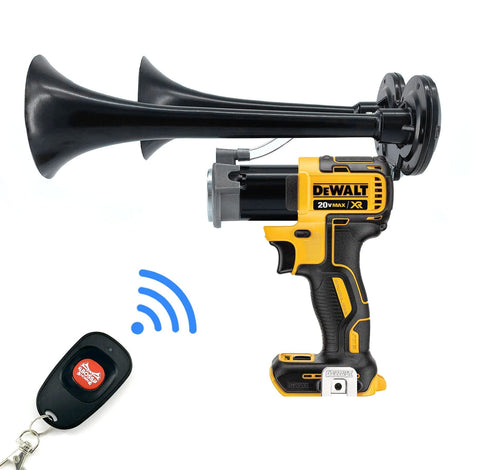
Dual Train Horn for DeWalt® 20v Battery (New 2026 Model) - BossHorn-25%
Loudness130 dB
Horn2 trumpets
Heard up to< 1 mile
ToneHigh pitch

Dual Train Horn for DeWalt® 20v Battery (New 2026 Model)

$280.00 $210.00
5.0 (6)
Dual Train Horn for Ryobi® 18v Battery (New 2026 Model) - BossHorn  dark-26%
Loudness130 dB
Horn2 trumpets
Heard up to< 1 mile
ToneHigh pitch

Dual Train Horn for Ryobi® 18v Battery (New 2026 Model)

$245.00 $180.00
4.8 (4)

Regatta horns on the line

Quick product demos of every horn — how it sounds, how it mounts on your drill battery, and how to use it to call a clean start sequence on the committee boat.

// Real owners

Straight from our customers

Real photos from real Boss Horn owners — tap any shot to zoom in.

The sound that times the fleet

Why an air horn belongs on the committee boat

A regatta lives and dies on the start. The race committee runs a timed sequence — flags go up and down while a horn marks each step — and the fleet sets its watches by that sound. If the signal is thin or dies halfway through the day, sailors miss the count, protests pile up and the line falls apart.

This kind of horn delivers a confident 150 dB note that punches through breeze and luffing sails, so the boat at the far end of the line hears the very same warning the boat on the pin does. Running on a cordless-drill battery means the signal holds up from race one through race seven, with no canister to swap when the wind finally fills in.


Are air horns allowed for sailing and regattas?

Yes — and open water during a regatta is one of the few places a 150 dB horn genuinely earns its keep. The Racing Rules of Sailing build sound signals right into the start: the warning and preparatory signals, the one-minute and the start are each marked by a horn or gun, with the flag — not the sound — being the official signal. A race-committee horn is doing exactly the job it was made for.

The honest caveats are about context. Keep the blasting out on the course and off the dock — a 150 dB horn has no business inside a packed clubhouse, a crowded marina or a quiet mooring field at dawn. Use it for the sequence, for recalls and for genuine on-water signaling, point it away from nearby crews, and follow your club's sailing instructions and any local noise rules.

How loud does a start signal need to be?

Portable air horns typically land somewhere from 110 dB to 150 dB, and the kits here top out at 150 dB. On a start line that matters: in a building breeze with sails snapping, you want a note that reaches the boat sitting on the far layline, not one that fades two hull-lengths from the committee boat.

Treat that power with respect. 150 dB is no joke — angle the trumpets outward over the water toward the fleet, keep them clear of ears, children, crew and anyone on the dock, and fire short, intentional bursts that land exactly on the count. The volume is there for reach, so send it at the line and never toward the people beside you.

How a drill-battery race horn works

Forget the compressor, the pressurized tank and any console wiring — none of that comes near the committee boat. Inside each unit, a built-in pump feeds a set of genuine metal trumpets, so the entire signal rig is one self-contained piece you lift out of a bag and set down ready to go.

What drives it is a cordless-drill battery — the kind most people already have on a shelf at home. Clip the pack onto the base (it fits Milwaukee® M18™, DeWalt® 20V MAX, Makita® 18V LXT®, Ryobi® ONE+® and more) and pull the trigger when the clock hits the mark. On models that include one, a remote good for up to 2,000 ft lets a timekeeper sound each step from the rail or a separate pin boat. Drained the pack across a long day? Charge it the same way you charge that drill.

Choosing the right horn for race day

Match the horn to how your club runs starts:

  • How many trumpets. Configurations span single, dual and quad trumpets; each one you add thickens the tone into a broader blast that travels the full length of a long line.
  • Which tone. The LOUDEST voicing is tuned to carry farthest across the course, while LOW TONE trades a little reach for a deep growl no sailor mistakes for anything but a signal.
  • Remote or not. A remote-equipped model triggers from as far as 2,000 ft away — worth it when your timekeeper sits forward or runs the pin from a second boat.
  • Matching the battery. Go with the version built around the drill packs already in your bag, and you'll never be scrambling for a charged battery as the warning approaches.
  • Ready out of the box. Each one arrives fully assembled and tucks into a committee-boat kit with nothing to install.

Your race-committee start checklist

Run through this before the first warning signal:

  • Battery topped off and seated — with a backup drill pack tucked in the bag for a full card of back-to-back races.
  • Horn kept dry and within arm's reach — a console cubby or open bag beats burying it under the flag box.
  • Remote linked and test-fired on models that carry one, so each signal goes off hands-free.
  • Trumpets pointed at the fleet — out across the line and away from your own crew and any boat sitting close.
  • Flags and timing rehearsed — hit the count, keep in mind the flag is the official signal, and read your sailing instructions for the exact procedure.

Sailing & regatta air horns — FAQ

Are air horns allowed for sailing and regattas?
Yes. Sound signals are built into the Racing Rules of Sailing — the warning, preparatory, one-minute and start are each marked by a horn or gun, with the flag as the official signal. Out on the course is exactly where a loud horn belongs. Just keep the blasting off the dock and out of crowded marinas and clubhouses, use it for the sequence and genuine on-water signaling, and follow your club's sailing instructions and local noise rules.
How loud is it?
Up to 150 dB. That's a deep, far-traveling note meant to cover an entire starting line even in wind and snapping sails — not just the boats sitting beside the committee boat. With that much volume, angle the trumpets toward the fleet, keep them clear of ears, kids and crew, and fire short bursts right on the count.
Does it need a compressor or an air tank?
No — none of that. There's no compressor to lug, no pressurized tank and no canisters to top up. A built-in pump and real metal trumpets do the work, all fed by a cordless-drill battery, so there's nothing to plumb aboard and nothing that quietly empties out between races.
Which drill batteries does it work with?
Everyday cordless-drill packs power it, with versions for Milwaukee® M18™, DeWalt® 20V MAX, Makita® 18V LXT®, Ryobi® ONE+® and more. Choose the one that lines up with batteries already in your kit, then clip the pack onto the base.
How far does the remote reach?
Certain models ship with a wireless remote rated to 2,000 ft, letting a timekeeper trigger the warning, prep and start from the rail, the bow or a separate pin-end boat — no leaning over a fixed button required.
Can I use it to run a full start sequence?
Absolutely — running the sequence is precisely what it's made for. Fire it on each step (warning, preparatory, one-minute and start) the same way you would a traditional race horn, while you work the flags. Bear in mind that under the rules the flag is the official signal and the sound is the backup, so concentrate on clean flag timing and let the horn carry the count out to the fleet.
Is 150 dB safe to use?
Respect it like the signal device it is. At 150 dB, you keep the trumpets facing out toward the line, never set it off close to anyone's ears, kids or crew, and limit yourself to short, deliberate bursts. The reach is the whole point — send it at the fleet, not into the cockpit.
How do I recharge it?
Same routine as your drill. Once the cordless-drill battery in the base drops, lift it out and set it on your usual charger — there's never a canister to buy or refill, so one charged pack is all that stands between you and the next regatta.
How fast does it ship?
Orders placed before 2 PM PT ship the same business day, putting a horn in your hands well ahead of the next time you run starts.

About Air Horns for Sailing & Regattas

Run a clean start and the whole fleet trusts the line. These train-horn-style air horns give a race committee a deep 150 dB signal for the warning, prep and start, and they run on the cordless-drill battery you already own — so there are no canisters to run dry mid-sequence and nothing to buy at the next regatta. Pre-built, grab-and-go power for the committee boat, the club deck and the starting line.