Illuminated green emergency exit sign with a directional arrow glowing above a doorway, marking the evacuation route out of a building

Air Horns for Fire Drills & Building Evacuation

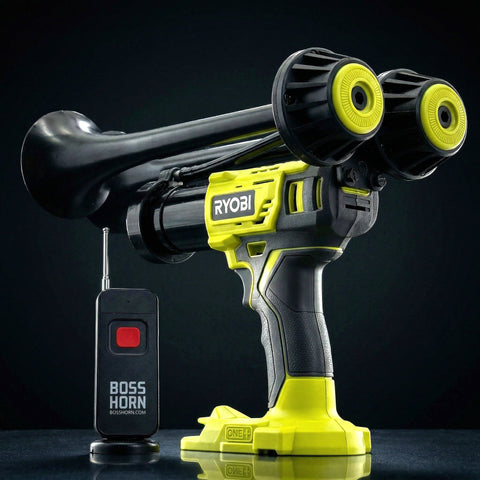
Up to 150 dB, powered by your cordless-drill battery — a portable fire-drill and evacuation horn a warden can grab and sound the instant a building needs to clear.

49 products
150 dB output
2,000 ft remote
Pre-Built
Ships same day
90-day money-back
1-Year Warranty
How do I choose the right horn for me?

Pick the horn that runs on a battery you already own.

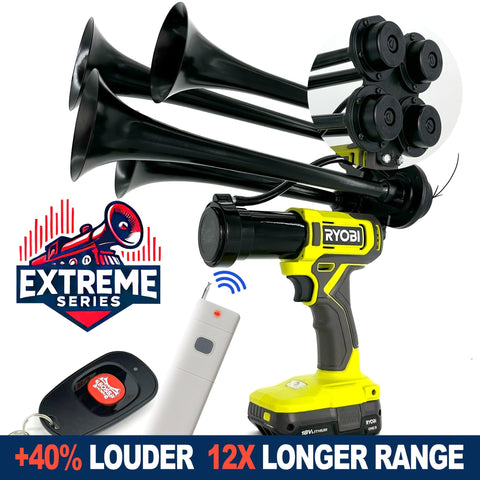
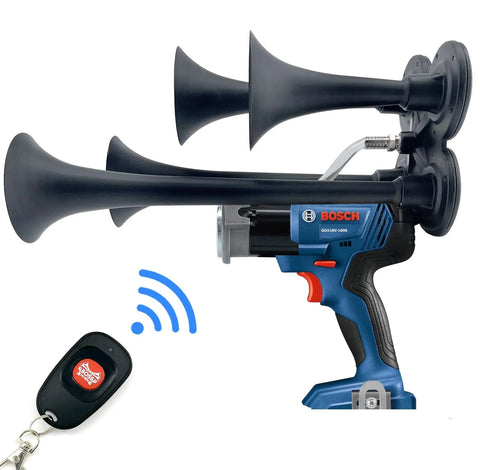
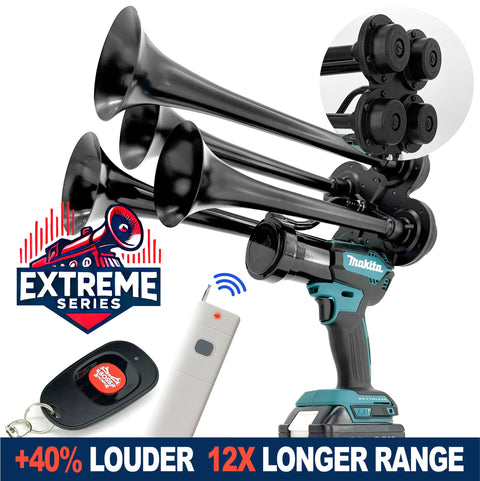
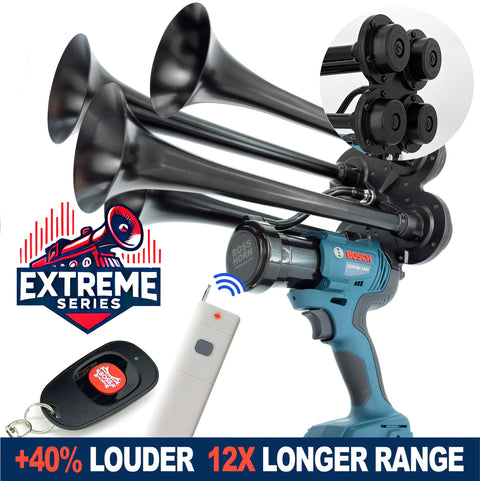
Runs on your existing tool batteries — the same packs as your drill or impact driver. No new batteries to buy or throw away: cheaper for you, easier on the planet.

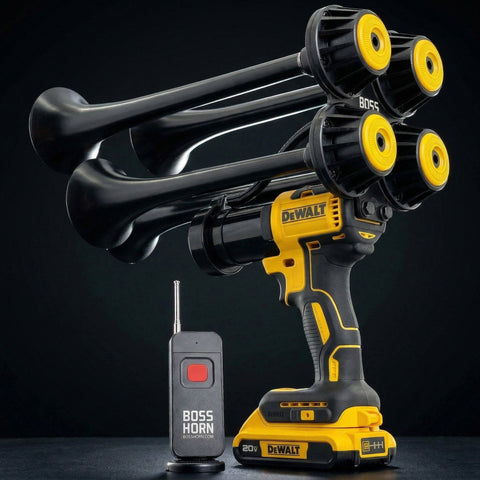
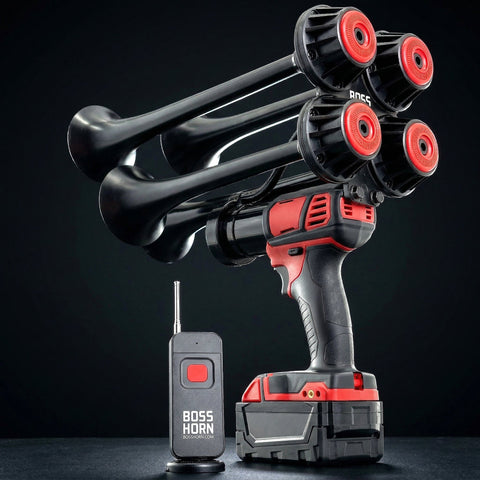
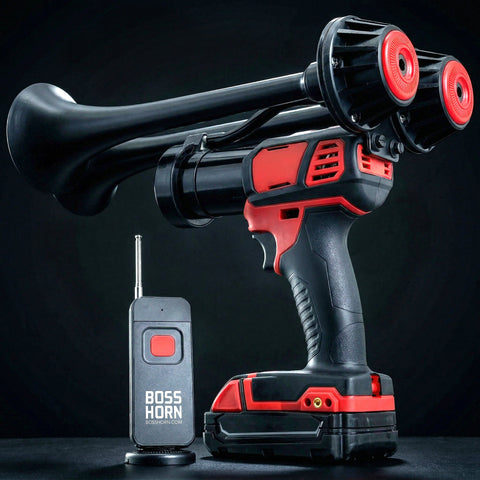
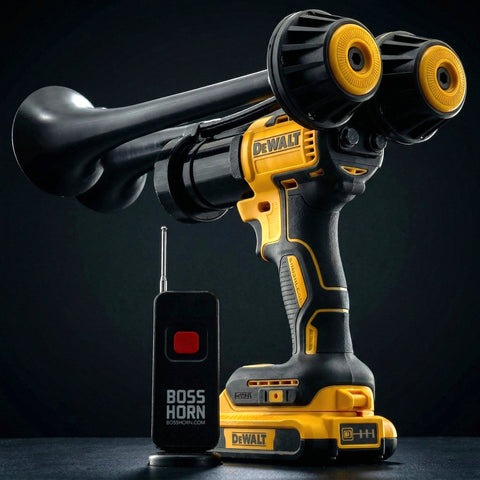
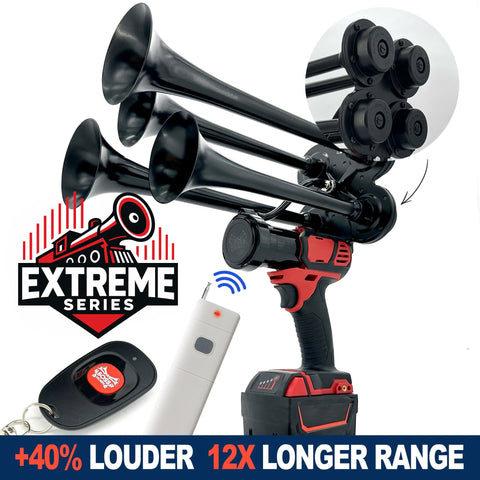
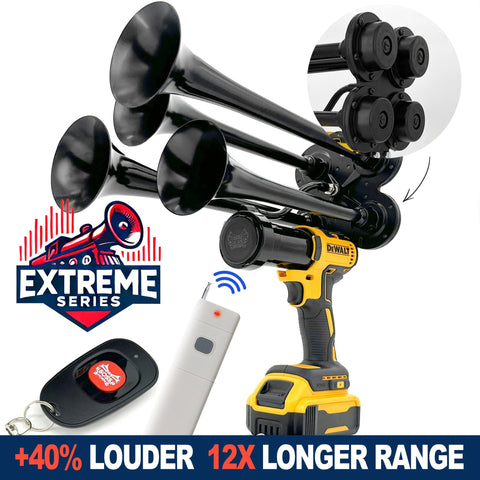
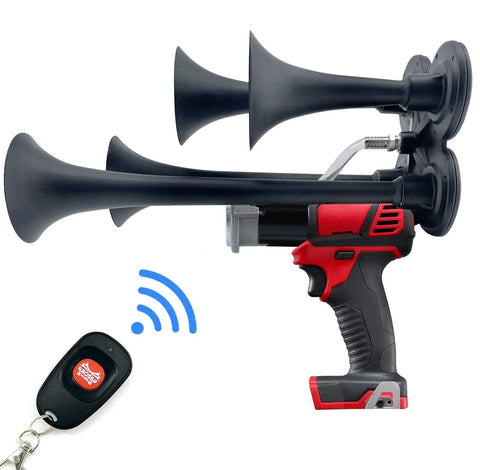
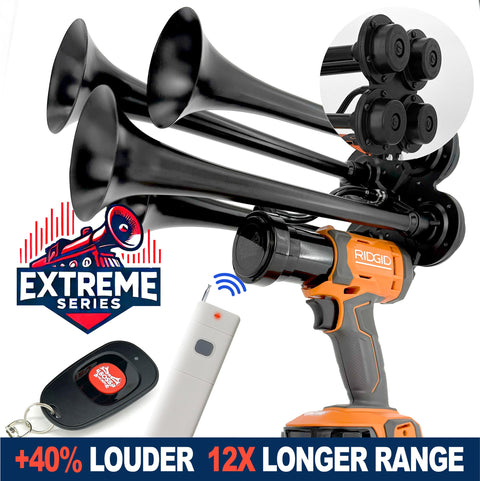
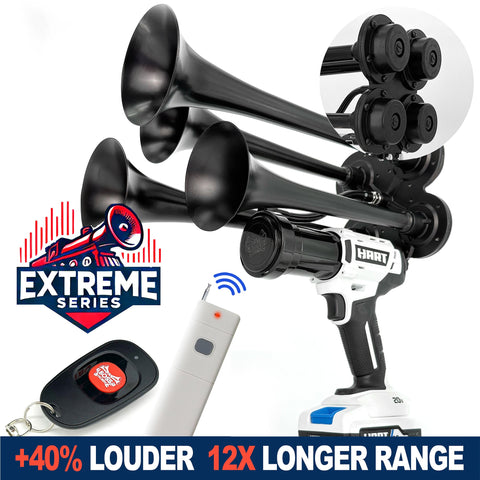
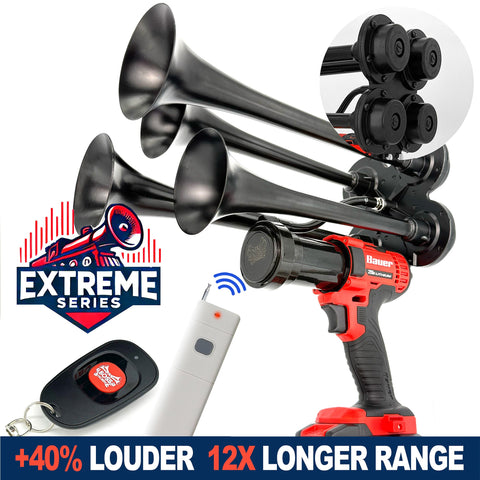
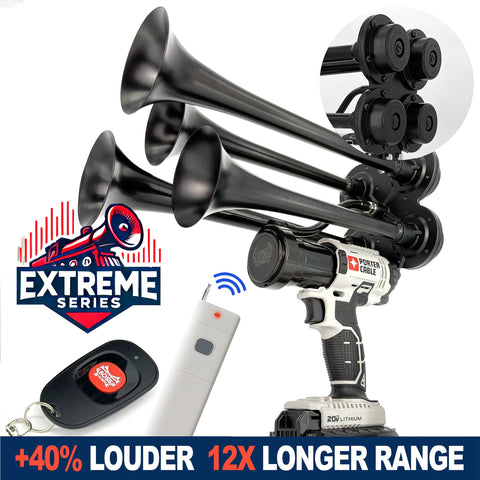
The brand changes nothing about the horn. Every horn uses the exact same internal and external parts — so a Quad is a Quad and a Dual is a Dual. They sound and perform identically across every battery brand; you give up zero sound or power.

No cordless tools yet? Go with DeWalt®, Milwaukee® or Ryobi® — they give you the widest range of tools to buy later on the very same batteries.

Which horn is the loudest?

Our loudest sit at the top — here's how the lineup ranks:

1. Boss Series — our newest (2026) and most refined; it reworks the older Extreme design and fixes its weak spots. Its older sibling, the Extreme Series, sits right alongside it.

2. Quad — four trumpets, big full sound.

3. Dual — the 2026 Dual shares the Boss design, and it's the one to pick if your battery brand isn't covered by the Boss Series yet.

Skip the 5-trumpet. The on-board compressor can't push enough air for all five trumpets, so it ends up thinner and higher-pitched than it should.

Do I need a drill — or does it come with one?

No drill needed — and none included.

Ships fully built and ready to use — nothing to assemble, no tools required.

The only thing you add is a battery — the same cordless-tool pack your drill already uses.

Snap it in, pull the trigger — and it roars in seconds.

Boss Horn colour caps
Air Horns for Fire Drills & Building Evacuation
Boss Horn
Boss Horn 1.51M subscribers
Subscribe

Why these horns own the evacuation signal

  • 150 dB of locomotive-grade sound that cuts through machinery, music and chatter, so every floor, bay and back room hears the order to get out.
  • Wireless remote up to 2,000 ft lets a warden start the evacuation from the muster point or the far side of the site without running back to the horn.
  • Recharges off your drill batteryno canned air to expire and no refills to restock — so the drill horn is ready every quarter when the next exercise comes around.
  • Pre-built and grab-and-gono compressor, no tank, no wiring — so it doubles as a temporary alarm the day the fixed system goes down for service.
  • Deep freight-train tone that reads as a real evacuation signal, not a toy, giving wardens one clear sound the whole building learns to act on.

Train Horns Built for Fire Drills & Building Evacuation

Battery compatibility:
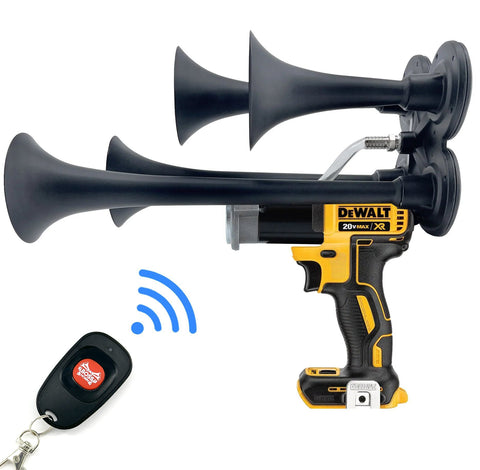
DeWalt Train Horn - Boss Series (New 2026 Model) - BossHorn - dark-14%
Loudness150 dB
Horn4 XL Trumpets
Heard up to1.5 miles
ToneDeep Low Pitch

Boss Series Train Horn for DeWalt® 20v Battery

$450.00 $385.00
5.0 (5)
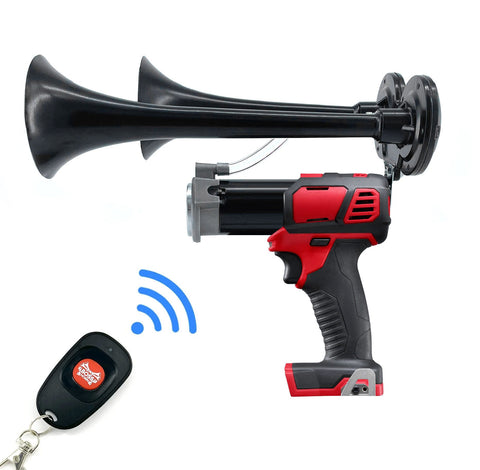
Boss Series Train Horn for Milwaukee® 18v Battery - BossHorn black-15%
Loudness150 dB
Horn4 XL Trumpets
Heard up to1.5 miles
ToneDeep Low Pitch

Boss Series Train Horn for Milwaukee® 18v Battery

$430.00 $365.00
4.7 (7)
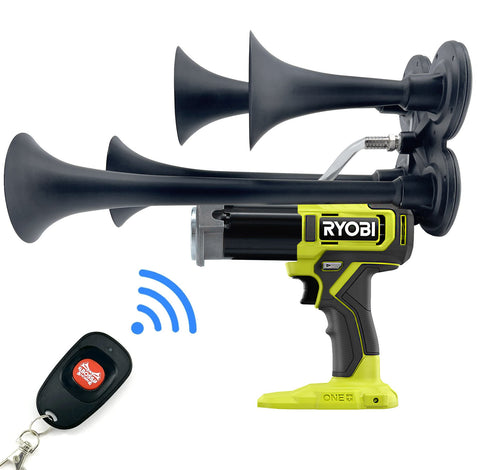
Ryobi Train Horn - Boss Series (New 2026 Model) - BossHorn dark
Loudness150 dB
Horn4 XL Trumpets
Heard up to1.5 miles
ToneDeep Low Pitch

Boss Series Train Horn for Ryobi® 18v Battery

$385.00
5.0 (3)
Dual Train Horn for Milwaukee® 18v Battery (New 2026 Model) - BossHorn black-27%
Loudness130 dB
Horn2 trumpets
Heard up to< 1 mile
ToneHigh pitch

Dual Train Horn for Milwaukee® 18v Battery (New 2026 Model)

$255.00 $185.00
5.0 (8)
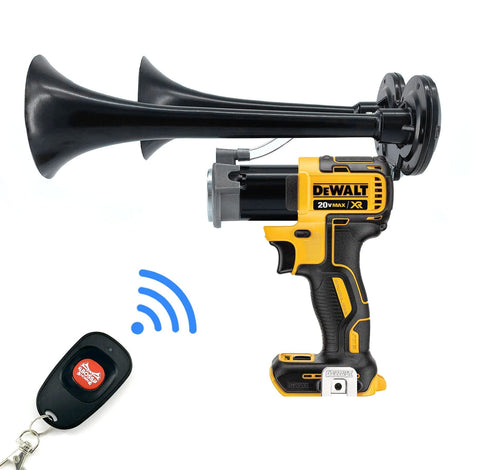
Dual Train Horn for DeWalt® 20v Battery (New 2026 Model) - BossHorn-25%
Loudness130 dB
Horn2 trumpets
Heard up to< 1 mile
ToneHigh pitch

Dual Train Horn for DeWalt® 20v Battery (New 2026 Model)

$280.00 $210.00
5.0 (6)
Dual Train Horn for Ryobi® 18v Battery (New 2026 Model) - BossHorn  dark-26%
Loudness130 dB
Horn2 trumpets
Heard up to< 1 mile
ToneHigh pitch

Dual Train Horn for Ryobi® 18v Battery (New 2026 Model)

$245.00 $180.00
4.8 (4)

Hear every evacuation horn before you trust it

Quick product demos of every horn — how it sounds, how it mounts on your drill battery, and how to use it, so you know exactly what a warden will be holding when the building has to clear.

// Real owners

Straight from our customers

Real photos from real Boss Horn owners — tap any shot to zoom in.

One sound the whole building knows

Why an air horn belongs in your evacuation plan

When a building has to empty — a planned fire drill or the real thing — hesitation costs time, and time is the whole game. A loud, instantly recognizable blast tells everyone, on every floor, that this is the moment to drop what they're doing and head for the exits.

That's the job a train-horn-style air horn does. A warden pulls the trigger and one deep note rolls down corridors, across the shop floor and out into the yard — no shouting over machinery, no waiting for word to spread desk to desk. Pair it with a set pattern your people already know and the evacuation starts the second the horn sounds.


Are air horns allowed for fire drills and evacuations?

Yes — used as a genuine signaling tool, a horn is a legitimate part of many evacuation plans. Fire wardens and safety officers commonly use one to start a drill, to sound a temporary fire alarm while a fixed system is offline for maintenance or not yet installed, and to call people in for a head count. The key is to treat it as a real signal, never a prank or a false alarm.

A couple of honest caveats: an air horn is not a substitute for a code-required fixed fire alarm where one is mandated, so check your local fire code and clear your plan with your fire authority or safety officer first. And because the sound carries so far, keep its everyday use to drills, exercises and real emergencies — agree on the signal pattern in advance so nobody mistakes it for the next-door site's horn.

How loud does an evacuation horn need to be?

Handheld air horns generally run between 110 and 150 decibels. The kits in this collection reach up to 150 dB — a deep, locomotive-grade blast built to override forklifts, compressors, HVAC roar and a crowded floor so the signal lands everywhere it needs to.

Use it responsibly. 150 dB is genuinely loud, so point the trumpets toward open space and down a corridor rather than at people, never sound it close to anyone's ears or near children, and keep to short, patterned bursts. The aim is to be heard building-wide, not to startle the person standing next to the warden.

How a drill-battery evacuation horn works

No compressor. No air tank. No wiring into the building. These horns use an on-board air pump and real metal trumpets, so the whole rig is grab-and-go — exactly what you want from a tool that has to work on a moment's notice.

Power comes from a cordless-drill battery your maintenance or facilities crew already keeps on the charger. Slide it into the base — compatible with Milwaukee® M18™, DeWalt® 20V MAX, Makita® 18V LXT® and Ryobi® ONE+® packs and more — and pull the trigger. Select models add a remote that works from up to 2,000 ft, so a warden can trigger the signal from the muster point or across a large floor plate. Because there's no canned air to expire or run dry, it's ready for the next quarterly drill; when the battery gets low, recharge it just like your drill.

Choosing the right horn for your building

The right evacuation horn is the one a warden can reach and trust every time. Match it to your site:

  • Trumpet count. Single, dual and quad-trumpet setups layer the tone — more trumpets push a fuller signal deeper into a large or noisy building.
  • Tone style. Pick a LOUDEST trumpet style for maximum cut-through on a busy floor, or LOW TONE for a deep, unmistakable note that travels.
  • Remote range. Long-range remote models fire from up to 2,000 ft — handy for starting a drill from the muster point or sweeping a multi-bay site.
  • Your battery brand. Choose the model that matches the drill packs your facilities crew already keeps charged, so the horn is never the thing without power.
  • Grab-and-go. It ships ready to sound — assign it to a warden's station and it's set for the next drill or a fixed-system outage.

Run the drill the same way every time

Your fire-drill & evacuation checklist

Before the next exercise, run through this:

  • Battery charged and a spare drill pack on the shelf at the warden's station.
  • Signal pattern agreed and posted — everyone knows what the blast means and where to go.
  • Muster point set and the route to it kept clear for the head count.
  • Remote paired and tested if your model includes one, with range checked across the floor.
  • Plan cleared with your fire authority or safety officer, especially if the horn covers for a fixed system that's offline.
  • Pointed down open corridors and clear of ears and bystanders before the warden sounds it.

Fire-drill & evacuation air horns — FAQ

Can a fire warden use an air horn for evacuations and drills?
Yes — sounding a loud horn to start a drill, signal a building to evacuate, or call people to a muster point is a legitimate use. Keep it to genuine drills and emergencies, agree on the signal pattern in advance, and clear your plan with your fire authority. It is a signaling tool, never something to sound as a prank or false alarm.
How loud is the horn?
These train-horn-style kits reach up to 150 dB — a deep, locomotive-grade blast that overrides machinery, HVAC noise and a crowded floor. Most handheld air horns fall between 110 and 150 dB, and these sit at the top of that range. Point the trumpets down open corridors and keep to short, patterned bursts.
Does it need an air compressor or a tank?
No. There's no compressor, no air tank and no wiring into the building. An on-board air pump feeds real metal trumpets, and the whole unit runs off a cordless-drill battery — so there's nothing to plumb, refill or install at the warden's station.
Which drill batteries does it work with?
It runs on common cordless-drill packs, including Milwaukee® M18™, DeWalt® 20V MAX, Makita® 18V LXT® and Ryobi® ONE+®, and more. Pick the model that matches the battery brand your facilities or maintenance crew already keeps charged so the horn is always ready.
How far does the remote reach?
Select models include a wireless remote that works from up to 2,000 ft. That lets a warden start the evacuation signal from the muster point or the far side of a large floor plate without running back to the horn.
Can it serve as a temporary fire alarm while our fixed system is down?
It's a practical stand-in for sounding a manual evacuation signal when a fixed alarm is offline for maintenance, upgrades, or not yet installed — that's a common fire-warden use. It is not a replacement for a code-required fixed fire alarm system, so check your local fire code and coordinate with your safety officer or fire authority before relying on it.
Is 150 dB safe to use?
150 dB is genuinely loud, so treat it with respect. Point the trumpets toward open space and down a corridor, never sound it close to anyone's ears or near children, and keep to short bursts. Used that way for real signaling, it's a powerful evacuation tool, not a hazard to the people standing nearby.
How do I recharge it?
There's nothing special to recharge — the power is your drill battery. When it runs low, pop it on your standard charger like you would after any job, then slide it back into the horn. Keeping a spare pack charged at the warden's station means the horn is always ready for the next drill.
How fast does it ship?
Orders placed before 2 PM PT ship the same business day, so you can have an evacuation horn at the warden's station fast.

About Air Horns for Fire Drills & Building Evacuation

When a building has to clear out fast — a scheduled fire drill, a real evacuation, or a fixed alarm that's offline for maintenance — every person needs the same unmistakable signal. These train-horn-style air horns reach up to 150 dB, run off the cordless-drill battery your crew already keeps charged, and give a fire warden a portable, grab-and-go evacuation and muster signal that's ready the moment the order goes out.