Three roped-together mountaineers in helmets ascending a snow-covered alpine ridge as a team in remote backcountry terrain

Air Horns for Search & Rescue

A 150 dB distress signal air horn that runs on your cordless-drill battery — built to carry across the backcountry when a SAR ground team needs to be heard.

49 products
150 dB output
2,000 ft remote
Pre-Built
Ships same day
90-day money-back
1-Year Warranty
How do I choose the right horn for me?

Pick the horn that runs on a battery you already own.

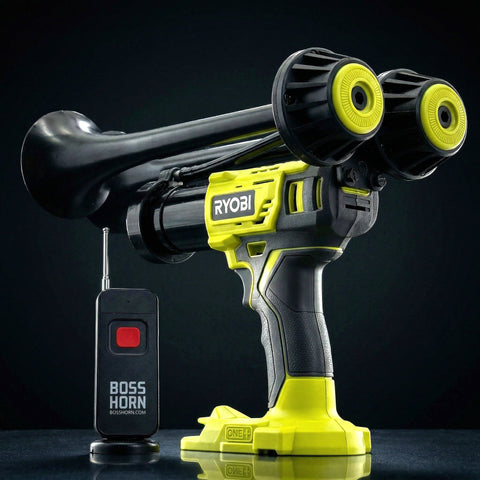
Runs on your existing tool batteries — the same packs as your drill or impact driver. No new batteries to buy or throw away: cheaper for you, easier on the planet.

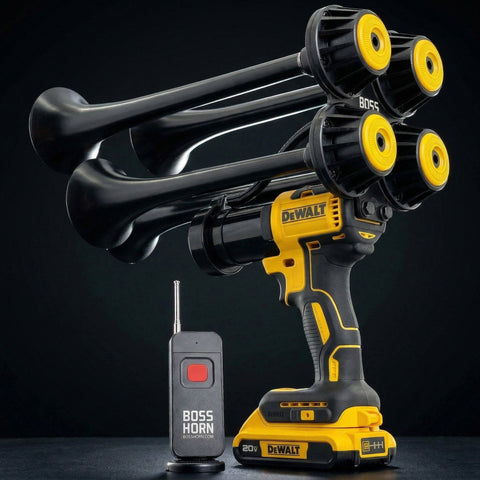
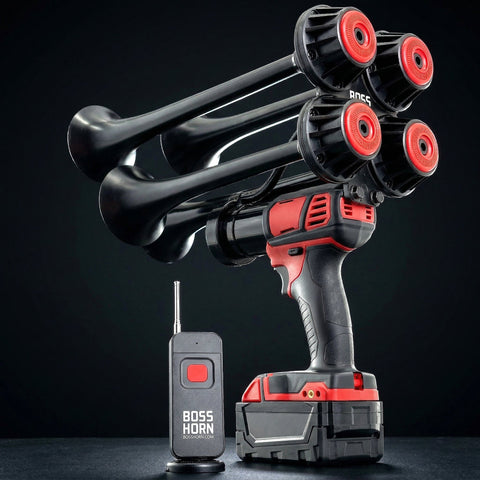
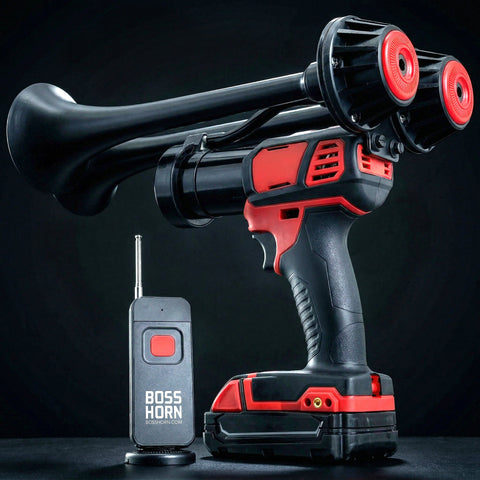
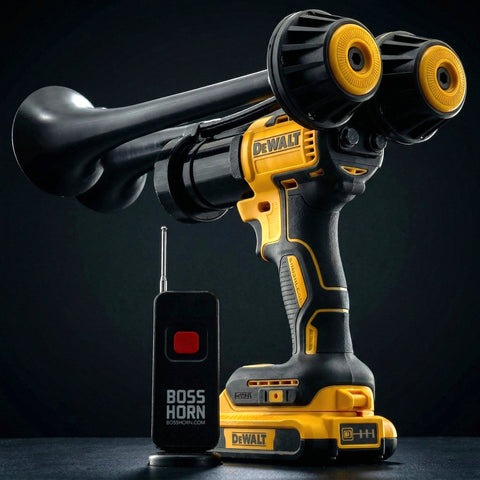
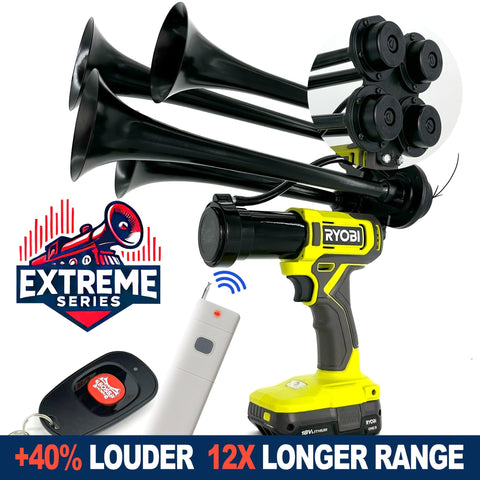
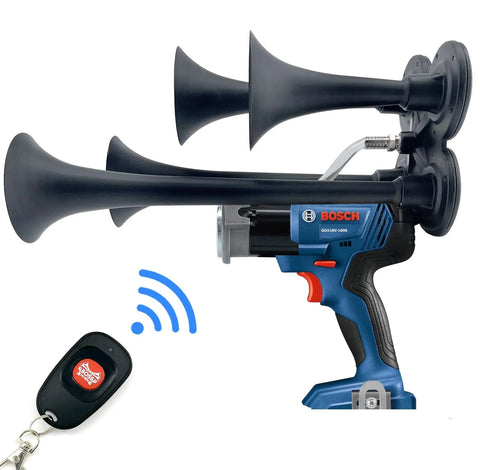
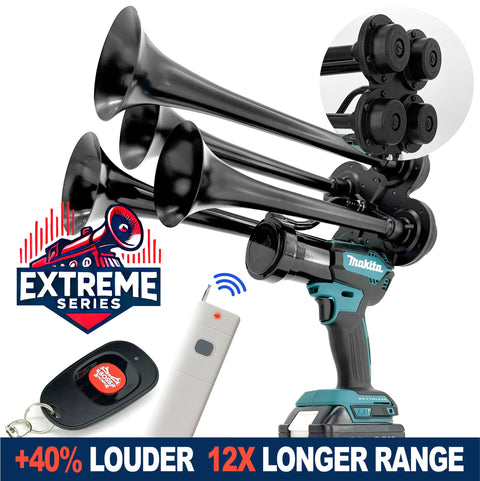
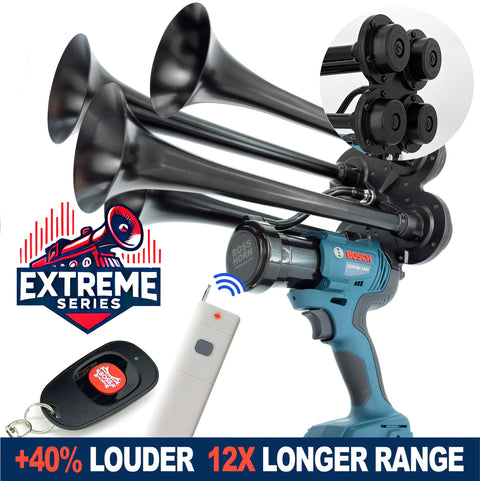
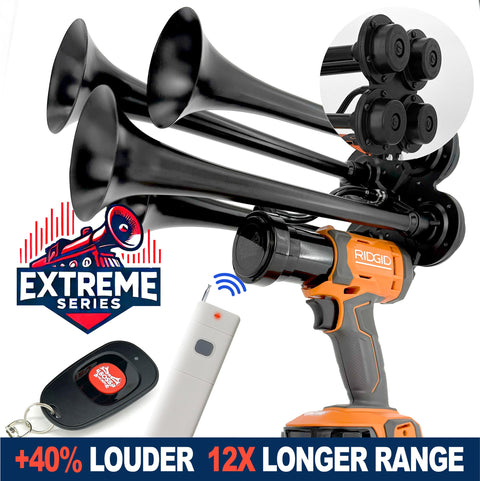
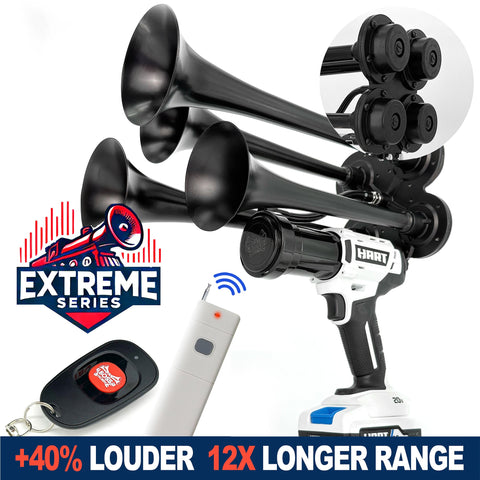
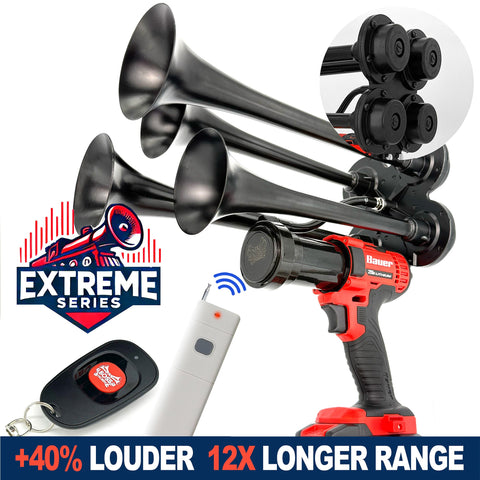
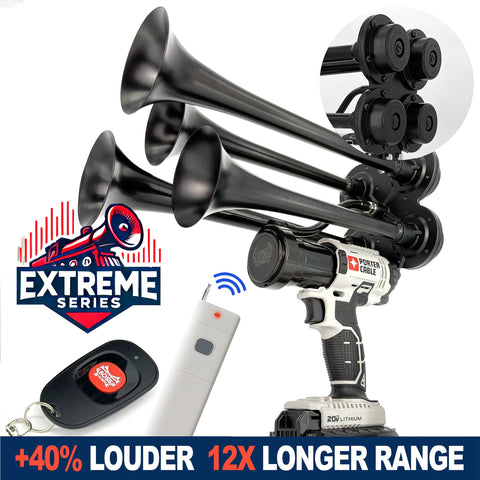
The brand changes nothing about the horn. Every horn uses the exact same internal and external parts — so a Quad is a Quad and a Dual is a Dual. They sound and perform identically across every battery brand; you give up zero sound or power.

No cordless tools yet? Go with DeWalt®, Milwaukee® or Ryobi® — they give you the widest range of tools to buy later on the very same batteries.

Which horn is the loudest?

Our loudest sit at the top — here's how the lineup ranks:

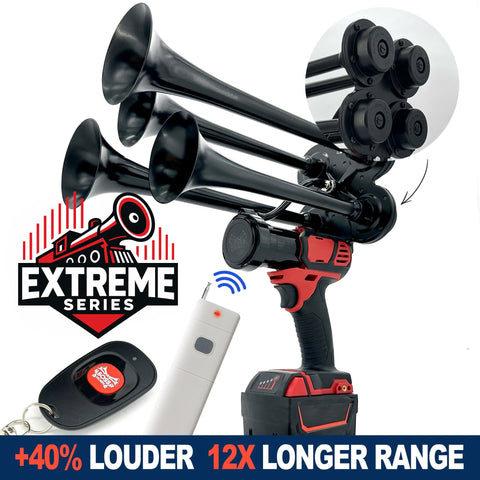
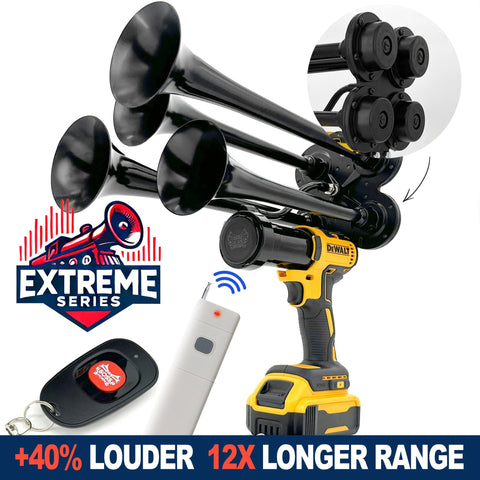
1. Boss Series — our newest (2026) and most refined; it reworks the older Extreme design and fixes its weak spots. Its older sibling, the Extreme Series, sits right alongside it.

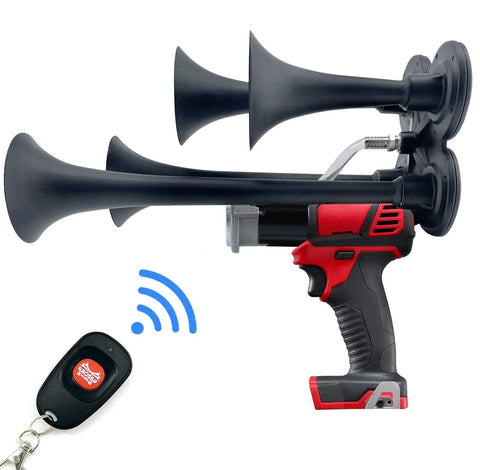
2. Quad — four trumpets, big full sound.

3. Dual — the 2026 Dual shares the Boss design, and it's the one to pick if your battery brand isn't covered by the Boss Series yet.

Skip the 5-trumpet. The on-board compressor can't push enough air for all five trumpets, so it ends up thinner and higher-pitched than it should.

Do I need a drill — or does it come with one?

No drill needed — and none included.

Ships fully built and ready to use — nothing to assemble, no tools required.

The only thing you add is a battery — the same cordless-tool pack your drill already uses.

Snap it in, pull the trigger — and it roars in seconds.

Boss Horn colour caps
Air Horns for Search & Rescue
Boss Horn
Boss Horn 1.51M subscribers
Subscribe

Why these horns own the search grid

  • 150 dB that travels the backcountry — a deep, locomotive-grade note that pushes through wind, rushing water and dense timber so a teammate on the next ridge or a subject down a drainage still catches it.
  • Wireless remote up to 2,000 ft — fire a blast from across a meadow, a switchback or a staging area without standing over a fixed button, so the signal goes out the second the call comes.
  • Recharges off your drill battery — it never dies mid-search and there are no canisters to buy or run dry days from the nearest road; charge the pack on your normal charger and you're set.
  • Pre-built, grab-and-go — zero install and nothing to plumb; it slides onto a battery and is ready before the team steps off the trailhead.
  • Deep freight-train tone — a low, recognizable signal that reads clearly as a deliberate call, not background noise, so your blasts cut through and get answered.

Air Horns Built for Search & Rescue

Battery compatibility:
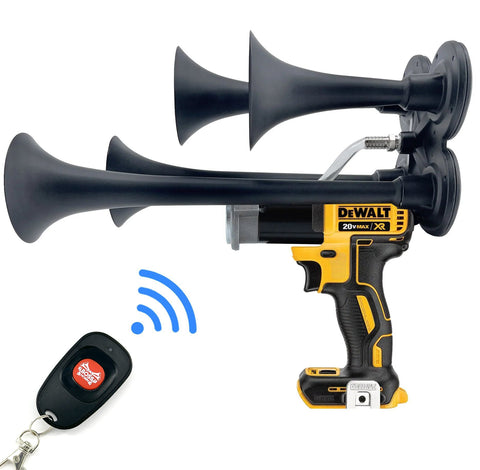
DeWalt Train Horn - Boss Series (New 2026 Model) - BossHorn - dark-14%
Loudness150 dB
Horn4 XL Trumpets
Heard up to1.5 miles
ToneDeep Low Pitch

Boss Series Train Horn for DeWalt® 20v Battery

$450.00 $385.00
5.0 (5)
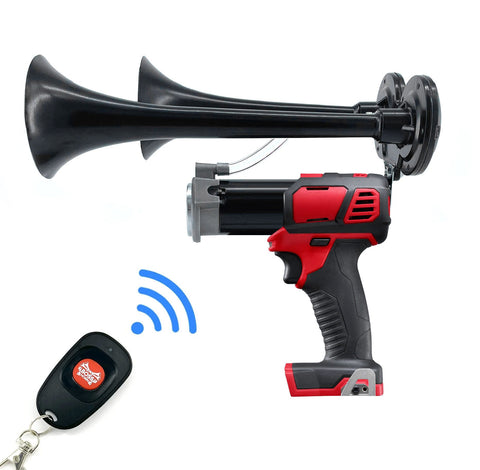
Boss Series Train Horn for Milwaukee® 18v Battery - BossHorn black-15%
Loudness150 dB
Horn4 XL Trumpets
Heard up to1.5 miles
ToneDeep Low Pitch

Boss Series Train Horn for Milwaukee® 18v Battery

$430.00 $365.00
4.7 (7)
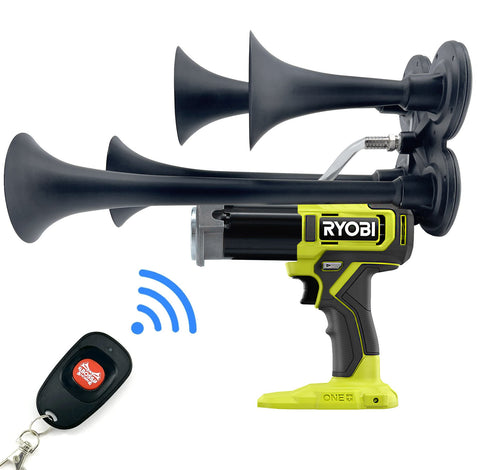
Ryobi Train Horn - Boss Series (New 2026 Model) - BossHorn dark
Loudness150 dB
Horn4 XL Trumpets
Heard up to1.5 miles
ToneDeep Low Pitch

Boss Series Train Horn for Ryobi® 18v Battery

$385.00
5.0 (3)
Dual Train Horn for Milwaukee® 18v Battery (New 2026 Model) - BossHorn black-27%
Loudness130 dB
Horn2 trumpets
Heard up to< 1 mile
ToneHigh pitch

Dual Train Horn for Milwaukee® 18v Battery (New 2026 Model)

$255.00 $185.00
5.0 (8)
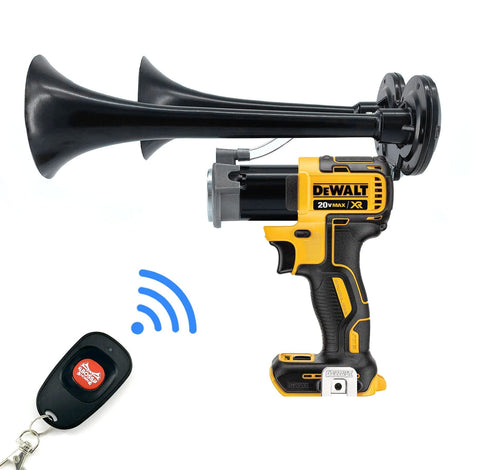
Dual Train Horn for DeWalt® 20v Battery (New 2026 Model) - BossHorn-25%
Loudness130 dB
Horn2 trumpets
Heard up to< 1 mile
ToneHigh pitch

Dual Train Horn for DeWalt® 20v Battery (New 2026 Model)

$280.00 $210.00
5.0 (6)
Dual Train Horn for Ryobi® 18v Battery (New 2026 Model) - BossHorn  dark-26%
Loudness130 dB
Horn2 trumpets
Heard up to< 1 mile
ToneHigh pitch

Dual Train Horn for Ryobi® 18v Battery (New 2026 Model)

$245.00 $180.00
4.8 (4)

See & hear the SAR signal horns

Quick product demos of every horn — how it sounds, how it mounts on your drill battery, and how to fire it by hand or by remote when a ground team needs to signal.

// Real owners

Straight from our customers

Real photos from real Boss Horn owners — tap any shot to zoom in.

Built to be heard

An air horn that carries when a ground team needs to signal

Voices fade fast in the backcountry. Wind, moving water and a wall of timber swallow a shout within a few hundred feet, and a whistle only reaches so far. A real train-horn-style air horn for search and rescue answers that gap with a low, carrying blast that a teammate two ridges over — or a lost subject hunkered in a drainage — can actually fix a direction on.

This is a working SAR signal horn, not a noisemaker. Use it to mark your position, call a hasty team back in, coordinate a sweep line by sound, or push a single deliberate blast out into open country so someone who's overdue knows help is close.

Are air horns allowed for search and rescue work?

For legitimate signaling, yes — a loud horn is a recognized way to make your presence known and to communicate over distance in the field. The honest caveats are about coordination and false alarms, not the device. Agree on your signals before the team steps off, log them on the radio so nobody mistakes a blast for a found-subject call, and keep the horn out of staging areas, base camp and trailhead parking where a 150 dB burst near people serves no purpose.

Lean on the conventions ground teams already know: a series of three distinct blasts is a widely understood distress signal, and a single short blast works well as a position or acknowledgment marker. Always defer to your team or agency's communication plan and to local land-management rules — and save full-volume use for open ground and genuine signaling, never as a prank or to move wildlife around carelessly.

How far does it really need to carry?

Handheld signal horns generally run between 110 and 150 decibels. The kits in this collection reach up to 150 dB — a deep, freight-train-grade note you feel as much as hear, built to push past wind, river noise and heavy brush where a thinner, higher signal gets lost. In open terrain that's the difference between a blast that dies at the next stand of trees and one that reaches a search line working the far slope.

Use it responsibly. 150 dB is a serious signal device, so point the trumpets toward open ground, never fire it near anyone's ears — your own teammates included — or near kids and pets at base, and keep it to short, deliberate bursts. The volume is the whole point; just aim it at open air.

How a drill-battery wilderness signal horn works

There's no compressor, no air tank and no vehicle wiring to fuss with in the field. Each horn has an on-board air pump and real metal trumpets, so the whole unit is self-contained and ready the instant you grab it.

The power source is a cordless-drill battery — the same kind already in a lot of rescue kits. Slide a charged pack into the base — compatible with Milwaukee® M18™, DeWalt® 20V MAX, Makita® 18V LXT®, Ryobi® ONE+® and more — and pull the trigger. Select models add a wireless remote that works from up to 2,000 ft, so a blast is one press away whether you're at the staging area or partway up a sweep. When the pack runs low, recharge it exactly like your drill — no canisters to refill and nothing to run dry on a long operation.

Choosing the right SAR signal horn

Match the horn to how your team works:

  • Trumpet count. Single, dual and quad-trumpet setups layer the tone — more trumpets build a fuller, farther-reaching blast.
  • Tone style. Pick a LOUDEST trumpet style for maximum carry across open terrain, or LOW TONE for a deep note that holds up in wind and timber.
  • Remote range. Long-range remote models fire from up to 2,000 ft — handy for signaling from a fixed staging point or a vantage above the search area.
  • Your battery brand. Choose the model that matches the drill packs already in your kit, so you're never short a battery on a callout.
  • Grab-and-go readiness. A pre-built unit that lives charged in the response bag beats anything you have to assemble at the trailhead.

Before the callout

Your SAR ground-team horn checklist

Stage it so it's ready the moment the page comes in:

  • Charged pack seated in the base, with a spare drill battery in the response bag for a long operation.
  • Horn reachable, not buried — a top pocket or kit pouch, not under the litter and rope.
  • Remote paired and tested if your model has one, so a blast is one press away from the staging area.
  • Signals briefed — confirm your blast patterns (three for distress, one to mark position) and log them on the radio before stepping off.
  • Trumpets aimed at open ground — point them away from teammates, base and any bystanders before you fire.

Search & rescue air horns — FAQ

Where am I allowed to use an air horn for search and rescue?
Anywhere legitimate field signaling is appropriate and coordinated with your team — open backcountry, search grids, drainages and trailheads, in line with your agency's communication plan and local land rules. Brief your signals first so a blast isn't mistaken for a found-subject call, and keep full-volume use away from base camp, staging and parking where a 150 dB burst near people serves no purpose.
How loud is it?
These train-horn-style kits reach up to 150 dB — a deep, freight-train-grade blast that carries across open terrain and pushes through wind, moving water and timber. Because it's that loud, aim the trumpets at open ground, keep them away from ears, kids and pets, and use short, deliberate bursts.
Does it need a compressor or an air tank?
No. There's no compressor, no air tank and no canisters to refill. Each horn has an on-board air pump and real metal trumpets, all powered by a cordless-drill battery — nothing to plumb and nothing to run dry partway through a long operation.
Which drill batteries does it work with?
It runs on common cordless-drill packs — compatible with Milwaukee® M18™, DeWalt® 20V MAX, Makita® 18V LXT®, Ryobi® ONE+® and more. Pick the model that matches the batteries already in your kit and slide the pack into the base.
How far does the remote reach?
Select models include a wireless remote that works from up to 2,000 ft, so you can trigger a blast from a staging area, a vantage point or partway up a sweep without standing over a fixed button.
What's the standard distress signal with an air horn?
A series of three distinct blasts is a widely understood distress signal, and a single short blast works well as a position or acknowledgment marker. Agree on your patterns with the team before stepping off and log them on the radio so every signal reads the same way to everyone in the field.
Is 150 dB safe to use?
150 dB is a serious signal device, so treat it like one. Point the trumpets toward open ground, never fire it near anyone's ears — teammates included — or near kids and pets at base, and stick to short bursts. The volume is the point; just aim it at open air.
How do I recharge it?
Recharge it exactly like your drill. When the cordless-drill battery in the base runs low, pop it out and charge it on your normal charger — there are no air canisters to buy or refill, which is what keeps it dependable across a long callout far from the nearest road.
How fast does it ship?
Orders placed before 2 PM PT ship the same business day, so you can have your horn charged and staged in the response bag before the next callout.

About Air Horns for Search & Rescue

A portable, rechargeable air horn built to be heard across a drainage, a ridgeline or a tree-line search grid. It reaches up to 150 dB, runs on the cordless-drill battery you already carry, and is ready the moment a ground team needs to signal — no compressor, no tank, no canisters to run dry.