A crowd of runners packed shoulder to shoulder at the starting line of an outdoor road race, waiting for the start signal

Air Horns for Race Starts & Finish Lines

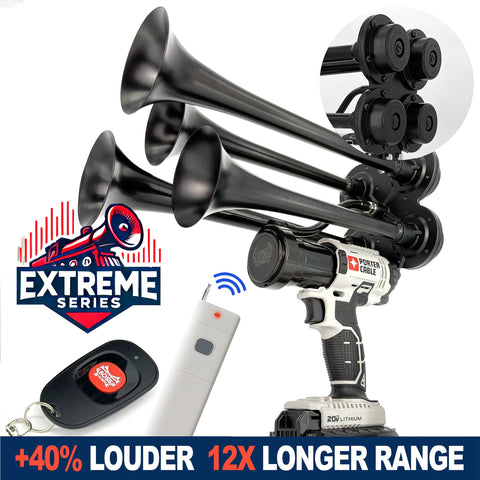
A 150 dB train-horn blast to start the wave and salute the finish — runs off your cordless-drill battery with no compressor or wiring, ready for 5Ks, marathons, charity runs and obstacle races.

49 products
150 dB output
2,000 ft remote
Pre-Built
Ships same day
90-day money-back
1-Year Warranty
Air Horns for Race Starts & Finish Lines
Boss Horn
Boss Horn 1.51M subscribers
Subscribe

Why these horns own race day

  • 150 dB that reaches the whole start corral. A deep train-horn note rolls over the music, the announcer and a few hundred chattering runners, so every wave hears the same clean cue to go.
  • Wireless remote up to 2,000 ft. Trigger the start from the timing arch, the lead vehicle or a spot down the course — fire each corral's send-off without sprinting back to the line.
  • Recharges off your drill battery — never dies before the gun. No spent cans to toss between heats, no air to refill. Top it off like your tools and it's ready for the next wave or next year's event.
  • Pre-built, grab-and-go, zero setup. On-board pump and real metal trumpets mean nothing to assemble or wire — pull it out of the gear box and it's ready before the first runner toes the line.
  • Deep freight-train tone, not a thin party squeak. A low, locomotive growl that reads instantly as GO from the start line and as a finish-line roar runners feel in their chest.

Train Horns Built for Race Starts & Finish Lines

Battery compatibility:
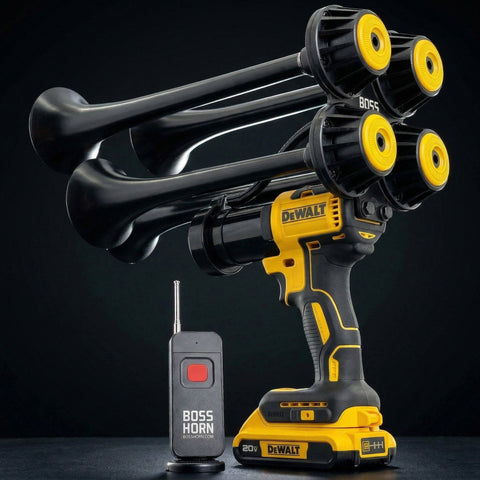
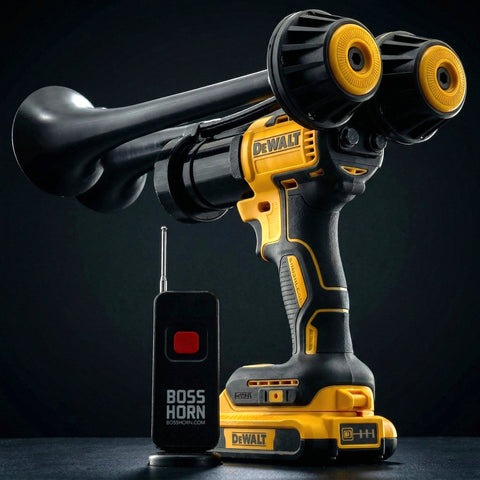
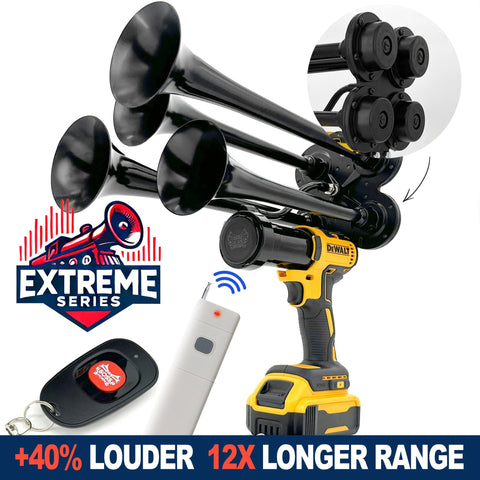
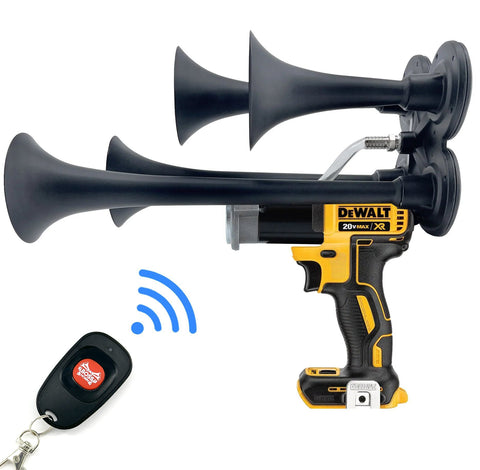
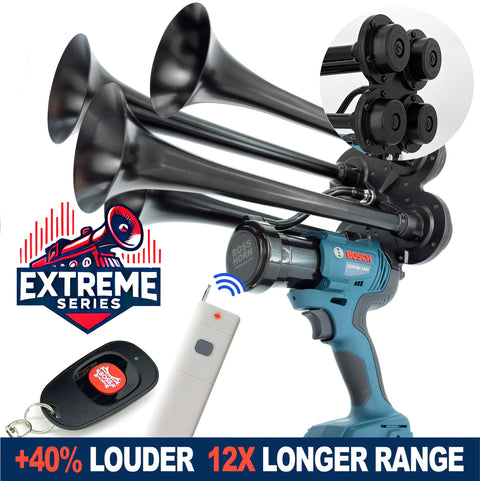
DeWalt Train Horn - Boss Series (New 2026 Model) - BossHorn - dark-14%
Loudness150 dB
Horn4 XL Trumpets
Heard up to1.5 miles
ToneDeep Low Pitch

Boss Series Train Horn for DeWalt® 20v Battery

$450.00 $385.00
5.0 (5)
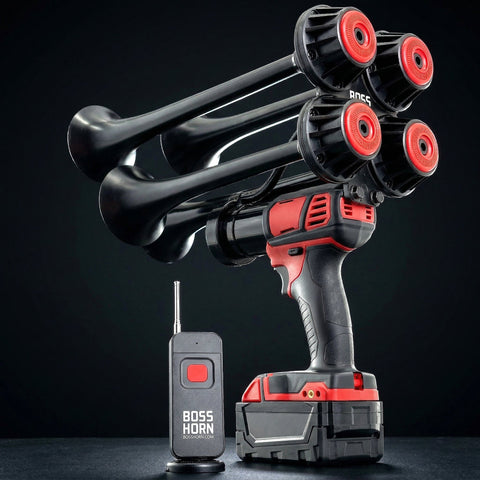
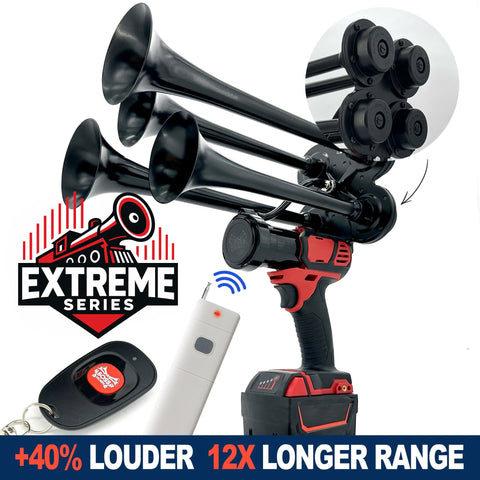
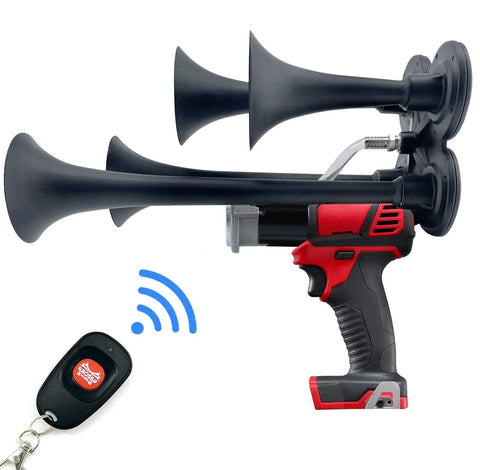
Boss Series Train Horn for Milwaukee® 18v Battery - BossHorn black-15%
Loudness150 dB
Horn4 XL Trumpets
Heard up to1.5 miles
ToneDeep Low Pitch

Boss Series Train Horn for Milwaukee® 18v Battery

$430.00 $365.00
4.7 (7)
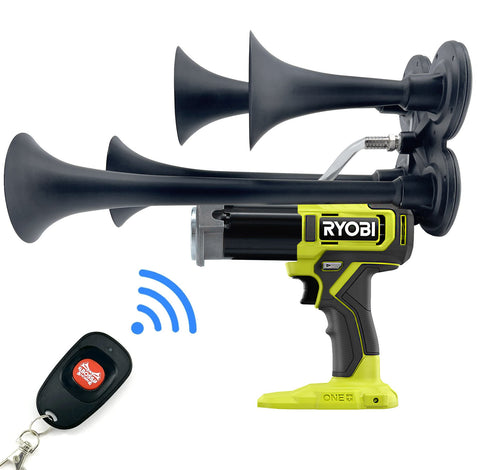
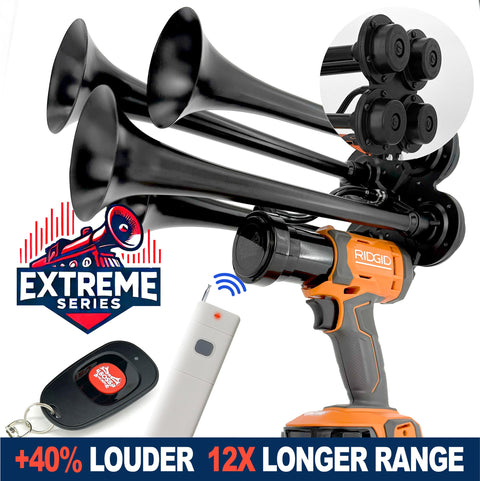
Ryobi Train Horn - Boss Series (New 2026 Model) - BossHorn dark
Loudness150 dB
Horn4 XL Trumpets
Heard up to1.5 miles
ToneDeep Low Pitch

Boss Series Train Horn for Ryobi® 18v Battery

$385.00
5.0 (3)
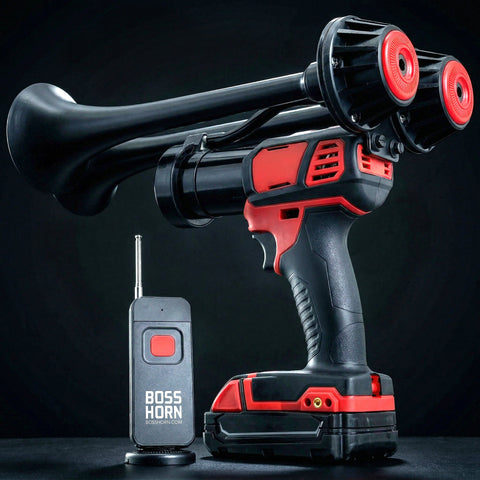
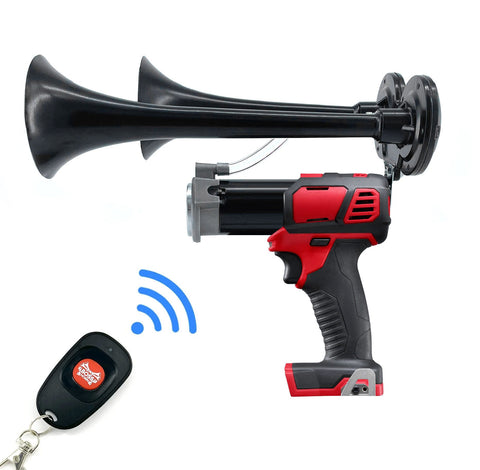
Dual Train Horn for Milwaukee® 18v Battery (New 2026 Model) - BossHorn black-27%
Loudness130 dB
Horn2 trumpets
Heard up to< 1 mile
ToneHigh pitch

Dual Train Horn for Milwaukee® 18v Battery (New 2026 Model)

$255.00 $185.00
5.0 (8)
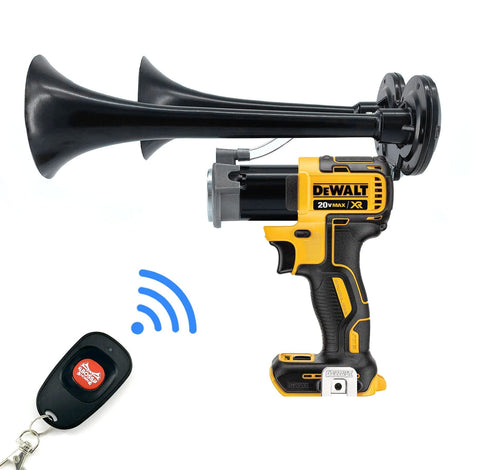
Dual Train Horn for DeWalt® 20v Battery (New 2026 Model) - BossHorn-25%
Loudness130 dB
Horn2 trumpets
Heard up to< 1 mile
ToneHigh pitch

Dual Train Horn for DeWalt® 20v Battery (New 2026 Model)

$280.00 $210.00
5.0 (6)
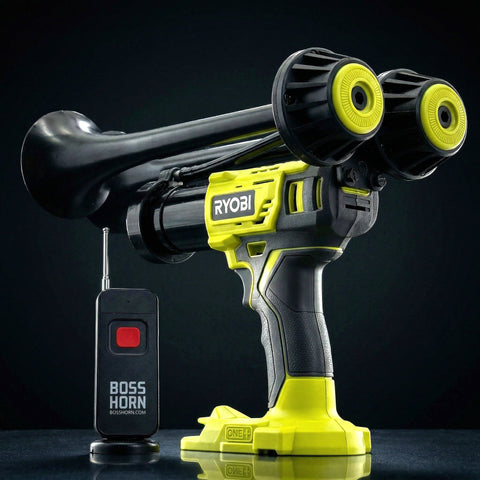
Dual Train Horn for Ryobi® 18v Battery (New 2026 Model) - BossHorn  dark-26%
Loudness130 dB
Horn2 trumpets
Heard up to< 1 mile
ToneHigh pitch

Dual Train Horn for Ryobi® 18v Battery (New 2026 Model)

$245.00 $180.00
4.8 (4)

See & hear the race-day horns

Quick product demos of every horn — how it sounds, how it mounts on your drill battery, and how to use it to send off a wave or roar in the finish.

Made for the start line

One blast and the whole field is gone

Nothing launches a race like a single, unmistakable sound. A real train-horn-style air horn gives your 5K, marathon, charity fun run or obstacle race a start signal that cuts through the warm-up music, the announcer and a corral full of nervous chatter — so every runner reacts to the same instant instead of guessing off a shouted "go."

And it isn't only for the line. Hit it to call each wave forward, to mark the leaders cresting the final hill, and to roar every last finisher across the mat — the deep blast turns a quiet finish chute into the loudest, proudest moment of someone's day.


Where it fits

Are air horns allowed for races?

For races held on open courses, parks, trails and closed roads, a loud start signal is standard kit — organizers have long used a horn, whistle or starter device to send runners off, and a portable air horn does exactly that job in the open air where it belongs. That's the legitimate home for these horns: the start corral, the wave staging area, mile markers, aid stations and the finish chute.

A couple of honest notes. Keep it outdoors and on your own event footprint — it's a start-and-finish signal, not an indoor-gym or spectator-stands noisemaker, and many venues restrict artificial horns in enclosed seating. Some events also choose softer cues for participants who are sound-sensitive, so brief the field that a horn start is coming and clear the immediate area around the trumpets before you fire.

The numbers

How much volume does a start signal need?

Portable air horns generally run from 110 to 150 decibels. The kits in this collection reach up to 150 dB — enough to carry from the start arch to the back of a deep corral and down a finish chute lined with cheering spectators, so nobody misses the cue.

Use it responsibly. 150 dB is genuinely loud, so aim the trumpets up and out over open course, never blast right beside a runner's, volunteer's, child's or pet's ears, and keep it to short bursts — a crisp send-off and a quick finish-line salute, not a constant drone.

How it works

No compressor, no tank, no canisters to buy

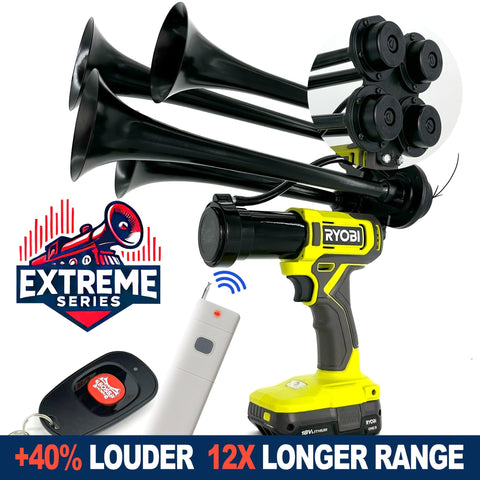
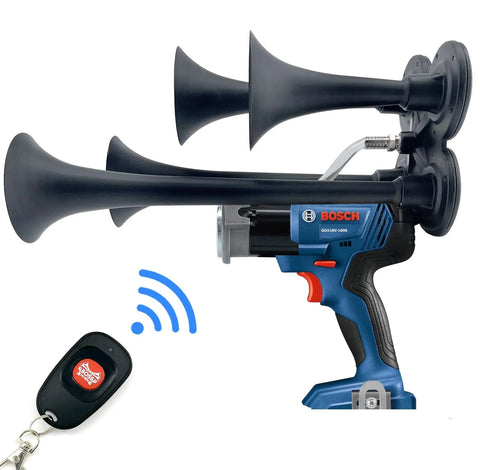
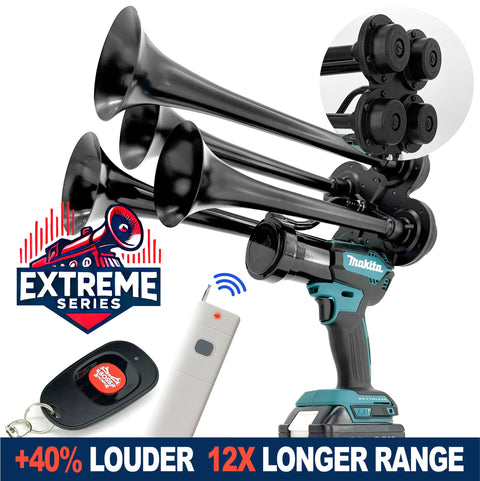
Disposable push-button cans run out mid-event and a shop air horn means a compressor and tank you have to haul to the course. This skips both. It uses an on-board air pump and real metal trumpets, so the entire unit is self-contained and grab-and-go.

It runs on the cordless-drill battery already in your garage. Slide a pack into the base — compatible with Milwaukee® M18™, DeWalt® 20V MAX, Makita® 18V LXT® and Ryobi® ONE+® batteries and more — squeeze the trigger and let it roar. Select models add a remote that works from up to 2,000 ft, so you can send a wave from the arch or down the course. When the battery runs low, recharge it just like your drill — no cans, ever.

Buying guide

Choosing the right horn for your event

Match the horn to the size and style of your race:

  • Trumpet count. Single, dual and quad-trumpet setups layer the tone — more trumpets give a fuller blast for big-field marathons and large fun runs.
  • Tone style. Pick a LOUDEST trumpet style to punch through a packed corral, or LOW TONE for that deep, locomotive growl at the finish.
  • Remote range. Long-range models fire from up to 2,000 ft — handy for starting waves from the arch or signaling from a lead vehicle.
  • Battery brand. Choose the model that matches the drill packs your crew already carries, so a charged battery is always on hand on race morning.
  • Grab-and-go. With no tank or compressor, it lives in the gear box, rides to the course and recharges between events.

Race morning

Your race-day horn checklist

  • Charge a battery the night before — the same packs as your cordless drill — and pack a spare for a multi-wave morning.
  • Test the trigger and remote at low stakes before runners arrive, and pair the remote with whoever is calling the start.
  • Brief the field that a horn start is coming, and give a clear "on the horn" countdown so every corral reacts together.
  • Aim up and over open course, away from the front-row runners, volunteers, kids and pets.
  • Plan the finish — short bursts for the leaders, the final finisher and any age-group milestones worth a roar.

Race start & finish line air horns — FAQ

Can I use an air horn to start a 5K, marathon or fun run?
Yes — for races on open courses, parks, trails and closed roads, a loud horn is a standard way to send runners off and to signal the finish. Keep it outdoors on your own event footprint, brief the field that a horn start is coming, and clear the area right around the trumpets before you fire. It's a start-and-finish signal, not an indoor or spectator-stands noisemaker.
How loud is it?
These train-horn-style kits reach up to 150 dB — a deep, locomotive-grade blast that carries from the start arch to the back of a deep corral and down a finish chute. Portable air horns generally run 110–150 dB, and 150 dB sits at the top of that range, so aim it over open course and keep the bursts short.
Does it need a compressor or air tank?
No. There's no compressor and no air tank to haul to the course. The horn uses an on-board air pump and real metal trumpets, so the whole unit is self-contained — drop it in your gear box and it's ready to go.
Which drill batteries does it work with?
It runs on common cordless-drill batteries, including Milwaukee® M18™, DeWalt® 20V MAX, Makita® 18V LXT® and Ryobi® ONE+® packs, and more. Use the model that matches the batteries your crew already owns, slide one in, and it's ready for the start line.
How far does the remote reach?
Select models include a wireless remote that works from up to 2,000 ft. That's enough to trigger the start from the timing arch, a lead vehicle or a spot down the course without running back to the line each time.
Can one horn handle multiple waves or corrals?
Yes. Because it recharges off a drill battery instead of running on disposable cans, you can fire wave after wave all morning without running dry. Keep a charged spare battery on hand for a big multi-corral start and you're set for the whole event.
Is 150 dB safe to use around runners and spectators?
It's safe when you use it responsibly. 150 dB is genuinely loud, so point the trumpets up and over open course, never blast right beside someone's ears, kids, volunteers or pets, and stick to short bursts. Treat it as a clean start cue and a finish-line salute, not a constant drone.
How do I recharge it?
Just like your drill. When the cordless-drill battery runs low, pop it out and charge it on your normal charger, then slide it back in. There are no cans, cartridges or refills to buy between heats or events.
How fast does it ship?
Orders placed before 2 PM PT ship the same business day, so you can have your horn in hand before race weekend.

About Air Horns for Race Starts & Finish Lines

A grab-and-go air horn built to send runners off the line and roar them across the finish — 150 dB of real metal-trumpet sound for 5Ks, marathons, charity fun runs and obstacle races, powered by a cordless-drill battery with no compressor, tank or wiring to deal with.