Construction crew in hard hats and high-visibility safety vests huddled together for a briefing on a job site

Air Horns for Construction Site Signaling

Up to 150 dB, powered by your cordless-drill battery — a grab-and-go signal horn that carries across a busy construction site.

49 products
150 dB output
2,000 ft remote
Pre-Built
Ships same day
90-day money-back
1-Year Warranty
Air Horns for Construction Site Signaling
Boss Horn
Boss Horn 1.51M subscribers
Subscribe

Why these horns own the job site

  • 150 dB of locomotive-grade blast that carries across the whole site and pushes past excavators, generators and impact tools.
  • Wireless remote up to 2,000 ft so a spotter can signal from across the site or up on the deck without standing at the horn.
  • Recharges off your drill battery — it won't die mid-shift, and there are no disposable cans to keep restocking in the gang box.
  • Pre-built and grab-and-gozero install, no wiring, ready to sound the first signal before work starts.
  • Deep freight-train tone that stands apart from beepers and backup alarms, so the crew knows it's the signal.

Train Horns Built for Construction Site Signaling

Battery compatibility:
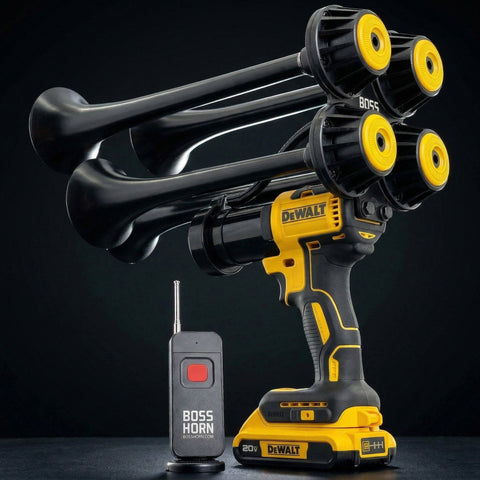
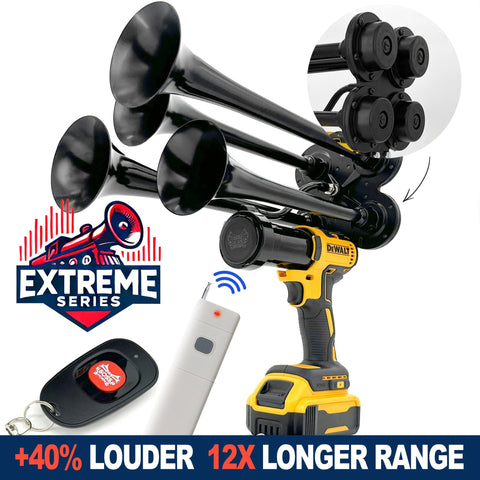
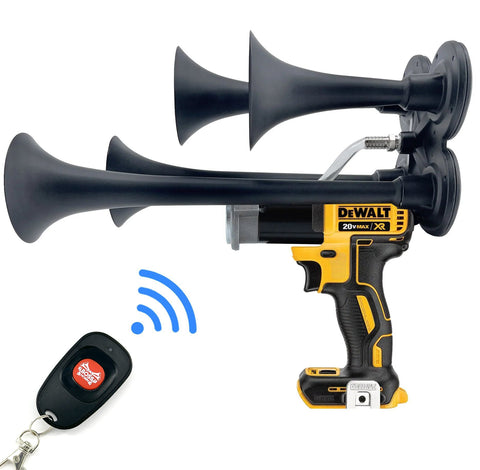
DeWalt Train Horn - Boss Series (New 2026 Model) - BossHorn - dark-14%
Loudness150 dB
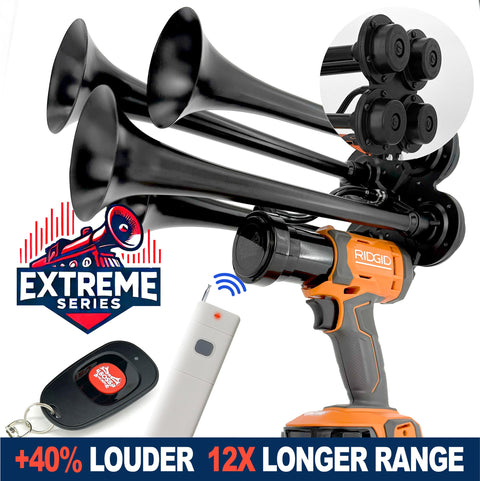
Horn4 XL Trumpets
Heard up to1.5 miles
ToneDeep Low Pitch

Boss Series Train Horn for DeWalt® 20v Battery

$450.00 $385.00
5.0 (5)
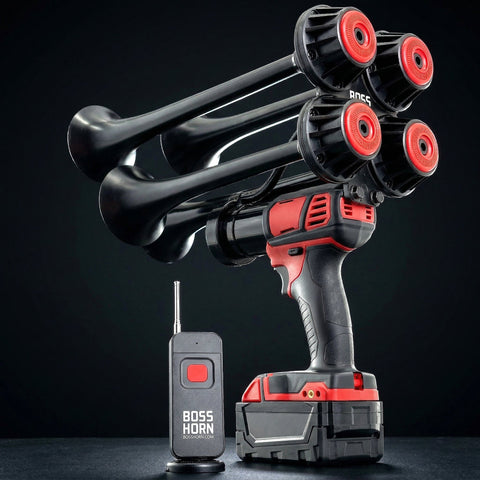
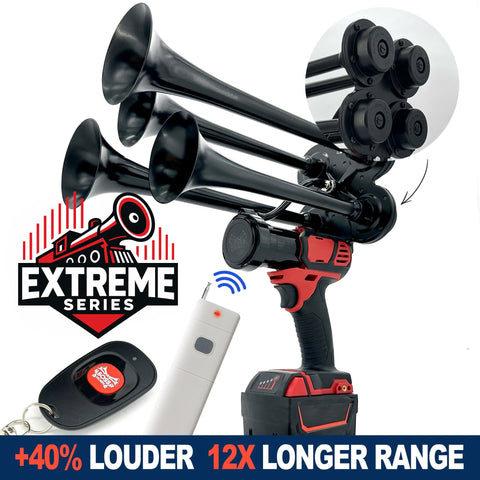
Boss Series Train Horn for Milwaukee® 18v Battery - BossHorn black-15%
Loudness150 dB
Horn4 XL Trumpets
Heard up to1.5 miles
ToneDeep Low Pitch

Boss Series Train Horn for Milwaukee® 18v Battery

$430.00 $365.00
4.7 (7)
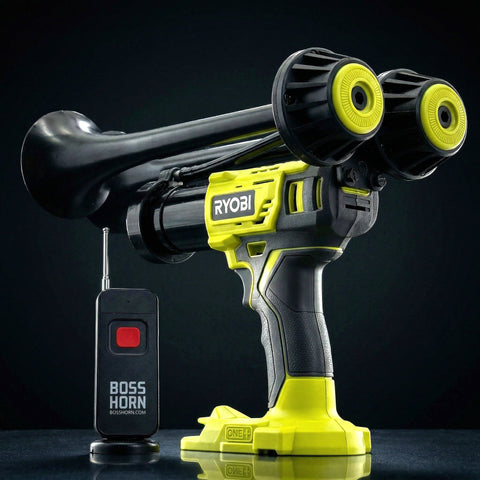
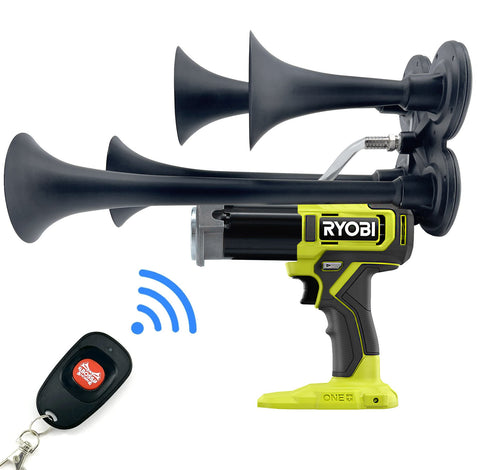
Ryobi Train Horn - Boss Series (New 2026 Model) - BossHorn dark
Loudness150 dB
Horn4 XL Trumpets
Heard up to1.5 miles
ToneDeep Low Pitch

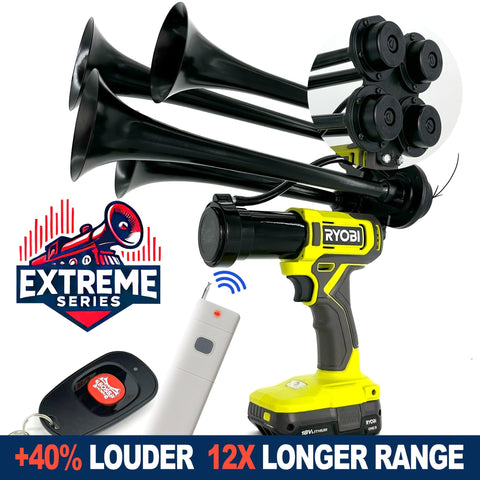
Boss Series Train Horn for Ryobi® 18v Battery

$385.00
5.0 (3)
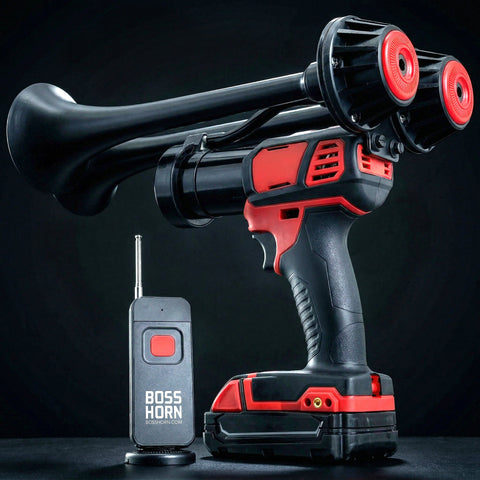
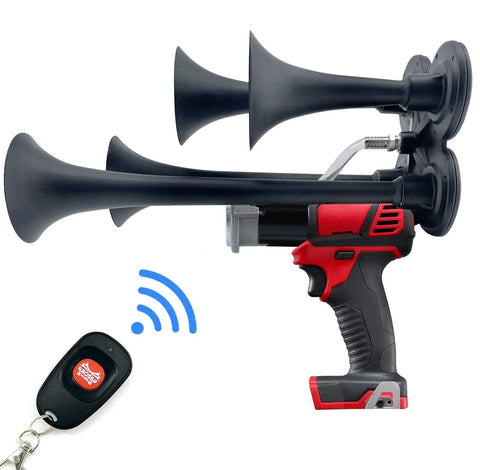
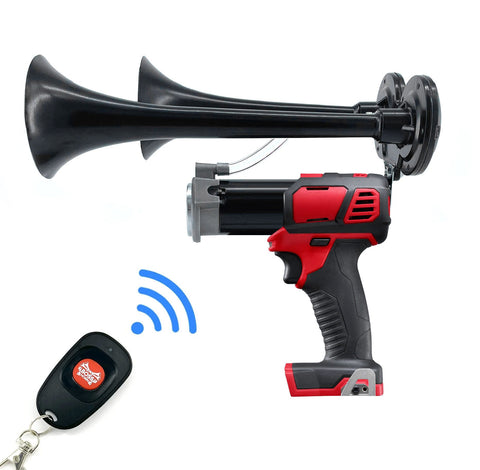
Dual Train Horn for Milwaukee® 18v Battery (New 2026 Model) - BossHorn black-27%
Loudness130 dB
Horn2 trumpets
Heard up to< 1 mile
ToneHigh pitch

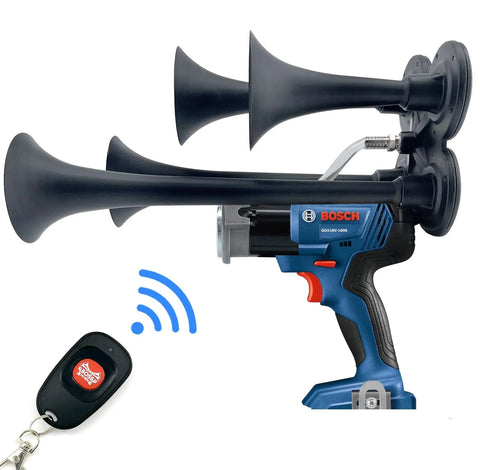
Dual Train Horn for Milwaukee® 18v Battery (New 2026 Model)

$255.00 $185.00
5.0 (8)
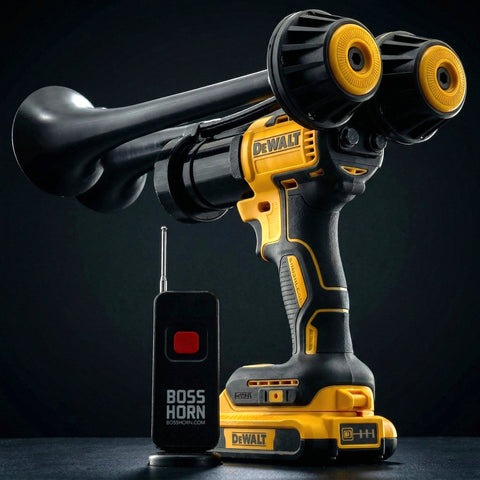
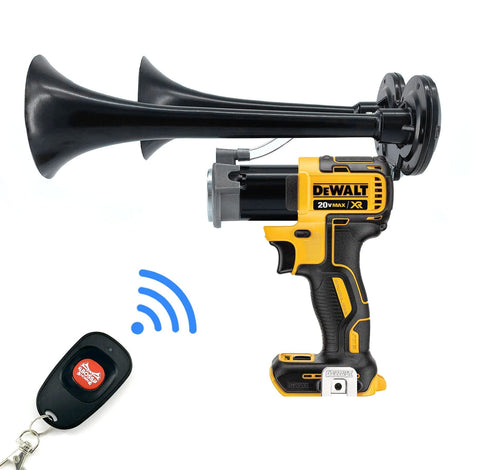
Dual Train Horn for DeWalt® 20v Battery (New 2026 Model) - BossHorn-25%
Loudness130 dB
Horn2 trumpets
Heard up to< 1 mile
ToneHigh pitch

Dual Train Horn for DeWalt® 20v Battery (New 2026 Model)

$280.00 $210.00
5.0 (6)
Dual Train Horn for Ryobi® 18v Battery (New 2026 Model) - BossHorn  dark-26%
Loudness130 dB
Horn2 trumpets
Heard up to< 1 mile
ToneHigh pitch

Dual Train Horn for Ryobi® 18v Battery (New 2026 Model)

$245.00 $180.00
4.8 (4)

See every signal horn in action

Quick product demos of every horn — how it sounds, how it mounts on your drill battery, and how to use it for clear signals on site.

Built for the job site

Why an air horn earns its place on a busy site

On an active job site a voice doesn't travel far. Excavators, generators, jackhammers and concrete saws bury anything a person can shout, so crews fall back on one sound everyone already understands — a sharp, unmistakable blast.

A real train-horn-style air horn gives a spotter, foreman or signal person a tone that cuts clean through the machinery and reaches the far corner of the site. One pull moves the whole crew: stop work, clear the area, swing the load, or head for the muster point.


Are air horns allowed for construction site signaling?

Yes — this is exactly the kind of place a loud horn belongs. OSHA expects a distinctive employee alarm that workers recognize as the signal to evacuate or to carry out the site's emergency action plan, and a horn is one of the accepted ways to provide it. Audible signaling is also routine for everyday work: starting and stopping operations, warning before a blast, and directing crane and equipment moves.

The key is discipline, not volume alone. Agree on your signal patterns in advance (for example, three blasts to evacuate), brief every worker on what each pattern means, and keep the horn for genuine signaling — never horseplay. Review your site safety plan and any local rules so the signal stays clear and trusted.

How loud does a site signal need to be?

To carry over heavy equipment you need real output. Handheld air horns generally run 110 to 150 decibels, and the train-horn-style kits in this collection reach up to 150 dB — a deep, locomotive-grade blast built to push past engine drone, impact tools and a site full of background noise.

Use it responsibly. 150 dB is a serious sound level, so aim the trumpets out across open ground, keep them away from anyone's ears, and fire short, deliberate bursts that match your agreed signal. The goal is a clear warning the whole crew hears — not a blast set off next to the person beside you.

How a drill-battery signal horn works

There's no compressor to wheel out, no air tank to keep charged, and no wiring to run across the site. Each horn carries an on-board air pump and real metal trumpets, so the unit is self-contained and ready the moment it leaves the gang box.

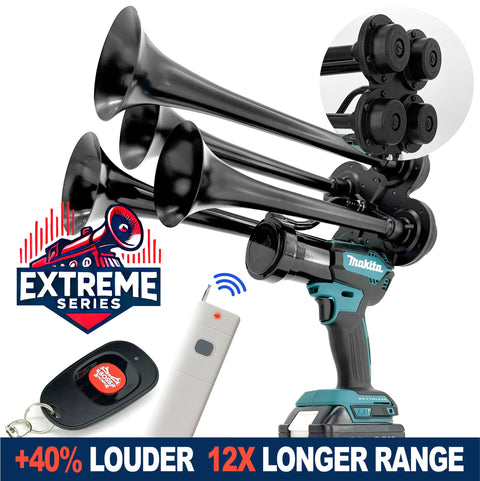
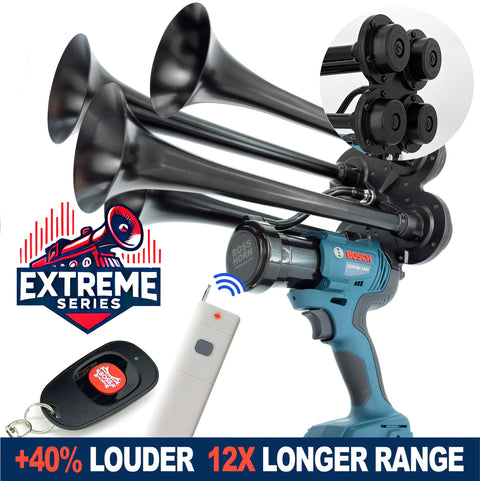
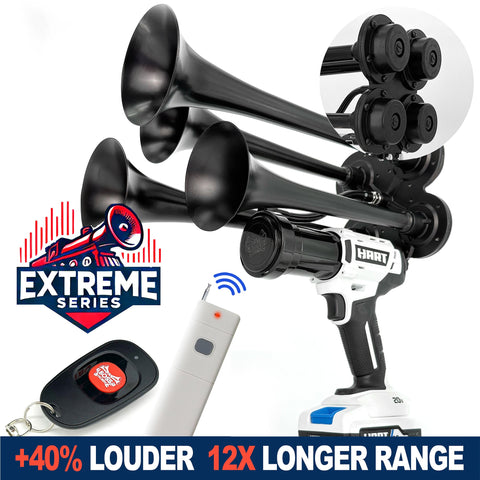
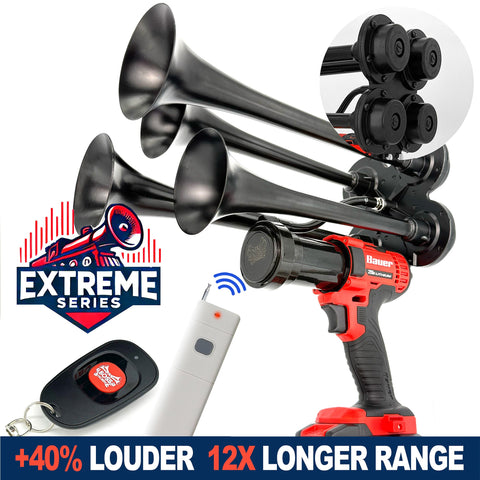
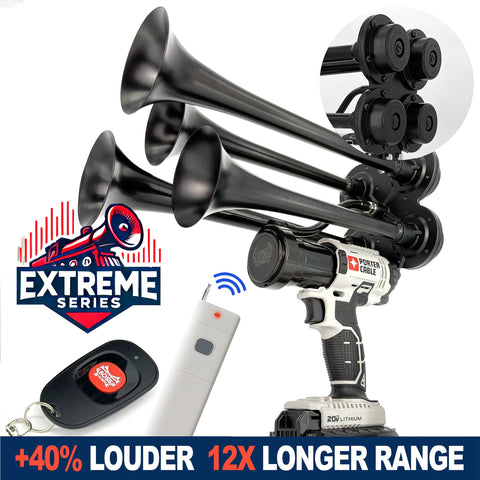
It runs on the same cordless-drill battery your crew already uses — slide a Milwaukee® M18™, DeWalt® 20V MAX, Makita® 18V LXT® or Ryobi® ONE+® pack (and more) into the base, pull the trigger, and it sounds off. Select models add a remote that works from up to 2,000 ft, so a spotter can signal from across the site or up on the deck. When the pack runs low, recharge it on your normal drill charger.

Choosing the right horn for your crew

Match the horn to how your site runs:

  • Trumpet count. Single, dual and quad-trumpet builds stack the tone — more trumpets give a fuller, farther-reaching note.
  • Tone style. Pick a LOUDEST trumpet style for maximum cut-through, or LOW TONE for a deep growl that stands apart from beepers and backup alarms.
  • Remote range. Remote-equipped models trigger from up to 2,000 ft — useful when the signal person isn't standing at the horn.
  • Battery brand. Choose the model that runs on the drill packs already on your truck, so a charged battery is never far away.
  • Grab-and-go. With no tank or compressor, it lives in the job box and tops off between shifts.

Your job-site signaling checklist

  • Charge a battery before the shift — the same cordless-drill packs your crew already carries.
  • Set your signal patterns and post them so every worker knows what each blast means.
  • Test the horn and remote at the toolbox talk so it's confirmed working before work starts.
  • Pick a signaling spot with clear line of sight, trumpets aimed at open ground and away from ears.
  • Keep it for real signals only — evacuation, warnings and equipment moves, never horseplay.

Construction site signaling air horns — FAQ

Can I use an air horn for signaling on a construction site?
Yes — it's a legitimate, expected use. OSHA calls for a distinctive employee alarm to signal evacuation or the emergency action plan, and horns are commonly used for that along with everyday signals like start/stop work, blast warnings and directing equipment. Agree on your signal patterns, brief the crew, and reserve the horn for genuine signaling.
How loud is the horn?
Up to 150 dB — a deep, train-horn-style blast made to carry over excavators, generators and impact tools. Handheld air horns typically run 110 to 150 dB, and these sit at the top of that range. Aim the trumpets at open ground, keep them clear of ears, and use short, deliberate bursts.
Does it need an air compressor or a tank?
No. There's no compressor, no air tank and no wiring to install. An on-board air pump drives real metal trumpets, so the whole unit is self-contained and runs straight off a cordless-drill battery.
Which drill batteries does it work with?
It powers up from common cordless-drill packs, including Milwaukee® M18™, DeWalt® 20V MAX, Makita® 18V LXT® and Ryobi® ONE+® — and more. Pick the model that matches the batteries already on your truck and slide the pack into the base.
How far does the remote reach?
Select models include a wireless remote that triggers the horn from up to 2,000 ft, so a spotter or signal person can sound it from across the site without standing at the unit. Range varies by model — check the product page for the exact horn.
Can I set different signals, like one blast to start and three to evacuate?
Yes — that's how site signaling works. The horn produces a clear, consistent blast, and your crew assigns the meaning: for example, one blast to start, two to stop, three to evacuate. Post the patterns and cover them in your toolbox talk so everyone responds the same way.
Is 150 dB safe to use on site?
It's safe when handled like the signaling tool it is. 150 dB is very loud, so always point the trumpets toward open ground and away from people, never fire it close to anyone's ears, and keep to short bursts rather than holding the trigger. Workers near the source should wear hearing protection, as they would around any loud equipment.
How do I recharge it?
Just like your drill. When the battery runs low, set it on your cordless-drill charger, top it off, and drop it back in — there are no air canisters to buy or refill, so it's ready shift after shift.
How fast does it ship?
Orders placed before 2 PM PT ship the same business day, so you can have a horn on site for your next shift.

About Air Horns for Construction Site Signaling

Portable, rechargeable train-horn-style air horns built for clear signaling on a busy construction site — up to 150 dB that pushes past heavy machinery, powered by the cordless-drill battery your crew already carries. No compressor, no tank and no wiring: grab it from the job box, pull the trigger, and sound off.