A lone white boat on calm open water under grey, misty skies — the kind of low-visibility marine conditions where a loud sound signal keeps boaters safe

Air Horns for Marine Safety

A 150 dB train-horn-style blast that runs off your cordless-drill battery — built to cut through wind, engine noise and fog so other boaters hear you.

49 products
150 dB output
2,000 ft remote
Pre-Built
Ships same day
90-day money-back
1-Year Warranty
Air Horns for Marine Safety
Boss Horn
Boss Horn 1.51M subscribers
Subscribe

Why these horns own the safety call

  • 150 dB that carries across open water — a deep blast that pushes through wind, spray and engine drone so a vessel a long way off still hears your signal.
  • Wireless remote up to 2,000 ft on select models — sound a warning or rally a man-overboard search without leaving the helm or your spotter position.
  • Recharges off your drill battery — no aerosol cans to run dry mid-trip and no last-minute dock-store refill; top it off like any cordless tool before you launch.
  • Grab-and-go, zero install — pre-built with an on-board pump, so it's stowed and ready before you ever leave the slip, no wiring into the boat's electrical.
  • Deep freight-train tone that reads instantly as a real signal — not a thin squeak the next boat can shrug off in a busy channel.

Train Horns Built for Marine Safety

Battery compatibility:
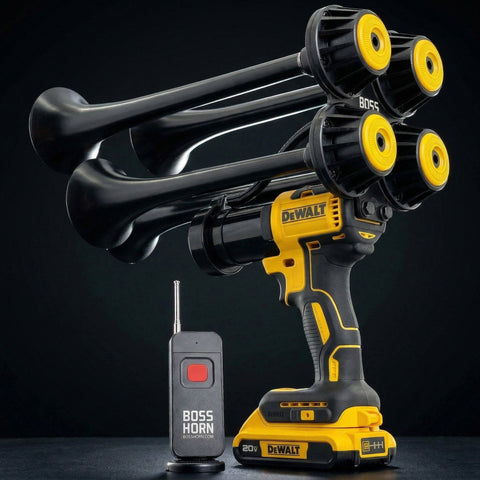
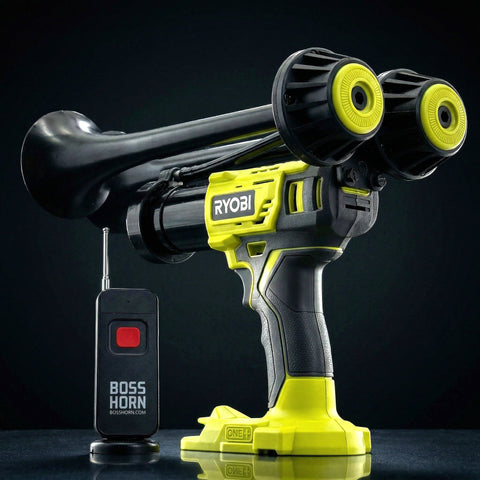
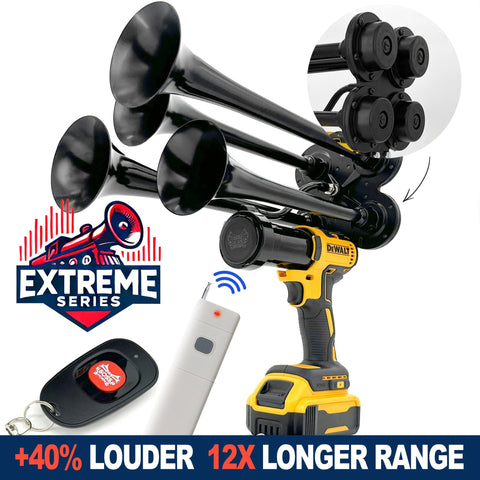
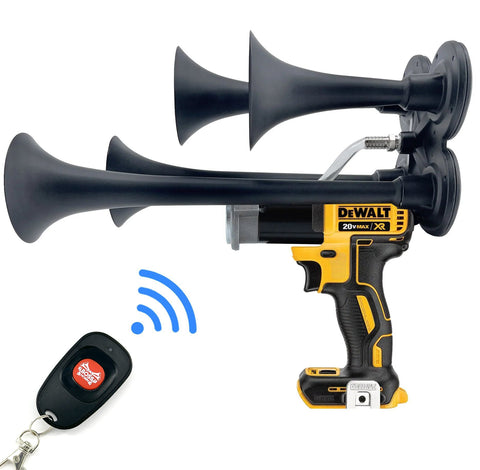
DeWalt Train Horn - Boss Series (New 2026 Model) - BossHorn - dark-14%
Loudness150 dB
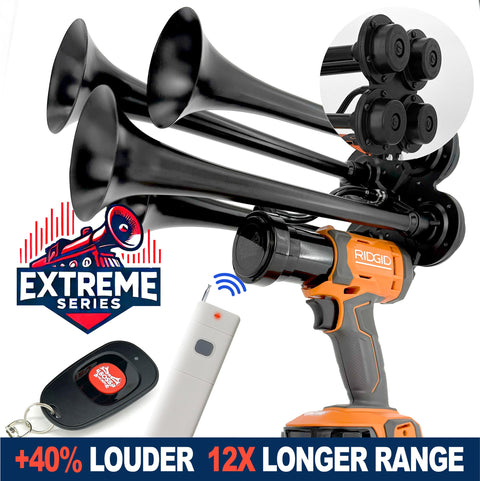
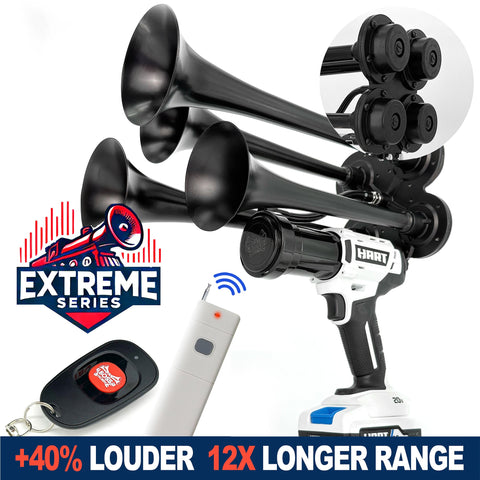
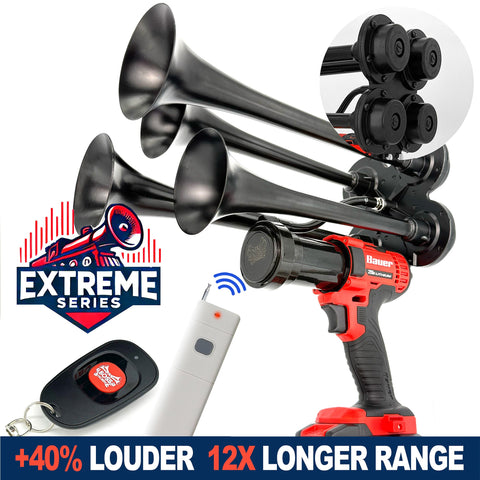
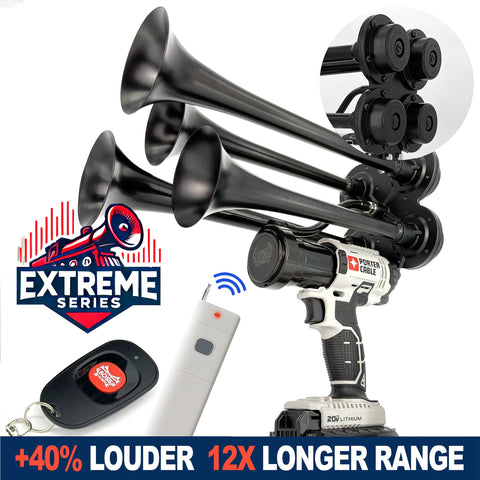
Horn4 XL Trumpets
Heard up to1.5 miles
ToneDeep Low Pitch

Boss Series Train Horn for DeWalt® 20v Battery

$450.00 $385.00
5.0 (5)
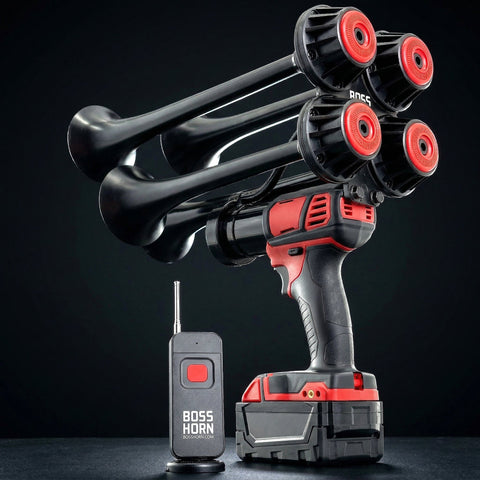
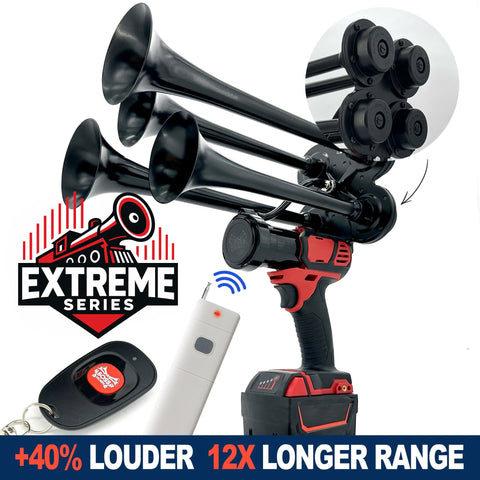
Boss Series Train Horn for Milwaukee® 18v Battery - BossHorn black-15%
Loudness150 dB
Horn4 XL Trumpets
Heard up to1.5 miles
ToneDeep Low Pitch

Boss Series Train Horn for Milwaukee® 18v Battery

$430.00 $365.00
4.7 (7)
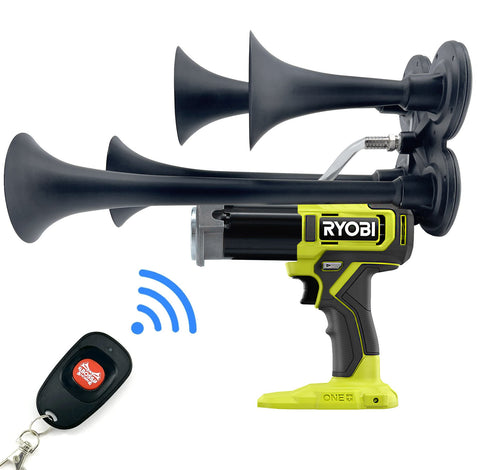
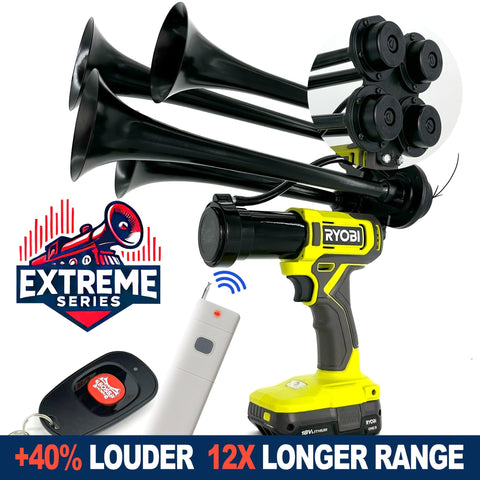
Ryobi Train Horn - Boss Series (New 2026 Model) - BossHorn dark
Loudness150 dB
Horn4 XL Trumpets
Heard up to1.5 miles
ToneDeep Low Pitch

Boss Series Train Horn for Ryobi® 18v Battery

$385.00
5.0 (3)
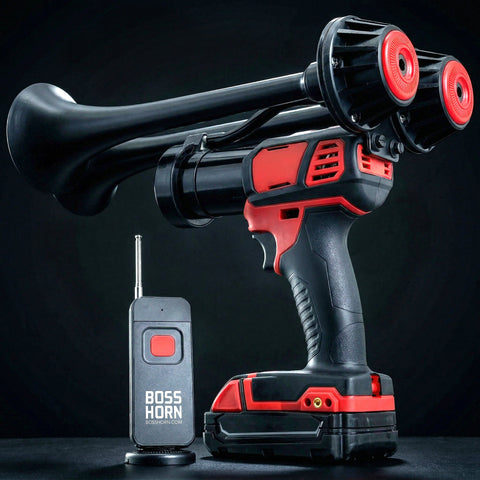
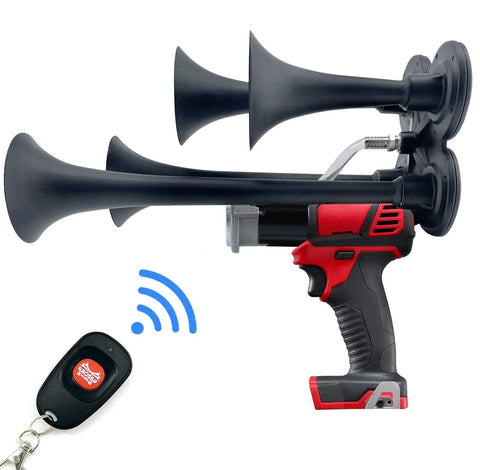
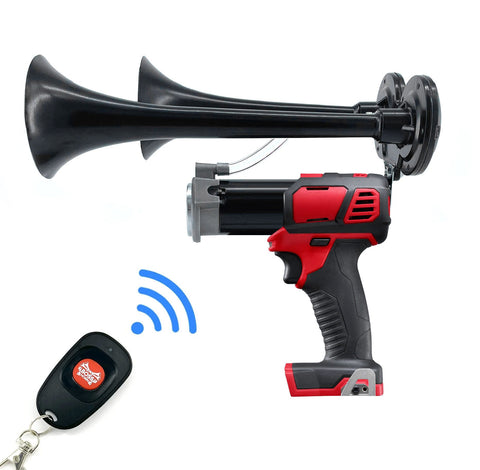
Dual Train Horn for Milwaukee® 18v Battery (New 2026 Model) - BossHorn black-27%
Loudness130 dB
Horn2 trumpets
Heard up to< 1 mile
ToneHigh pitch

Dual Train Horn for Milwaukee® 18v Battery (New 2026 Model)

$255.00 $185.00
5.0 (8)
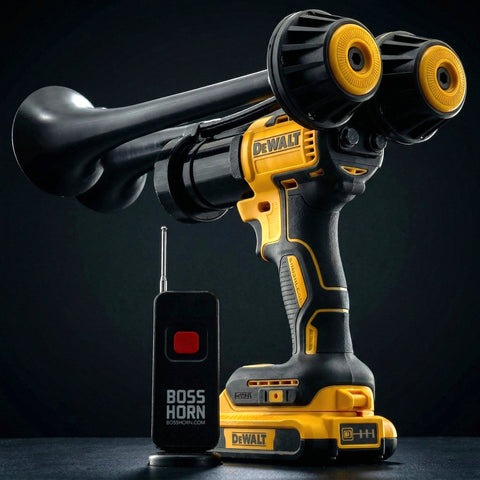
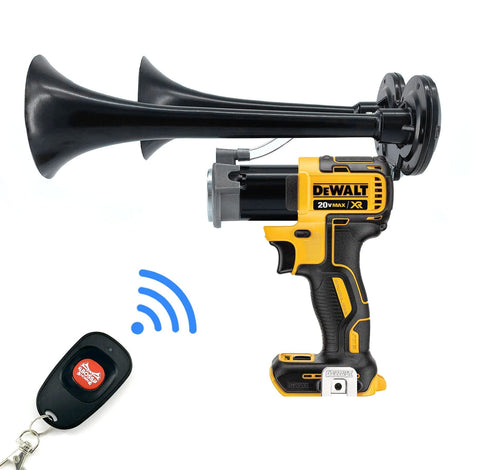
Dual Train Horn for DeWalt® 20v Battery (New 2026 Model) - BossHorn-25%
Loudness130 dB
Horn2 trumpets
Heard up to< 1 mile
ToneHigh pitch

Dual Train Horn for DeWalt® 20v Battery (New 2026 Model)

$280.00 $210.00
5.0 (6)
Dual Train Horn for Ryobi® 18v Battery (New 2026 Model) - BossHorn  dark-26%
Loudness130 dB
Horn2 trumpets
Heard up to< 1 mile
ToneHigh pitch

Dual Train Horn for Ryobi® 18v Battery (New 2026 Model)

$245.00 $180.00
4.8 (4)

See & hear every marine safety horn

Quick product demos of every horn — how it sounds, how it mounts on your drill battery, and how to use it for clear, responsible signaling on the water.

Sound is your safety net on the water

Why a loud horn is core safety gear afloat

Out on the water there are no brake lights and no shoulder to pull onto — your voice carries only a few yards, and an arm wave disappears the moment another skipper looks away. Sound is how boats talk to each other. A sharp, far-reaching blast is what tells a crossing vessel you're there, warns a boat backing off a ramp, or pulls every set of eyes toward a person in the water.

A train-horn-style air horn gives you that voice on demand. One pull sends a deep 150 dB signal across the water — loud enough to register over a running engine, a stiff breeze and the slap of chop — so the message lands the first time, when seconds matter.


Are air horns required for marine safety?

Here's the honest answer: not only are they allowed, a sound-signaling device is required gear. Under the U.S. Coast Guard navigation rules, every vessel must carry a means of making an efficient sound signal, and larger boats are expected to produce a blast audible over a meaningful distance. An air horn is one of the recognized ways to meet that need.

Sound signals do real work: they announce your intentions when passing or overtaking, mark your position in fog and other restricted visibility, and call attention in an emergency. Use it the right way — for genuine signaling, maneuvering and distress situations — not to startle other boaters or wildlife. Carry it, know your local rules, and keep it where you can reach it fast.

How loud does a marine signal need to be?

Handheld and powered air horns generally run between 110 and 150 decibels. The kits in this collection reach up to 150 dB — a deep, locomotive-grade blast built to carry across open water and hold up against wind and engine noise that swallows quieter whistles.

Use it responsibly. 150 dB is seriously loud at close range, so point the trumpets out over open water and away from your crew, keep it clear of ears, children and pets aboard, and stick to short, deliberate bursts. The volume is there for when you truly need to be heard — signal with purpose, not for fun.

How a drill-battery marine horn works

No compressor. No air tank to refill. No splicing into your boat's wiring. These horns use an on-board air pump driving real metal trumpets, so the entire rig is self-contained and ready to stow in a console or dry bag.

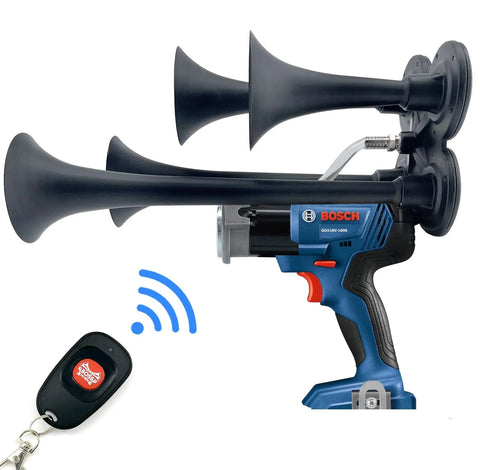
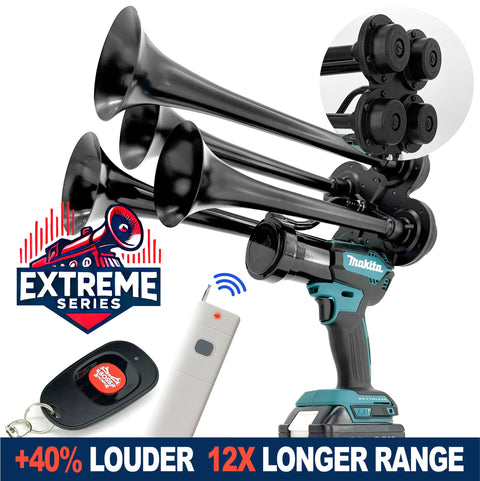
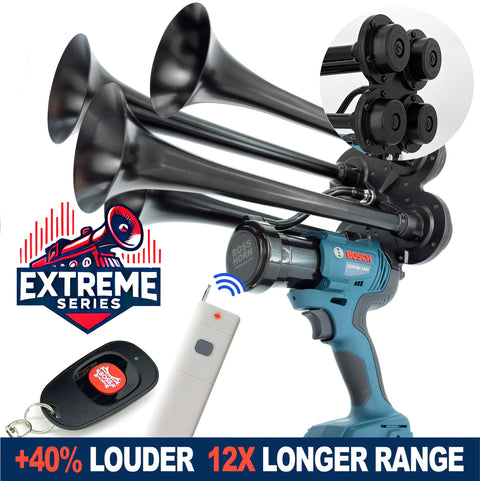
Power comes from a cordless-drill battery you most likely already own. Slide the pack into the base — compatible with Milwaukee® M18™, DeWalt® 20V MAX, Makita® 18V LXT® and Ryobi® ONE+® batteries and more — pull the trigger, and it sounds off. Select models add a wireless remote that works from up to 2,000 ft, so a spotter or helmsman can fire a signal from across the boat. When the battery drops, you recharge it exactly like your drill.

Choosing the right horn for your boat

Match the horn to how and where you run:

  • Trumpet count. Single, dual and quad-trumpet setups layer the sound — more trumpets build a fuller, broader signal that fills more of the water around you.
  • Tone style. Pick a LOUDEST trumpet build for maximum cut-through, or a LOW TONE model for that deep, unmistakable locomotive note.
  • Remote range. Wireless-remote models trigger from up to 2,000 ft — handy for signaling from the bow, the helm or a man-overboard spotter station.
  • Battery brand. Choose the version that matches the drill batteries already in your kit, so you're never short of power at the ramp.
  • Grab-and-go. Everything is pre-built, so the horn lives in your safety kit ready to sound the moment you need it.

Before you leave the dock

Your pre-launch sound-signal check

Run through this quick list every time you head out:

  • Charged pack on the horn and a spare drill battery in the kit.
  • Horn stowed within reach of the helm — not buried under gear in a locker.
  • Remote paired and tested if your model uses one, with fresh batteries.
  • Trumpets clear of salt buildup and aimed out over open water.
  • Crew briefed on where the horn is and the signals you'll use for maneuvering, fog and man overboard.

Two minutes at the dock means your safety signal is ready the second the water demands it.

Marine safety air horns — FAQ

Are air horns allowed and accepted for marine use?
Yes. A sound-signaling device is required gear on the water under U.S. Coast Guard navigation rules, and an air horn is one of the recognized ways to meet that requirement. Use it for genuine signaling, maneuvering and emergencies, and check your local and state boating rules before heading out.
How loud is the horn?
These train-horn-style kits reach up to 150 dB — a deep blast built to carry across open water and push through wind and engine noise. Aim the trumpets out over open water, keep them clear of ears, kids and pets aboard, and use short, deliberate bursts.
Does it need a compressor or an air tank?
No. There's no compressor, no air tank and no wiring into the boat. An on-board air pump drives real metal trumpets, and the whole unit runs off a cordless-drill battery, so it's self-contained and easy to stow.
Which drill batteries fit it?
It runs on common cordless-drill packs, including Milwaukee® M18™, DeWalt® 20V MAX, Makita® 18V LXT® and Ryobi® ONE+® and more. Pick the model that matches the batteries already in your toolkit.
How far does the wireless remote reach?
Select models include a wireless remote that works from up to 2,000 ft, so a helmsman, bow spotter or man-overboard lookout can sound a signal without leaving position.
Can I use it for fog and restricted-visibility signaling?
Yes — a loud, far-carrying horn is exactly what's called for when visibility drops. The deep 150 dB tone helps mark your position to nearby vessels in fog, rain or low light. Learn the standard sound signals for your situation and use them deliberately.
Is 150 dB safe to use on board?
It's safe when used responsibly. 150 dB is very loud up close, so point the trumpets out over open water and away from your crew, keep them away from ears, children and pets, and sound only short, purposeful bursts when you're signaling.
How do I recharge it?
Recharge the drill battery exactly like you would for any cordless tool. Keep a charged spare pack in your safety kit so the horn is always ready, and there are no aerosol cans to run dry mid-trip.
How fast does it ship?
Orders placed before 2 PM PT ship the same business day.

About Air Horns for Marine Safety

On the water, sound is your most reliable safety tool. These train-horn-style air horns deliver a deep, far-carrying 150 dB blast that runs off the cordless-drill battery you already own — no compressor, no tank, nothing to wire in — so you can signal your position, warn another vessel, or call for help the instant you need to.