Overhead view of an open-pit quarry with heavy excavation equipment and track marks across layered tan and grey rock

Air Horns for Mining & Quarry Blast Signaling

A 150 dB, drill-battery air horn that carries your blast warning and all-clear signals clear across the pit — no compressor, no tank.

49 products
150 dB output
2,000 ft remote
Pre-Built
Ships same day
90-day money-back
1-Year Warranty
How do I choose the right horn for me?

Pick the horn that runs on a battery you already own.

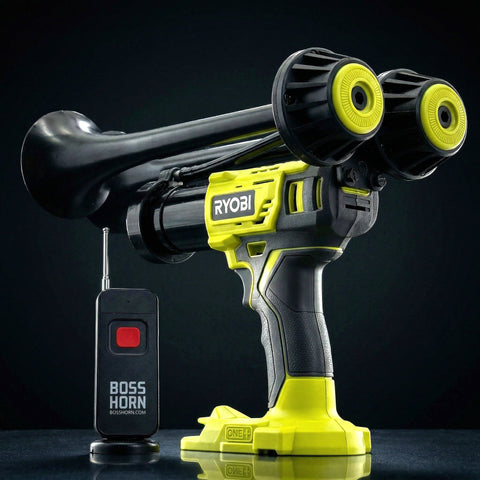
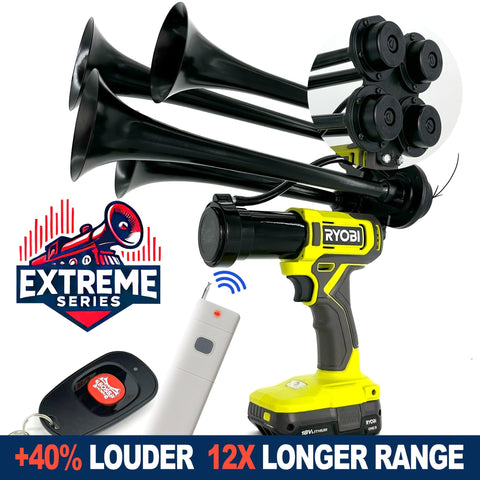
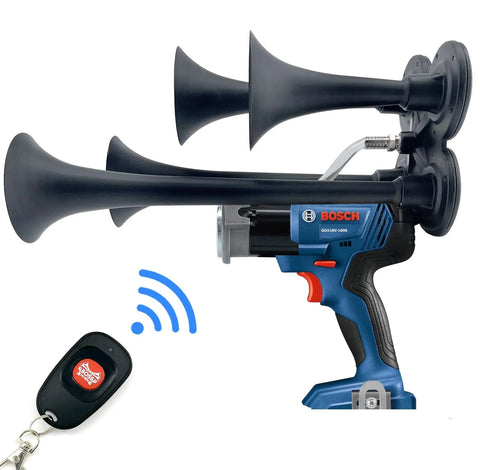
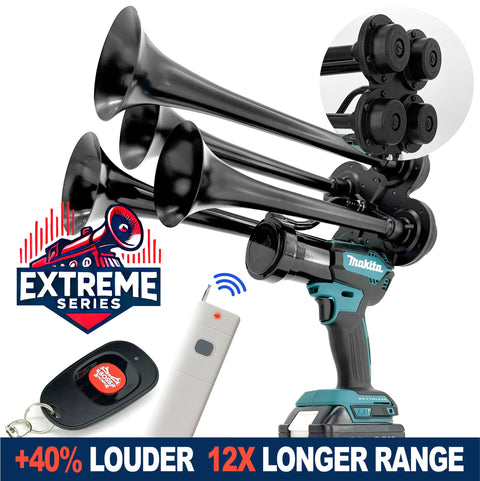
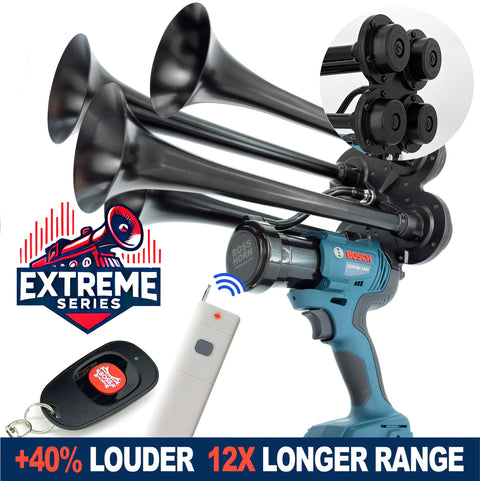
Runs on your existing tool batteries — the same packs as your drill or impact driver. No new batteries to buy or throw away: cheaper for you, easier on the planet.

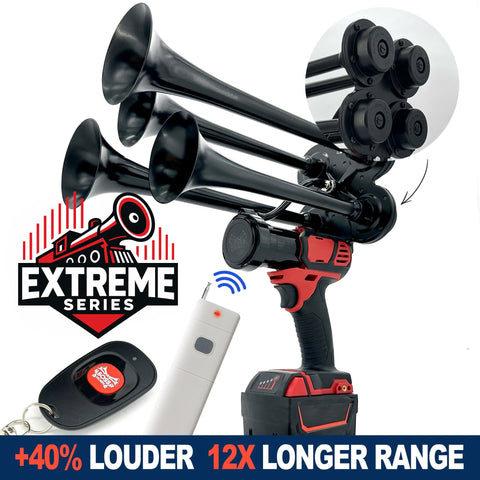
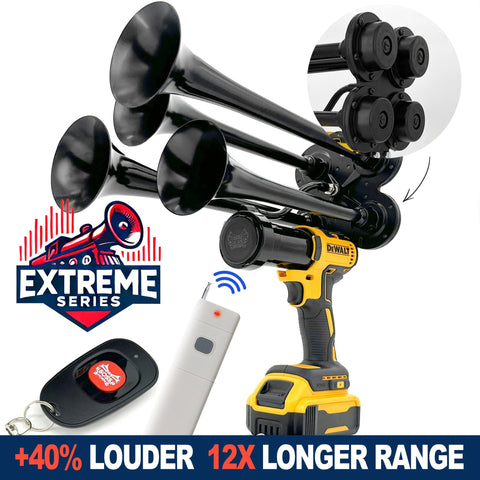
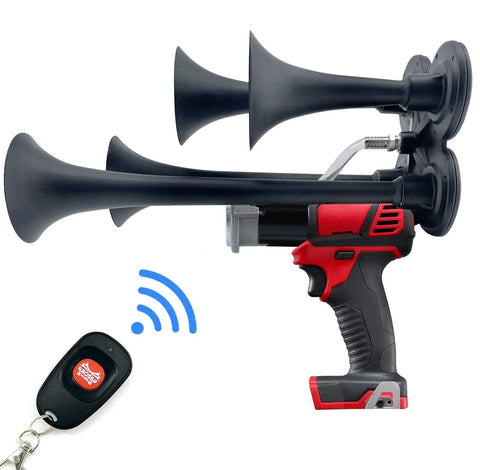
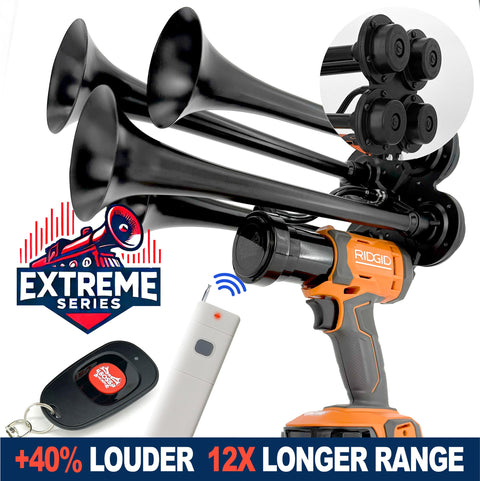
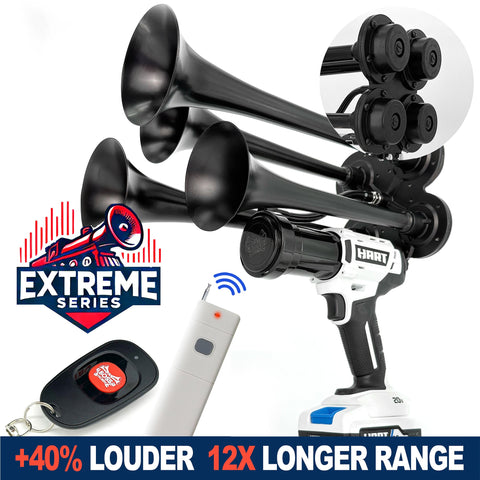
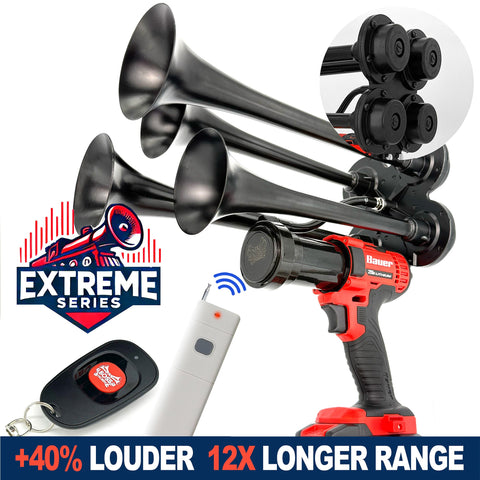
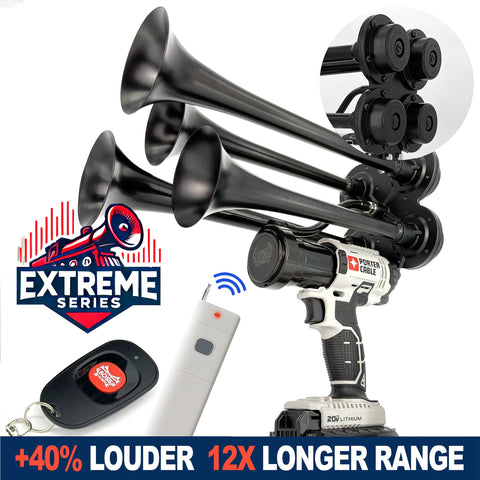
The brand changes nothing about the horn. Every horn uses the exact same internal and external parts — so a Quad is a Quad and a Dual is a Dual. They sound and perform identically across every battery brand; you give up zero sound or power.

No cordless tools yet? Go with DeWalt®, Milwaukee® or Ryobi® — they give you the widest range of tools to buy later on the very same batteries.

Which horn is the loudest?

Our loudest sit at the top — here's how the lineup ranks:

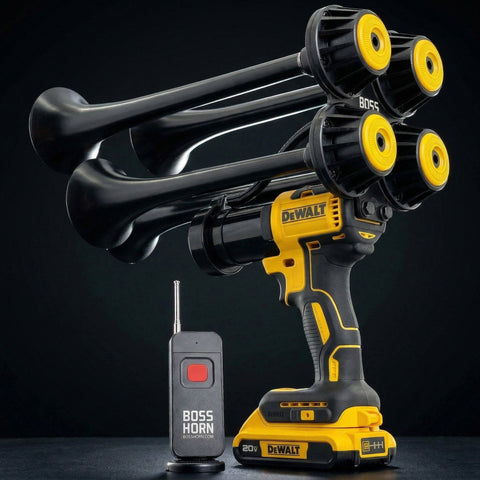
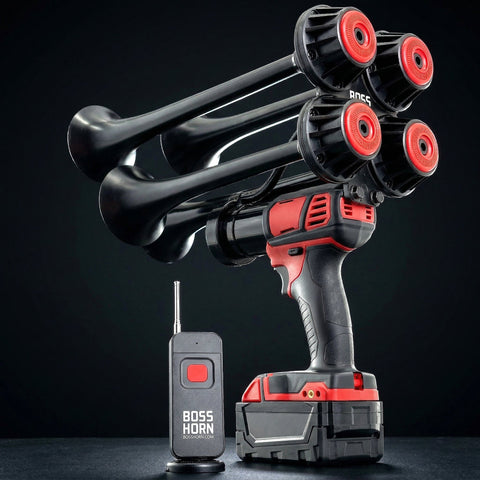
1. Boss Series — our newest (2026) and most refined; it reworks the older Extreme design and fixes its weak spots. Its older sibling, the Extreme Series, sits right alongside it.

2. Quad — four trumpets, big full sound.

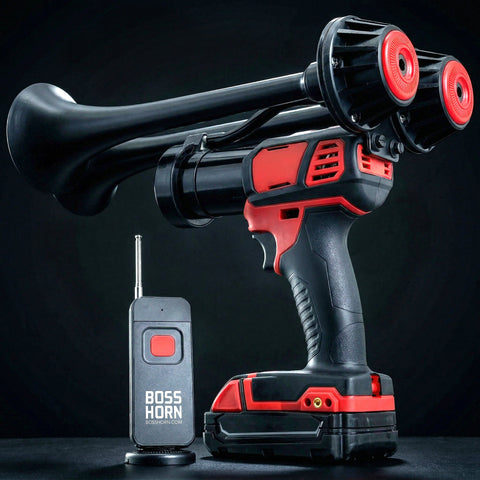
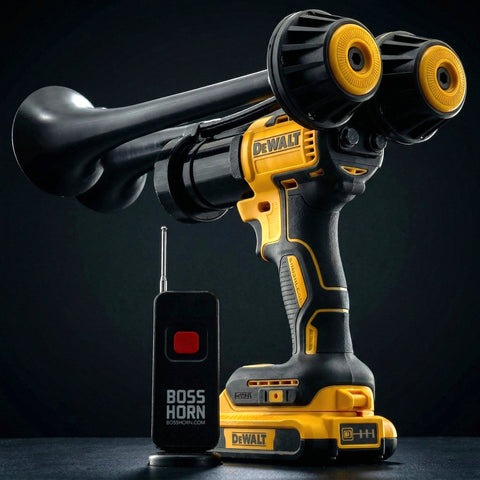
3. Dual — the 2026 Dual shares the Boss design, and it's the one to pick if your battery brand isn't covered by the Boss Series yet.

Skip the 5-trumpet. The on-board compressor can't push enough air for all five trumpets, so it ends up thinner and higher-pitched than it should.

Do I need a drill — or does it come with one?

No drill needed — and none included.

Ships fully built and ready to use — nothing to assemble, no tools required.

The only thing you add is a battery — the same cordless-tool pack your drill already uses.

Snap it in, pull the trigger — and it roars in seconds.

Boss Horn colour caps
Air Horns for Mining & Quarry Blast Signaling
Boss Horn
Boss Horn 1.51M subscribers
Subscribe

Why these horns own the blast call

  • 150 dB that clears the whole pit. A blast warning is useless if a loader operator on the far bench can't hear it — this tone carries across open ground, haul roads and machine noise.
  • Wireless remote up to 2,000 ft. The blaster can sound the warning, blast and all-clear from a safe standoff position, not from on top of the shot.
  • Recharges off your drill battery. No air cans to keep restocking and no canister that fades after a dozen pulls — slide in a charged pack and it's ready for the next round of signals.
  • Grab-and-go, zero install. Pre-built and ready before the warning sequence starts — no compressor to spool up, no tank to fill, no wiring to a truck.
  • Deep freight-train tone. A low, unmistakable blast that reads as stop and clear, not background equipment beeping.

Train Horns Built for Blast Signaling

Battery compatibility:
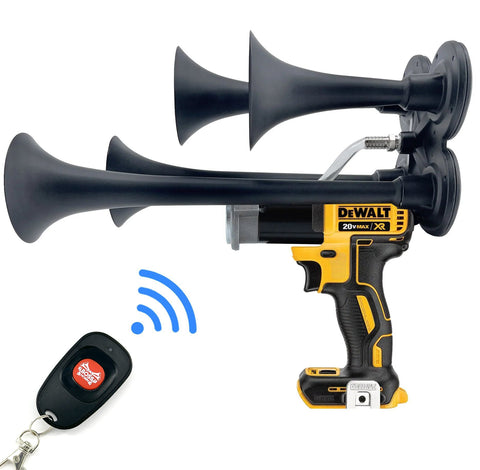
DeWalt Train Horn - Boss Series (New 2026 Model) - BossHorn - dark-14%
Loudness150 dB
Horn4 XL Trumpets
Heard up to1.5 miles
ToneDeep Low Pitch

Boss Series Train Horn for DeWalt® 20v Battery

$450.00 $385.00
5.0 (5)
Boss Series Train Horn for Milwaukee® 18v Battery - BossHorn black-15%
Loudness150 dB
Horn4 XL Trumpets
Heard up to1.5 miles
ToneDeep Low Pitch

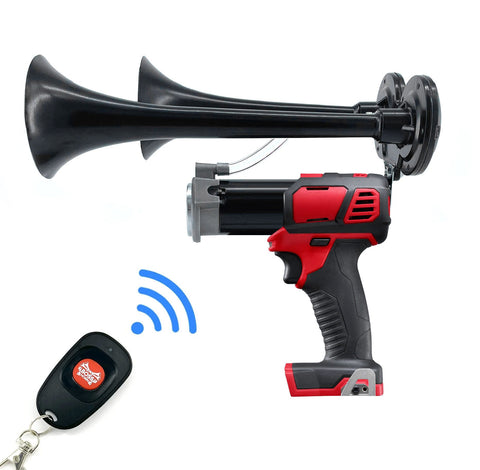
Boss Series Train Horn for Milwaukee® 18v Battery

$430.00 $365.00
4.7 (7)
Ryobi Train Horn - Boss Series (New 2026 Model) - BossHorn dark
Loudness150 dB
Horn4 XL Trumpets
Heard up to1.5 miles
ToneDeep Low Pitch

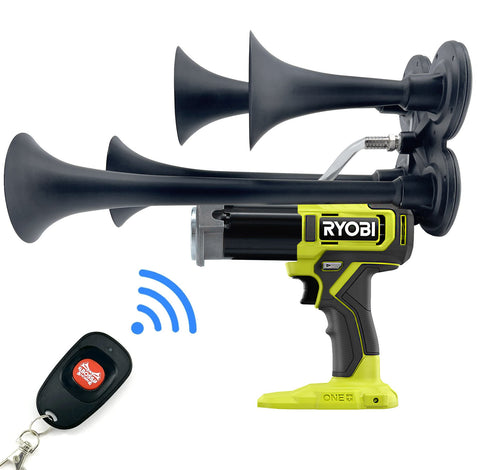
Boss Series Train Horn for Ryobi® 18v Battery

$385.00
5.0 (3)
Dual Train Horn for Milwaukee® 18v Battery (New 2026 Model) - BossHorn black-27%
Loudness130 dB
Horn2 trumpets
Heard up to< 1 mile
ToneHigh pitch

Dual Train Horn for Milwaukee® 18v Battery (New 2026 Model)

$255.00 $185.00
5.0 (8)
Dual Train Horn for DeWalt® 20v Battery (New 2026 Model) - BossHorn-25%
Loudness130 dB
Horn2 trumpets
Heard up to< 1 mile
ToneHigh pitch

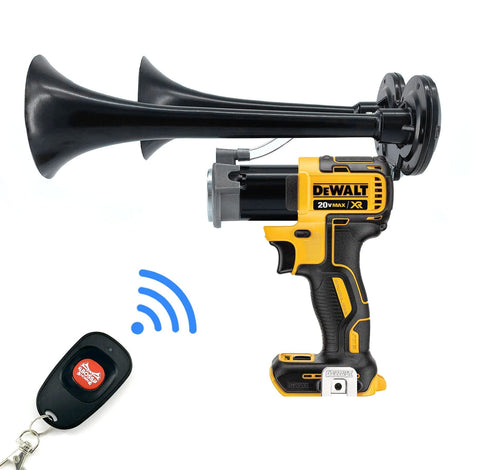
Dual Train Horn for DeWalt® 20v Battery (New 2026 Model)

$280.00 $210.00
5.0 (6)
Dual Train Horn for Ryobi® 18v Battery (New 2026 Model) - BossHorn  dark-26%
Loudness130 dB
Horn2 trumpets
Heard up to< 1 mile
ToneHigh pitch

Dual Train Horn for Ryobi® 18v Battery (New 2026 Model)

$245.00 $180.00
4.8 (4)

Blast-signal horns in action

Quick product demos of every horn — how it sounds, how it mounts on your drill battery, and how to use it to sound clear warning and all-clear signals on site.

// Real owners

Straight from our customers

Real photos from real Boss Horn owners — tap any shot to zoom in.

Heard across the pit

One blast everyone on site understands

On a quarry shot or a mine blast, the audible signal is the line between a routine round and a near-miss. The whole crew — drillers, loader and haul-truck operators, the powder crew, visitors and neighbors — has to hear the warning, recognize it, and clear the area before the shot.

A train-horn-style air horn for blast warning gives the blaster in charge a deep, carrying tone that cuts through diesel engines, crushers and distance. One pull says a shot is coming, get to your standoff position — no ambiguity, no straining to hear it over the equipment.


Use it the right way

Are air horns allowed for blast signaling?

Yes — an audible warning device is exactly what the rules call for. MSHA and OSHA require operators to sound a clear signal before a blast, and reference "an air whistle, air horn or other similar device" for the job. A posted code of blasting signals and a horn loud enough to be heard across the site are part of standard blasting safety.

This is a worksite signaling tool, not a noisemaker. Pair it with your site's posted signal code, sound it from a safe standoff position, and make sure every person on site has been trained on what the warning, blast and all-clear sequences mean before you ever fire a round.

How loud you need

How loud does a blast-warning horn need to be?

Handheld and portable air horns generally run between 110 and 150 decibels. The horns in this collection reach up to 150 dB — a deep, locomotive-grade blast built to travel across open benches, haul roads and the working face, not just the area right around the blaster.

Use it responsibly. 150 dB is genuinely loud, so aim the trumpets toward the open pit and away from anyone standing close, keep workers in earshot wearing their hearing protection, and use short, deliberate bursts that match your posted signal code rather than one long continuous blast.

No compressor, no tank

How a drill-battery air horn works

There's no compressor to start, no air tank to fill and no wiring to a vehicle. An on-board air pump feeds real metal trumpets, so the entire unit is self-contained and ready the moment you pick it up.

Power comes from a cordless-drill battery — the same packs your crew already runs, including Milwaukee® M18™, DeWalt® 20V MAX, Makita® 18V LXT® and Ryobi® ONE+®, and more. Slide in a charged pack, pull the trigger, and it sounds. Select models add a wireless remote that works up to 2,000 ft, so the blaster can call the signals from a safe standoff distance instead of standing over the shot. When a pack runs low, you recharge it just like the rest of your drill batteries.

Match it to the site

Picking the right horn for your operation

Different operations need different setups — here's how to choose:

  • Trumpet count. Single, dual and quad-trumpet models layer the tone; more trumpets mean a fuller blast that carries farther across a large pit.
  • Tone style. Pick a LOUDEST trumpet style for maximum reach, or LOW TONE for a deeper, freight-train growl that stands apart from equipment alarms.
  • Remote range. Wireless-remote models fire from up to 2,000 ft — ideal for sounding the warning and all-clear from a safe standoff position.
  • Battery brand. Match the model to the drill packs your crew already carries so a charged battery is always on hand.
  • Grab-and-go. Pre-built and self-contained, so it's ready before the warning sequence begins.

Before the shot

Quarry blast-signaling checklist

A quick run-through before you sound the first signal:

  • Charged battery seated in the horn, with a spare pack on the charger.
  • Signal code posted and reviewed — warning, blast and all-clear sequences clear to everyone on site.
  • Standoff position set — sound the signals from a safe distance, using the remote if your model has one.
  • Area confirmed clear — people, vehicles and equipment accounted for and behind cover before the blast signal.
  • Hearing protection on for anyone near the horn, with trumpets aimed toward open ground.
  • All-clear ready — sound it only after post-blast inspection confirms the area is safe.

Mining & quarry blast-signal air horns — FAQ

Where can I use one of these air horns on a mine or quarry site?
Anywhere you need a clear audible warning — sounding the warning, blast and all-clear signals around a quarry shot or mine blast, plus general site signaling. MSHA and OSHA both reference an air horn or similar device for blast warning. Use it alongside your site's posted signal code and standard blasting-safety procedures.
How loud is it?
Up to 150 dB — a deep, locomotive-grade blast designed to carry across open benches, haul roads and the working face, even over diesel engines and crushers. Aim the trumpets toward the open pit, keep workers in their hearing protection, and use short bursts that match your signal code.
Does it need a compressor or air tank?
No. There's no compressor, no air tank and no vehicle wiring. An on-board air pump drives real metal trumpets, so the whole unit is self-contained and ready the instant you pick it up.
Which drill batteries does it work with?
It runs on common cordless-drill packs, including Milwaukee® M18™, DeWalt® 20V MAX, Makita® 18V LXT® and Ryobi® ONE+®, and more. Match the model to the batteries your crew already carries so a charged pack is always on hand.
How far does the wireless remote reach?
Select models include a wireless remote that works from up to 2,000 ft. That lets the blaster sound the warning, blast and all-clear signals from a safe standoff position instead of standing over the shot.
Can it cover the warning, blast and all-clear signals?
Yes. Using short and long bursts, one horn can sound the warning sequence, the blast signal and the all-clear — just follow your site's posted code of blasting signals so every signal means the same thing to everyone on site.
Is 150 dB safe to use around the crew?
It's loud, so treat it as a signaling tool. Aim the trumpets toward open ground and away from anyone close, keep workers near the horn in their hearing protection, and use short, deliberate bursts rather than one continuous blast. Sound it from a standoff position whenever possible.
How do I recharge it?
You recharge the drill battery exactly like the rest of your cordless tools — pop the pack on its charger. Keep a charged spare on hand and the horn is always ready for the next round of signals; there are no air cans to restock.
How fast does it ship?
Orders placed before 2 PM PT ship the same business day.

About Air Horns for Mining & Quarry Blast Signaling

When a shot is about to go off, every person on the bench, in the pit and along the haul road has to hear the signal — clearly, the first time. These portable air horns put a deep, 150 dB blast in the blaster's hand, run off the cordless-drill battery you already carry, and cover the warning, blast and all-clear calls without a compressor, tank or wiring.