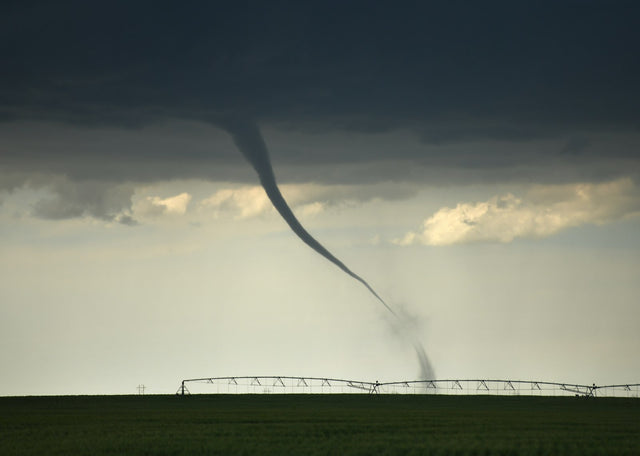
An overland pickup truck set up for camping with a rooftop tent mounted on the bed, parked in green wilderness on an overcast day

Air Horns for RV, Camping & Overlanding

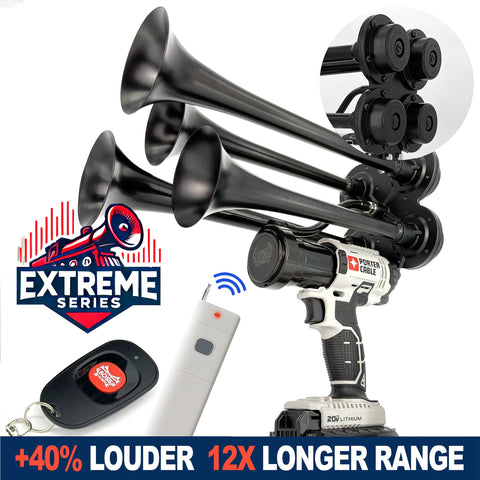
A 150 dB train-horn blast that runs off your cordless-drill battery — built to carry from the RV pad to the far end of the trail and across the whole campsite.

49 products
150 dB output
2,000 ft remote
Pre-Built
Ships same day
90-day money-back
1-Year Warranty
Air Horns for RV, Camping & Overlanding
Boss Horn
Boss Horn 1.51M subscribers
Subscribe

Why these horns own the trail and the campsite

  • 150 dB that travels the backcountry — a low, locomotive-grade note that pushes through wind, river noise and generator hum so a rig two switchbacks away or a hiker past the tree line still hears it.
  • Wireless remote up to 2,000 ft — trigger a blast from inside the RV, the rooftop tent or partway up the trail without standing over a fixed button on the bumper.
  • Recharges off your drill battery — never dies mid-trip, and there are no canisters to keep buying on a week-long run off-grid; top it up like any cordless tool.
  • Pre-built, zero install — no compressor, no air tank, no splicing into the rig's wiring; it's packed and ready before you air down at the trailhead.
  • Deep freight-train tone — real metal trumpets give you a serious low note that reads as a signal, not a campsite toy.

Train Horns Built for RV, Camping & Overlanding

Battery compatibility:
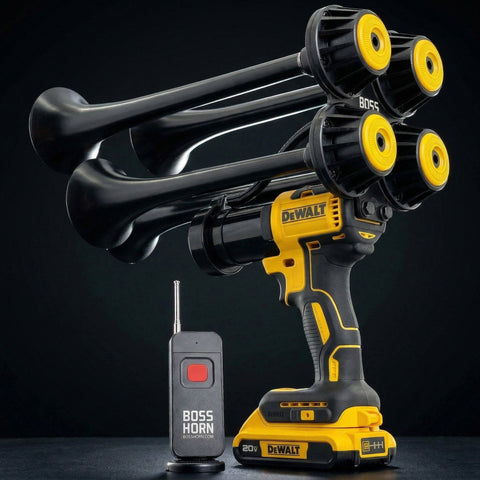
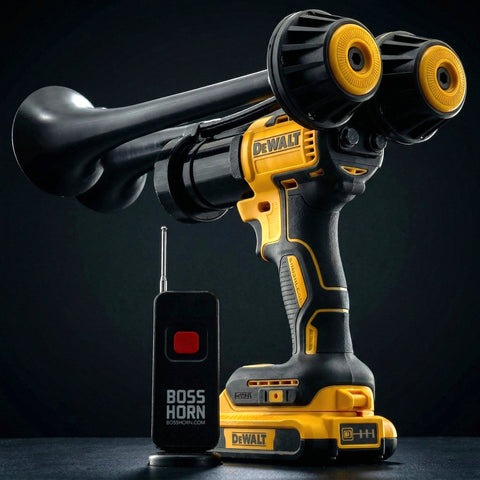
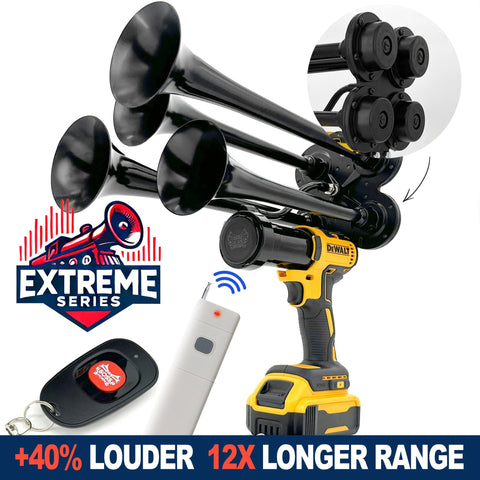
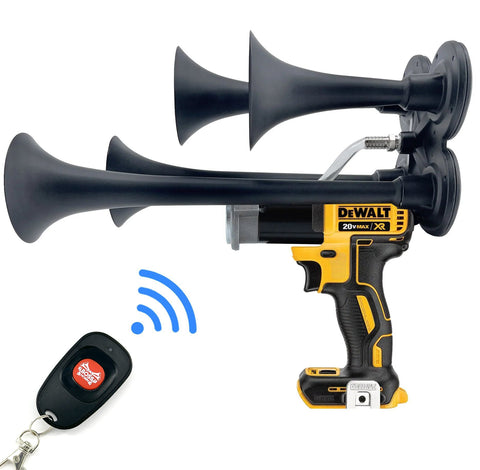
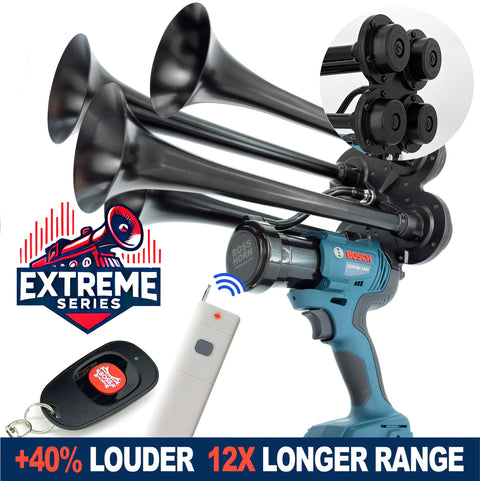
DeWalt Train Horn - Boss Series (New 2026 Model) - BossHorn - dark-14%
Loudness150 dB
Horn4 XL Trumpets
Heard up to1.5 miles
ToneDeep Low Pitch

Boss Series Train Horn for DeWalt® 20v Battery

$450.00 $385.00
5.0 (5)
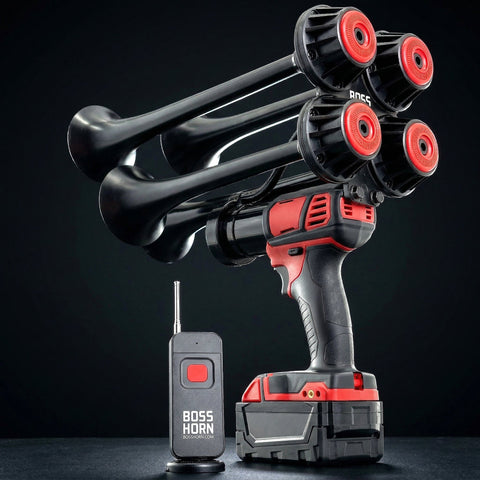
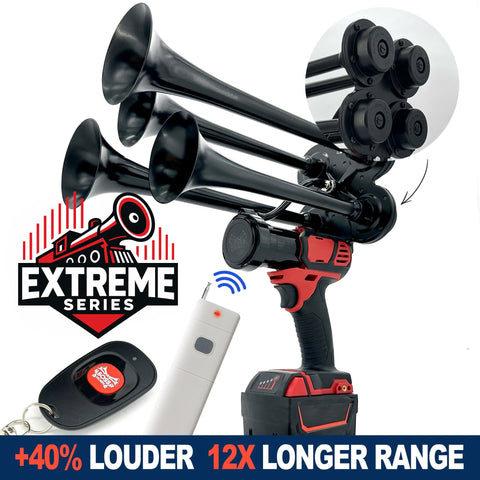
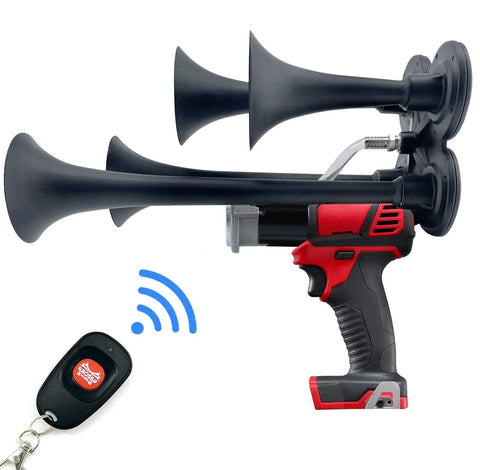
Boss Series Train Horn for Milwaukee® 18v Battery - BossHorn black-15%
Loudness150 dB
Horn4 XL Trumpets
Heard up to1.5 miles
ToneDeep Low Pitch

Boss Series Train Horn for Milwaukee® 18v Battery

$430.00 $365.00
4.7 (7)
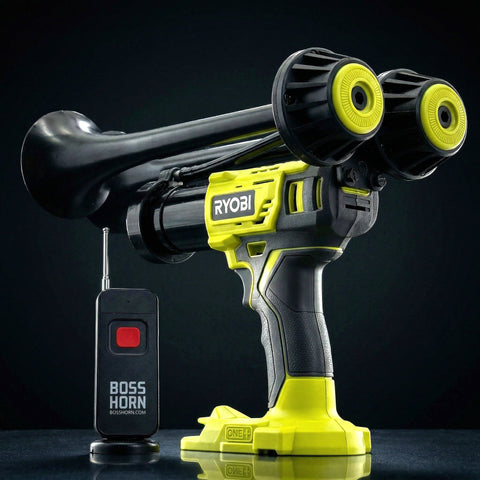
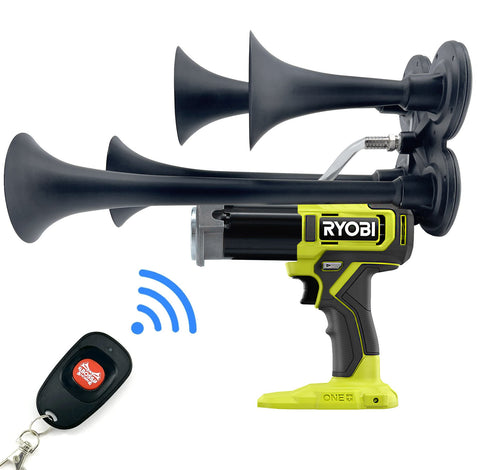
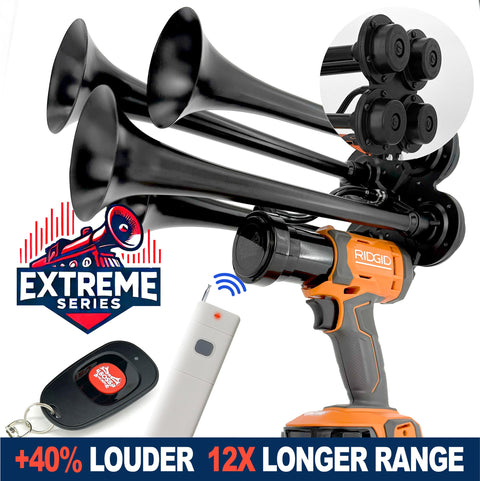
Ryobi Train Horn - Boss Series (New 2026 Model) - BossHorn dark
Loudness150 dB
Horn4 XL Trumpets
Heard up to1.5 miles
ToneDeep Low Pitch

Boss Series Train Horn for Ryobi® 18v Battery

$385.00
5.0 (3)
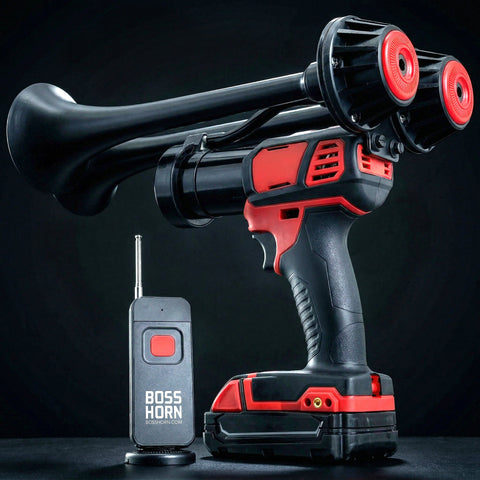
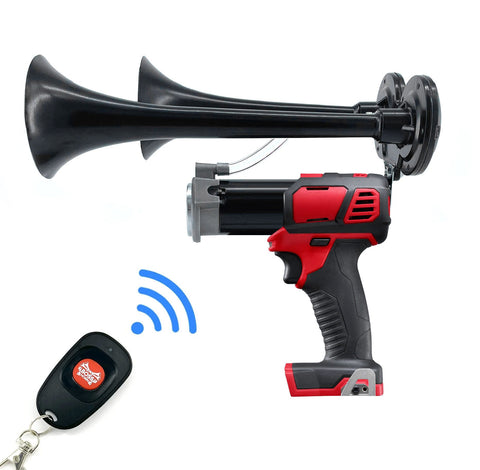
Dual Train Horn for Milwaukee® 18v Battery (New 2026 Model) - BossHorn black-27%
Loudness130 dB
Horn2 trumpets
Heard up to< 1 mile
ToneHigh pitch

Dual Train Horn for Milwaukee® 18v Battery (New 2026 Model)

$255.00 $185.00
5.0 (8)
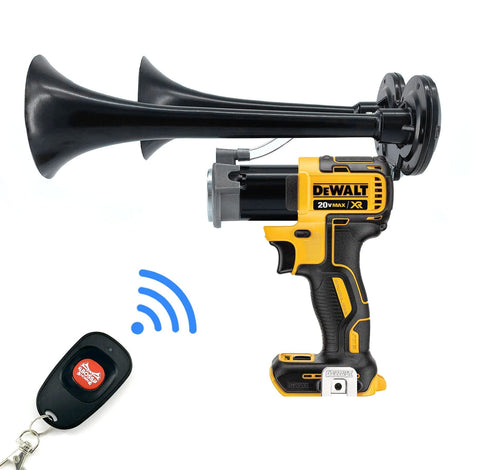
Dual Train Horn for DeWalt® 20v Battery (New 2026 Model) - BossHorn-25%
Loudness130 dB
Horn2 trumpets
Heard up to< 1 mile
ToneHigh pitch

Dual Train Horn for DeWalt® 20v Battery (New 2026 Model)

$280.00 $210.00
5.0 (6)
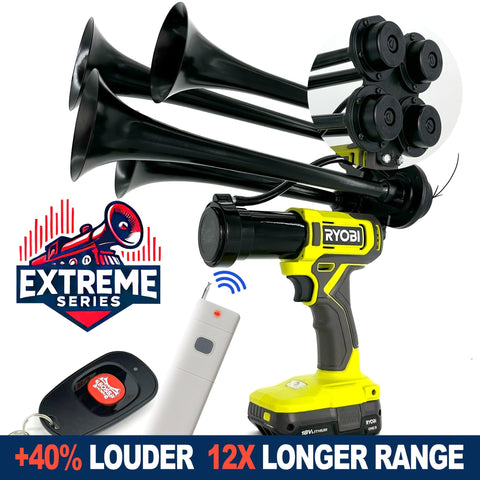
Dual Train Horn for Ryobi® 18v Battery (New 2026 Model) - BossHorn  dark-26%
Loudness130 dB
Horn2 trumpets
Heard up to< 1 mile
ToneHigh pitch

Dual Train Horn for Ryobi® 18v Battery (New 2026 Model)

$245.00 $180.00
4.8 (4)

RV, camp & overland horns in action

Quick product demos of every horn — how it sounds, how it mounts on your drill battery, and how to use it around the RV, out on the trail and at the campsite.

One tool, every leg of the trip

Why an air horn belongs in the kit

Past the last cell bar, your voice runs out of road fast. A real train-horn-style air horn covers the distance you can't — flagging a neighbor for a tow when a wheel drops off the two-track, pulling a wandering kid or hiker back toward camp, or making it unmistakably clear to a curious animal that this clearing belongs to people.

On the trail, it signals a spotter or a buddy rig when radios crackle out. At the RV pad, it calls the group in from the lake when dinner's on. At the campsite, it sits in the bin all weekend and earns its whole price the one hour you actually reach for it.


Where can you actually use one out here?

It comes down to where and when. Developed campgrounds and RV parks post quiet hours — often 10 PM to 6 AM — and a 150 dB blast during those hours, or anytime it's just rattling the loop, is a quick complaint and a word from the camp host. This isn't a noisemaker for a packed row of close-set sites.

Where it earns its place is the open outdoors: dispersed and boondocking sites, remote trailheads, overland tracks, your own land, and anywhere you've got room and a real reason — wildlife deterrence, group signaling or calling for help. Daytime, clear of other parties, and only with a purpose behind the pull. Always check the rules of the specific park, forest or trail system you're on before you use it.

How far does the sound need to carry?

Handheld air horns generally fall between 110 and 150 decibels, and the kits in this collection reach up to 150 dB — a deep, freight-train-grade blast meant to roll across an open campsite and well down a trail, even over wind and a running generator.

Use it responsibly. 150 dB is no joke, so point the trumpets out toward open ground, never fire it near anyone's ears, kids, pets or fellow campers, and keep to short bursts. The volume is the whole point — just aim it at empty air, not the next site over.

What makes it run without a compressor

There's nothing to plumb and nothing to wire. Each horn carries its own air pump and real metal trumpets, so the whole unit is self-contained and drops into a storage bay, a crossbed box or a camp tote.

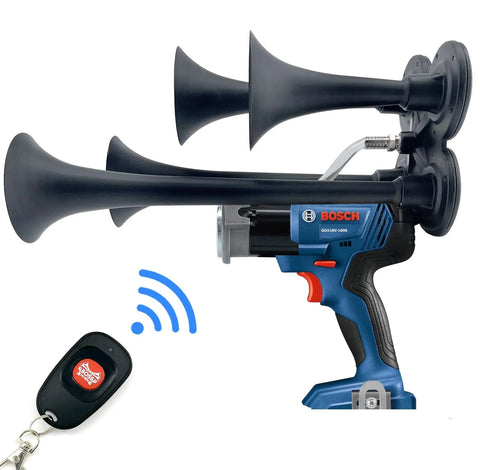
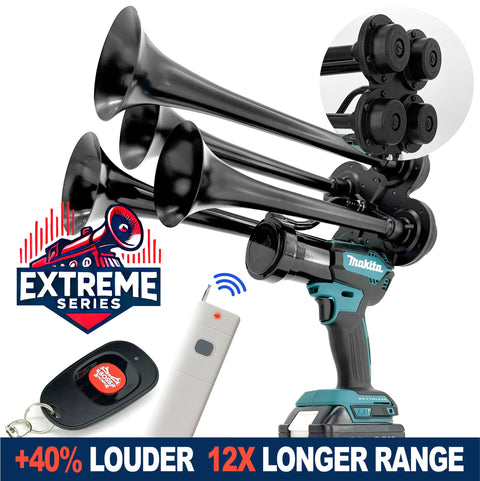
It runs on the same cordless-drill battery you already throw in for repairs and setup. Seat the pack in the base — works with Milwaukee® M18™, DeWalt® 20V MAX, Makita® 18V LXT®, Ryobi® ONE+® and more — and pull the trigger. Select models add a remote that reaches up to 2,000 ft, so the trigger can be in your hand at the RV while the horn sits on the bumper. When the pack drops low, recharge it just like your drill — no canisters to chase down on the road.

Matching a horn to how you travel

Different trips, different setups — here's how to choose:

  • Trumpet count. Single, dual and quad-trumpet models stack the tone — more trumpets, a fuller and deeper blast.
  • Tone style. Go LOUDEST for maximum carry across open country, or LOW TONE for that deep, serious freight-train growl.
  • Remote range. Remote models fire from up to 2,000 ft — handy from the cab, the tent or up the trail.
  • Battery brand. Pick the model that matches the drill packs already in your kit, so you're never a battery short days from a hardware store.
  • Grab-and-go. Everything ships pre-built, so it stows with zero install and rides along on every run, from a weekend at the campground to a week on the trail.

Run it before you roll out

Your pre-trip horn checklist

Before the rig leaves the driveway, run the list:

  • Charged pack seated in the base — plus a spare drill battery in the bay for a long stretch off-grid.
  • Horn stowed dry and reachable — a storage bay, crossbed box or cab cubby, not buried under the recovery gear.
  • Remote paired and tested if your model has one, so a blast is one press away from inside the RV or the tent.
  • Trumpets aimed at open ground — point them away from your own camp, kids and pets before you fire.
  • Local rules checked — quiet hours and noise policy for the park or trail, with the blast saved for wildlife, group signaling or a genuine emergency.

RV, camping & overlanding air horns — FAQ

Where am I allowed to use an air horn camping or overlanding?
It depends on where and when. Developed campgrounds and RV parks enforce quiet hours, usually 10 PM to 6 AM, and a 150 dB horn during those hours or near close-set sites will draw complaints. Save it for open ground — dispersed and boondocking sites, remote trailheads, overland tracks — and for wildlife deterrence, calling your group in, or a real emergency. Always check the specific park, forest or trail rules first.
How loud is it?
These train-horn-style kits reach up to 150 dB — a deep, freight-train-grade blast that carries across an open campsite and down a trail, even over wind and a running generator. Because it's that loud, aim the trumpets at open ground, keep them away from ears, kids and pets, and use short bursts.
Does it need a compressor or an air tank?
No. There's no compressor, no air tank and no canisters to refill. Each horn has an on-board air pump and real metal trumpets, all powered by a cordless-drill battery — nothing to plumb into the RV and nothing to run dry days from the nearest store.
Which drill batteries does it work with?
It runs on common cordless-drill packs — compatible with Milwaukee® M18™, DeWalt® 20V MAX, Makita® 18V LXT®, Ryobi® ONE+® and more. Pick the model that matches the batteries already in your kit and slide the pack into the base.
How far does the remote reach?
Select models include a wireless remote that works from up to 2,000 ft, so you can trigger a blast from inside the RV, the rooftop tent or partway up the trail without standing over a fixed button.
Can I use it to keep wildlife away from camp?
A sudden, loud blast is a recognized way to make your presence known and encourage an animal to move along before it gets close — most useful as an early, at-a-distance deterrent rather than something aimed point-blank at an animal. Treat it as one layer of a larger plan, not a replacement for proper food storage, bear spray where appropriate, and following the area's wildlife guidance.
Is 150 dB safe to use?
150 dB is seriously loud, so treat it like a real signal device. Point the trumpets toward open ground, never fire it near anyone's ears, kids or pets, and stick to short bursts. The volume is the point — just aim it at open air, not the next campsite.
How do I recharge it?
Recharge it exactly like your drill. When the cordless-drill battery in the base runs low, pop it out and charge it on your normal charger — there are no air canisters to buy or refill, which is what keeps it dependable on a long trip off-grid.
How fast does it ship?
Orders placed before 2 PM PT ship the same business day, so you can have your horn packed in the rig before your next trip out.

About Air Horns for RV, Camping & Overlanding

Three days down a forest road, a horn that just works is worth more than one more gadget that doesn't. These train-horn-style air horns ride in the RV, clip into your overland kit and live at the campsite — throwing a deep 150 dB blast off the cordless-drill battery you already pack, with no canisters to run dry miles from the nearest store. One tool for waving down help on the trail, calling the crew back to camp, and letting wildlife know exactly where the people are.